
















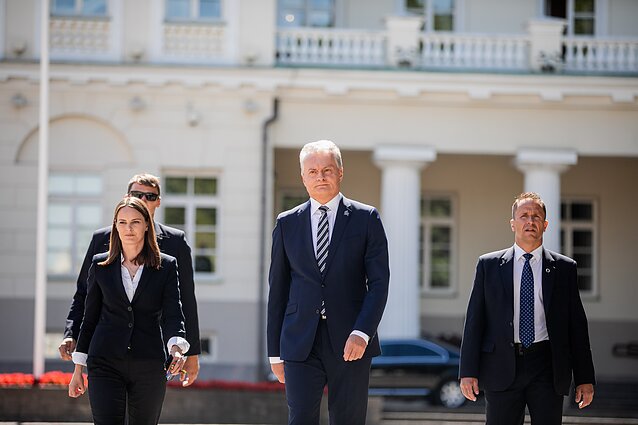
Lithuanian President Gitanas Nausėda won the election in 2019 by promising to turn Lithuania into a ‘welfare state’. But what is it and how can it come about?
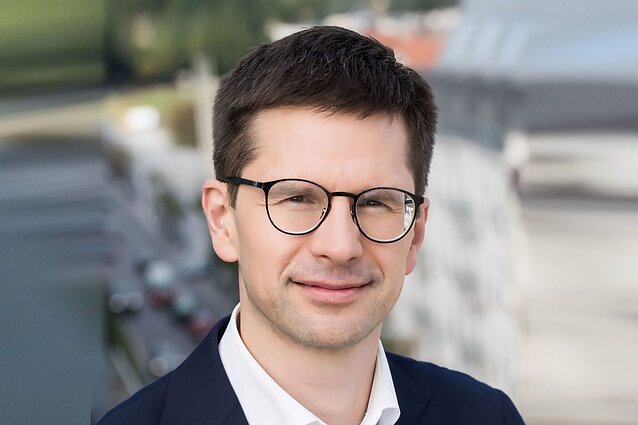
For one thing, it would mean leaving behind Lithuania's current combination of low tax revenues and poor public services, says Egidijus Barcevičius, an associate professor at Vilnius University's Institute of International Relations and Political Science (TSPMI), in a press release by the university.
Lithuania will have to transform itself into a welfare state eventually, he believes, but the country first has to decide what kind of welfare it wants and how it is going to fund it.
State's role in social services
Welfare state can mean different things for different people. “In my understanding, this is first and foremost the activity of institutions in the public sector and involves funding allocated to alleviate unexpected life events, [such as] job loss, drop in income, health decline,” says Barcevičius. “But a welfare state is equally about the actions public institutions take to create equal opportunities for all members of the society to access welfare services.”
Welfare may even include cultural services and regulation of the market: limits on working hours, work safety, employment of minors, fiscal policy.
Historically, welfare state is a recent invention, says Barcevičius, as until relatively recently states were mostly concerned with war, security and infrastructure.
Services like education and healthcare did not come into the state's purview until the 19th century, but are now seen as its essential functions.
Otto von Bismarck’s Germany (1871–1890) is often seen as the cradle of modern welfare state. “The German Chancellor Bismarck was the person who banned socialist movements and literature, but it was under his rule and supervision that the first steps were taken towards creating healthcare, accident insurance and even pension insurance in Germany,” according to Barcevičius.
It was active worker movements, demanding rights and social security, that forced Bismarck's hand, he adds, although another consideration may have been even more salient: the German chancellor thought that social security would help win the recently unified Reich the loyalty of its citizens.
Which model is best?
Today, welfare institutions differ widely across the world, says Barcevičius. Broadly speaking, the question to ask is whether the state primarily helps those in urgent need, offers services to everyone, or provides social security at the middle-class level. Moreover, models differ by how welfare is funded.
Bismarсk’s corporative system is now primarily found in Germany and Austria, while the liberal welfare system is characteristic of the UK and the US.
“In Lithuania, the state plays the main role in healthcare. This means that we pay our contributions, and if we need a health service, we usually contact public clinics or hospitals. In the United States, where the market plays a much bigger part, the government provides healthcare services only to those who cannot afford them privately or are over 65. Everyone else buys healthcare services in the market, with some of them subsidised by the state,” says Barcevičius.
Which variety is more effective? Any answer would be a value judgement, he says.
“I personally trust the active role of the state in the social sphere more and believe that the state must help everybody reach and stay in the middle-class. Countries that do that seem more successful to me, I see Scandinavia as exemplary,” says Barcevičius.

New taxes required
But widely available and quality services will require funding, he adds.
“That’s why the current government is trying to carefully tell the public that if we want quality, high-level welfare services, and a middle-class welfare state, then we need to find a way to collect revenue to fund them.”
Getting rid of tax exemptions, introducing new environmental levies and taxes on wealth will have to come sooner or later. “Yet, neither the president, nor the government want to tackle that question head-on,” Barcevičius says.
Lithuanians seem to want a robust welfare state, quality public services and government aid programmes like those in Scandinavia and continental Europe, but are reluctant to pay more in taxes. Moreover, it is far from clear who will get to shoulder the bill.

“An ageing society poses some financial questions [...]. If the number of working people decreases and the number of those who need welfare services increases, then we are faced with a problem,” says Barcevičius.
Other problems, such as climate change, can also be a challenge, as preventing natural disasters will require funding.
“A fundamental question also concerns the level of trust in the state and its institutions. Societies will never be willing to fund institutions which provide welfare services, unless they trust them and believe in their use.
“Once questions like ‘Why should I throw my money into the pot?’ or ‘Why should I pay for others?’ appear – which tends to happen in divided societies – the impetus to create a universal security net starts to wane,” Barcevičius says.

Newsletter
Every Friday morning.