









A systematic rift is emerging between the European Union’s east and west. Josep Borrell’s fiasco in Moscow is just one of many symptoms, writes Jeroen Bult, a publicist and historian.
“We have grown used to Brussels applying unilateral sanctions without any legal substantiation more and more often. We are proceeding from the assumption that the EU is not a reliable partner, at least at the current stage,” Sergei Lavrov, the veteran foreign minister of Russia, sneered during a recent press conference in Moscow.
The foreign guest standing next to him remained silent. That would hardly have been surprising – or embarrassing – if the visitor in question had been Lavrov’s counterpart from some autocratic ex-Soviet republic that, like Russia, was cracking down on all oppositional activities.
If, however, the visitor is the high representative of the EU, one would expect an immediate interruption, followed by a vigorous plea for liberal democracy and the rule of law, the values the protestors in Russia (and Belarus) are fighting for.
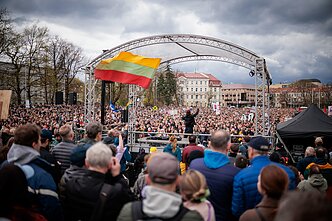
If that very visitor also finds out, via Twitter, that three European diplomats will be expelled from Russia because they attended these impressive gatherings in support of Alexei Navalny, one expects an instant condemnation and concrete action.
Read more: EU’s reputation ‘shaken’, says Lithuanian FM as Moscow expels diplomats

Josep Borrell did nothing of the kind, thus not only humiliating himself, but also the EU as a whole.
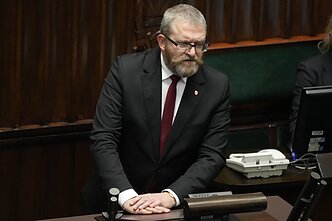
Estonian Member of the European Parliament Riho Terras, a former commander of the National Defence Forces who once said that he would not hesitate to have Putin’s ‘little green men’ shot down if they dared to set foot on the Estonian soil, felt inspired to draft a letter calling for Borrell’s resignation.
In the letter, which has been signed by more than 70 fellow MEPs, Terras is loathing Borrell’s decision to go to Moscow in the first place, his denial that proposals with regard to additional sanctions against Russia have been put forward by EU member states, and his omission to mention the ongoing war in the Donbass.
Meanwhile, while appearing in the European Parliament on February 9, Borrell, trying to save his skin, stated that he would “put forward concrete proposals using the right of initiative that the high representative has […] – it will be for the member states to decide the next step, but yes, this could include sanctions.”
Interesting here is the phrase “it will be for the member states to decide the next step”.
This indicates that there is a deeper, underlying problem, a problem that is detrimental to the Baltic States and that Borrell is just a symptom of.

The main task of the high representative of the EU is to coordinate the so-called Common Foreign and Security Policy (CFSP) that the EU (the European Community back then) agreed on in Maastricht in December 1991.
This “Second Pillar of Maastricht” painfully failed two major tests: the wars in ex-Yugoslavia in the first half of the 1990s and the Iraq crisis of 2002–2003.
Ever since, eurocrats, think tanks and individual politicians have submitted proposals and ideas to provide the CFSP with more assertiveness, so that the EU is (finally) able to play a more prominent role in the global arena.
Donald Trump’s neo-isolationist America First infatuation seemed like the ultimate stimulus for rigging up the CFSP even more seriously, the “European Strategic Autonomy” becoming the new mantra in Brussels.
The most persistent nuisance that has thwarted attempts to prepare the CFSP for maturity could be summarised with one word: Russia. EU member states’ geopolitical perceptions of the great power in the east have not always overlapped, to put it mildly.
Due to their experiences with the totalitarian Soviet occupation and, since 1991, with Russia’s systematic refusal to accept legal and moral liability for political repression, economic exploitation and ecological devastation that took place in that era, Estonia, Latvia and Lithuania have observed Russia’s whims with great distrust.

The EU ‘imported’ this wariness when the three republics (and Poland) joined the Union in 2004. The national psyches of most older members have hardly been affected by the Russia factor.
Having experienced occupation by Nazi-Germany (Western Europe) or home-grown fascism (Southern Europe) only and being able to keep communism at an arm’s length and to recover in freedom and prosperity after 1945, their historical-psychological correlation with Russia is low-key.
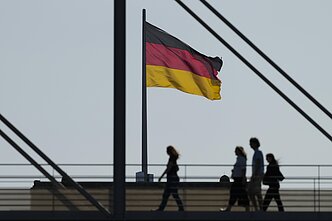
A special case is Germany. A symbiosis of historically stronger connections with Russia (dating back to the Bismarck era), a sense of guilt emanating from the atrocities committed during the Nazi invasion of the Soviet Union, a certain gratitude for Moscow’s permission for national reunification in 1990 and an entanglement of German and Russian business interests (energy) has resulted in Berlin’s cautious approach to Russia.
This could already be discerned during the Cold War, when, in the late 1960s, Willy Brandt managed to implement his legendary Ostpolitik: by gaining the trust of the Soviet leadership and expanding political and economic ties as intensively as possible, tensions with the East could be reduced. According to its conservative criticasters, this philosophy deliberately neglected human rights, but after the Kohl government took over in 1982, it would pursue Ostpolitik.
The main contours of this Weltanschauung are still in place. True, Germany endorsed EU (and NATO) enlargement, but only hesitantly. Former Estonian Prime Minister Mart Laar is giving a striking example of this in his book Ajaga võidu (A Race Against Time, 2020), the second part of his memoirs.

In Spring 1997, Joachim Bitterlich, an influential advisor of Chancellor Helmut Kohl, alluded to suspending EU accession talks with Estonia, because Kohl was allegedly annoyed by critical remarks from Estonian President Lennart Meri who described Germany as an advocate of Russia.
To the present day, Berlin has cherished its special relationship with Moscow; it still believes in the benefits of a constructive, imperturbable dialogue. German President Frank-Walter Steinmeier, like Brandt a member of the social democratic SPD, recently described the controversial Nord Stream 2 gas pipeline as “the last bridge between Europe and Russia” (“Demolishing bridges is not a sign of strength”).
That is the current state of the European level playing field. The Baltic states are most suspicious of Russia and are pressing for a tougher approach. Western and Southern Europe, on the other hand, are anxious to repudiate political (and economic) contacts with Moscow, with Germany taking a special position.
Moreover, Southern Europe is more concerned about instability in and migration from its backyard, Northern Africa and the Middle East. Central and Eastern Europe has displayed a rather ambivalent stance regarding Russia, with Poland backing the Baltic position and Viktor Orbán’s Hungary conducting its own little Ostpolitik (which includes ordering Sputnik V vaccines).
Even Estonia has given mixed signals. The right-wing populist EKRE party, which dominated the recently imploded Ratas-II government, was not entirely opposed to rapprochement with Russia. From this point of view, it is remarkable that EKRE MEP Jaak Madison signed Terras’ letter as well.
It will be difficult for Estonia, Latvia and Lithuania to effectuate any changes on this complex playing field and to push the CFSP in the ‘right’, Russia-sceptical direction.
Read more: Why Russia politics threaten European security

They could deploy more diplomatic efforts in Western Europe, especially in Germany, where the Greens, the only political party that has really been critical of Putin’s dictatorship and Nord Stream, have been continuously second in opinion polls, after the CDU.
The possibility of the ‘Black-Green’ coalition later this year cannot be ruled out. Since the junior coalition partner normally gets the Foreign Ministry, it might be advisable to figure out who the potential Green candidates are and to get in touch with them.
Extending dialogue with France – French Foreign Minister Le Drian recently hosted his three Baltic colleagues in Paris – might also offer diplomatic opportunities.
But Estonia, Latvia and Lithuania should not avoid uncomfortable questions either. Are they seriously willing to invest in the CFSP, now that a pro-Atlanticist president, a soulmate who strongly detests Putin, has been inaugurated in Washington?
Are they prepared to reach out to Southern Europe and to empathise with its concerns, which could also mean taking over refugees stranded there?
Sacking Josep Borrell, meanwhile, will not solve anything at all.
Jeroen Bult is a Dutch historian and publicist, specialised in Estonia, Latvia and Lithuania.

Newsletter
Every Friday morning.