












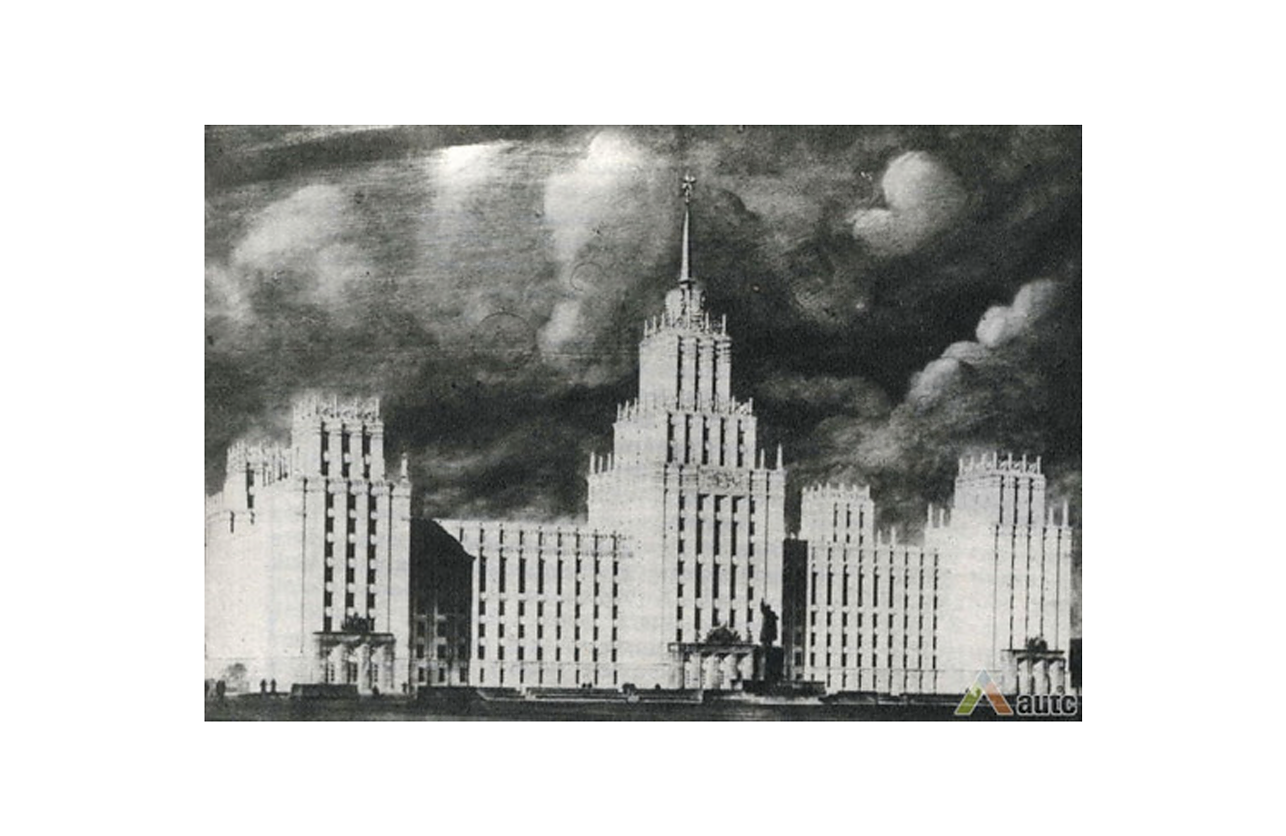
Vilnius may have looked different from what we see today. Take a look at the 16 aborted utopias that could have dramatically altered the Lithuanian capital.
1. Church of the Heart of Jesus
Designed by Antanas Vivulskis (Antoni Wiwulski), a famous Lithuanian-Polish architect, the construction of the church began in Vytenio Street during the interwar period. During the Soviet occupation, however, the construction was stopped and the walls already there were incorporated into the Builders’ Palace.
According to Vilnius City Municipality, the idea to restore the unfinished church has not been abandoned.
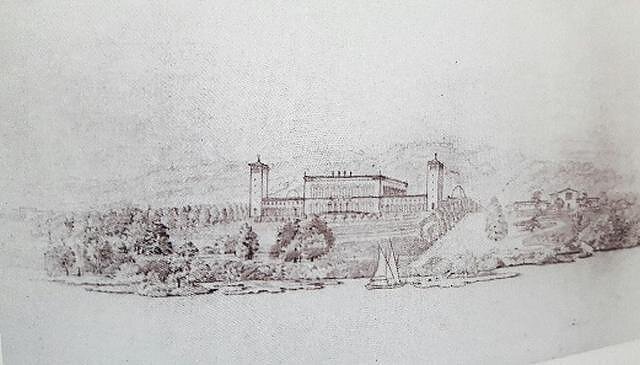
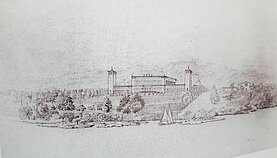
2. Verkiai palace
In 1840, the Prussian architect Karl Friedrich Schinkel proposed a restoration project for the Verkiai Palace. Had it been implemented, this palace would now look as if it was brought from Austria.
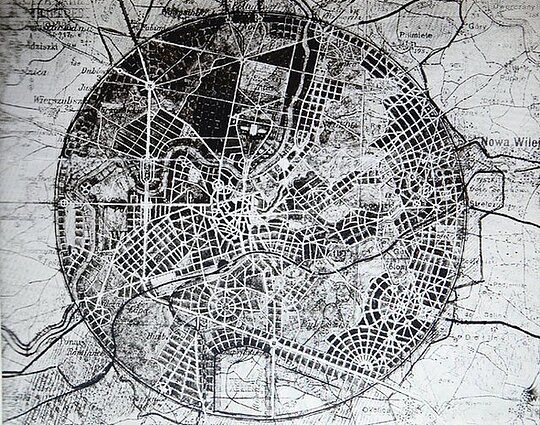
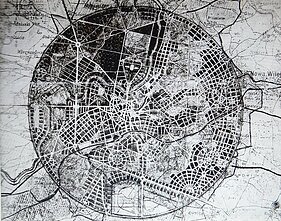
3. Circle city
In 1931, Janusz Tłomakowski offered a rather utopian vision for Vilnius – the city in the shape of a perfect circle.
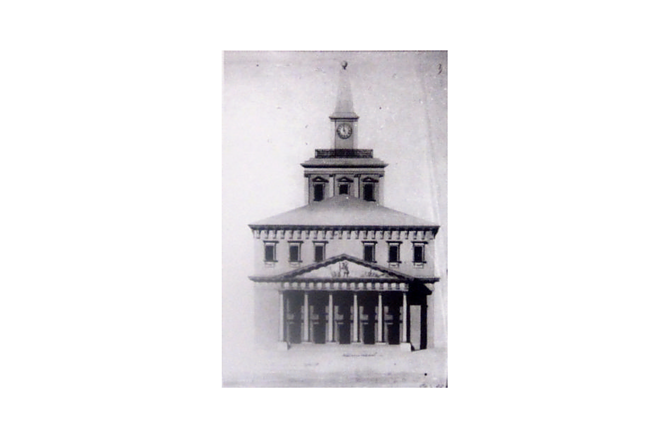
4. Town Hall
The Town Hall building in Vilnius could have looked differently, if the original idea of Laurynas Stuoka-Gucevičius came into being.
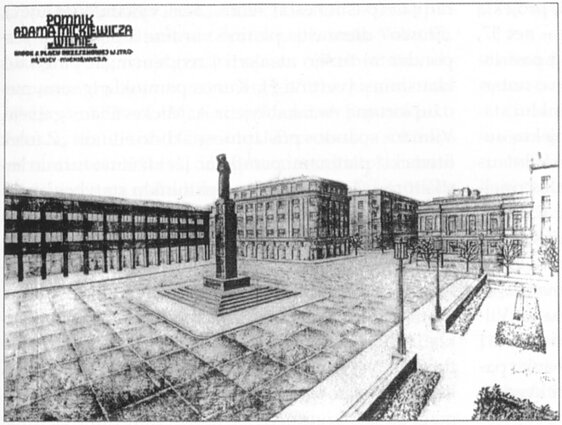
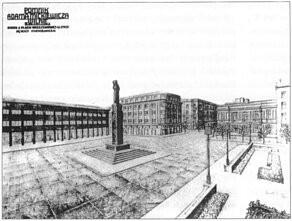
5. Monument to Adam Mickiewicz
During the interwar period, the city's authorities searched for a place to build a monument to Adam Mickiewicz (Adomas Mickevičius), the famous Polish poet who spent his student years in Vilnius. Finally, a decision was made to build it in the middle of Gedimino Avenue, next to the current Vincas Kudirka Square. But the project was never implemented.
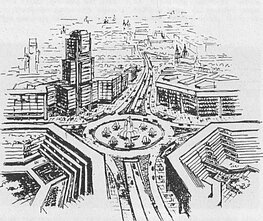
6. Kalvarijų Street
The current intersection of Kalvarijų Street and Konstitucijos Avenue could have been much bigger and in the form of a roundabout, with Kalvarijų Street turned into something similar to a highway.
7. Old Town
After World War Two, Vilnius Old Town could have been cut by a wide highway – there were various plans for where to put it, but the idea was eventually discarded. The construction of Salomėja Nėris school directly on the planned highway may have contributed to the project's binning.
7. Bus station
The current bus station is only a small part of the original project proposed by architect Vytautas Brėdikis. A huge office building was supposed to be built above the station, but the idea was rejected, which angered the architect.
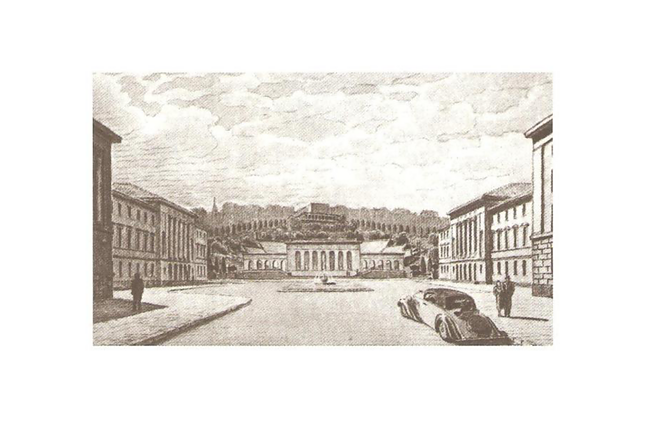
8. Lukiškės Square
The current Lukiškės Square was at the centre of many discussions during the Soviet years, and a number of competitions were held to decide how to redevelop it. If at least some of them had been implemented, Lukiškės Square would now resemble the central squares in Minsk or Kyiv.
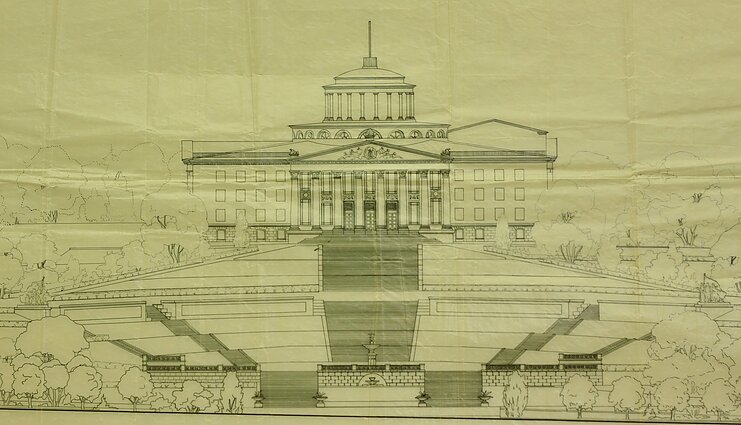
9. Tauras Hill
The Tauras Hill could have been topped with a disproportionately large Soviet palace – a more modest project was implemented istead. That buidling was recently demolished.
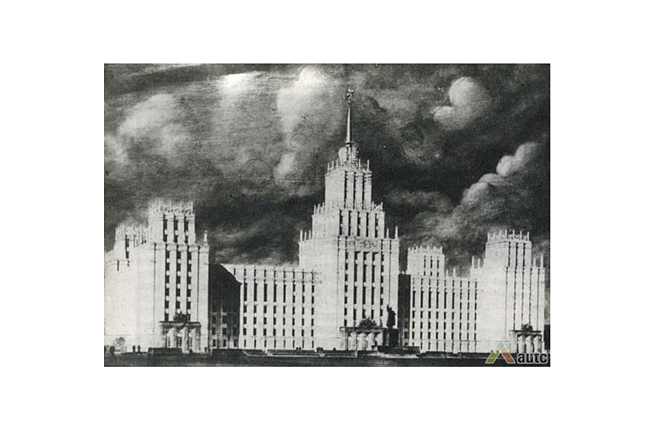
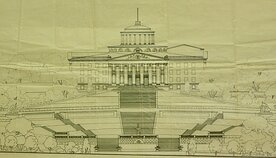
10. Government Palace
Under the Soviet administration, the authorities planned to build a huge Government Palace next to Lukiškės Square. The winning design proposed a structure resembling the palaces found in Minsk and Moscow. However, the idea was shelved.
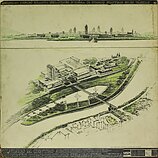
11. Neris Bay
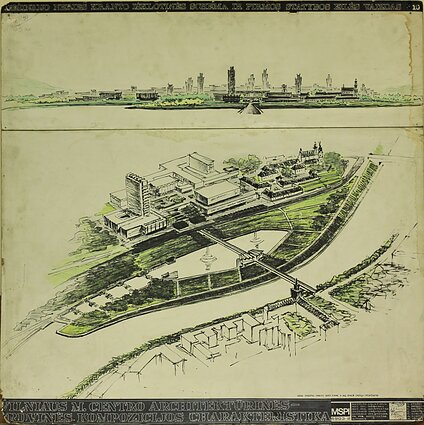
The idea developed by architect Algimantas Nasvytis on the right bank of the Neris became a reality after Lithuania’s independence. It left out just one detail – there should have been a Neris Bay with water cascades instead of the meadow next to the White Bridge.
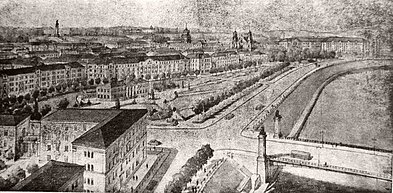
12. Left bank of the Neris
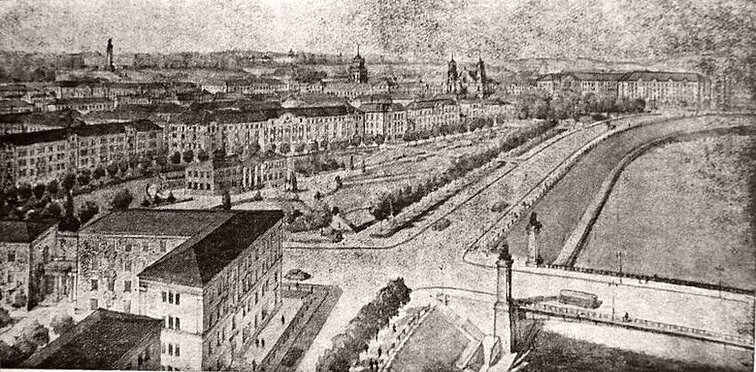
The left bank of the Neris river could have looked different than it does now, with a green area between the street and the buildings, according a design proposed in 1950.
13. Šnipiškės
Šnipiškės, one of the most unique neighbourhoods of Vilnius, could have looked like an ordinary Soviet residential neighbourhood, if the plans to demolish the old wooden houses in order to build multi-storey blocks had been implemented.
14. Pilaitė
Pilaitė may have been considerably larger. However, the development plans were eventually stopped, and only the southern side of the area was built up after Lithuania’s independence.
15. Žvėrynas
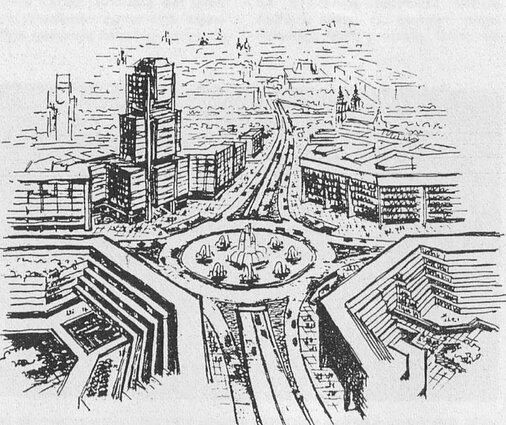
A sad fate awaited the current Žvėrynas neighbourhood. The plan was to build the Ukmergės Street motorway, connecting it to the current Geležinio Vilko Street via a new bridge. A tunnel planned under the current Čiurlionio Street would have connected the Geležinio Vilko Street to Naujamiestis. These two highways would have significantly distorted the face of Žvėrynas and Naujamiestis.
16. Vilnius subway
Vilnius subway is still a utopian idea for the city which has been alive for some 50 years.