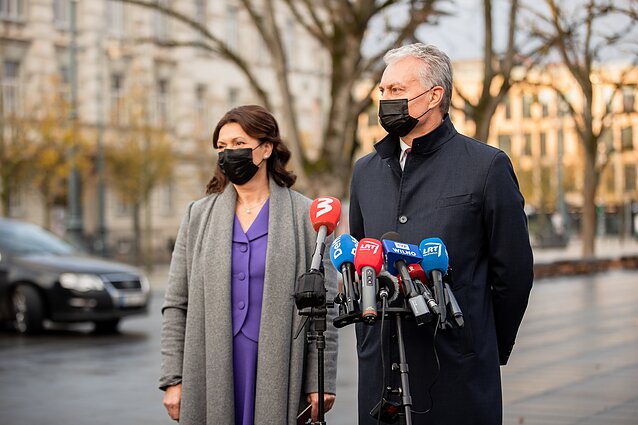
















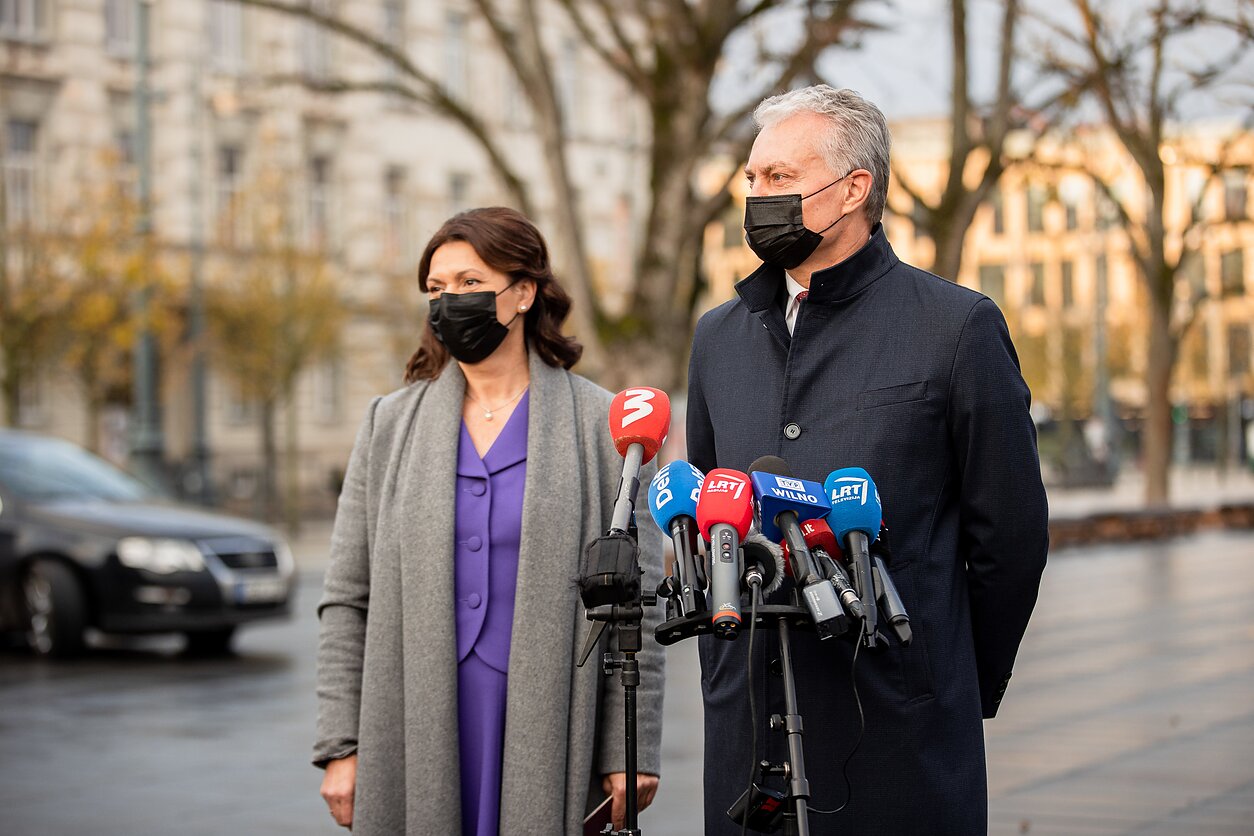
Lithuanian human rights advocates have criticised the president’s office and First Lady Diana Nausėdienė for hosting a conference on crisis pregnancy which they say gave a one-sided approach that could lead to restrictions on women’s rights.
Last Friday, a conference “The State’s Duty to Help Women in Crisis Pregnancy: Opportunities and Challenges” took place at the Presidential Palace and immediately prompted a response from human rights observers.
Natalija Arlauskaitė, a professor at the Institute of International Relations and Political Science of Vilnius University (TSPMI), questioned the competencies of The Free Society Institute that organised the conference.
According to her, the organisers portrayed the event as “scientific and practical”, but there was little science in it, as the institute is not a research institution.
The Marriage and Family Studies Centre of the Faculty of Catholic Theology of Vytautas Magnus University (VDU) also contributed to organising the conference. This shows that the organisers had a clear agenda in mind, Arlauskaitė said.
“What do the involvement of these institutions and the content of the conference mean? They mean preparations for restricting women’s right to safe abortion,” the professor argued.
She added that the conference organisers interpreted crisis pregnancy as any unplanned or unwanted pregnancy. The event portrayed any decision to terminate pregnancy as “a crisis” from which the woman needed to be rescued, Arlauskaitė said.
Read more: Flawed family planning policy leads to high teen pregnancy and abortion rates in Lithuania

“In this case, the assistance focuses on foetus preservation and not the calm and conscious decision of a woman. It turns out that the political content of this kind of help is control over a woman's body, limiting her ability to decide her own destiny,” the professor said.
According to MP Dovilė Šakalienė, the conference used the language of help for mothers and their babies as a pretext to limit women’s rights.
“The conference essentially said that there is no right to abortion. I want to make it clear that there is such a right and that it is part of women’s reproductive rights,” Šakalienė said.
She added that the organisers did not address the problem of domestic violence in Lithuania and the pressure that women felt from their partners to terminate pregnancy.
“It is important to discuss what we can do to effectively ensure the safety of a woman, her right to choose and receive all legal, medical, and other assistance,” she added.
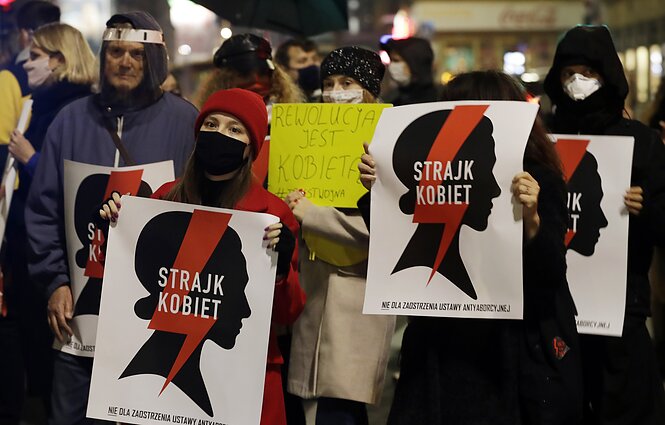
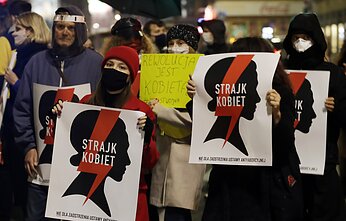
The conference in Lithuania is also worrying due to the events in Poland, where the courts have effectively banned all legal abortions, according to Šakalienė.
"The decisions made in Poland could most likely be seen as breaches of Europe's Convention on Human Rights [...] as it bans torture and inhumane treatment," she added.
The president’s office said that the conference took place in the Presidential Palace because of the importance of the issue. The event sought to identify what kinds of help women and their families needed in the event of crisis pregnancy.
“The assistance system for women experiencing crisis pregnancies in our country is underdeveloped. […] The conference sought to stimulate discussions and find possible solutions to the problem,” the president’s office said.
“Discussions of economic, social, and psychological assistance for women experiencing crisis pregnancies do not in any way imply restricting women’s rights or reviewing the legal framework for abortion,” it added.
According to the Free Society Institute, the definition of crisis pregnancies it used did not include cases where a woman firmly made up her mind and planned to terminate the pregnancy.
It added that the conference featured a wide range of speakers from the Lithuanian University of Health Sciences (LSMU), Vytautas Magnus University (VDU) and Vilnius University (VU), the Lithuanian Centre for Social Research, and other institutions and organisations.
According to the organiser, the accusations of the conference’s one-sidedness had no merit.
Read more: What's next in Lithuania's stalling fight against gender violence? – opinion

Newsletter
Every Friday morning.