












Medics who trained abroad face near-insurmountable barriers to entering specialist medical training, whilst young doctors who want to invest and work in their own country are finding themselves shut out of Lithuania's state health insurance system.
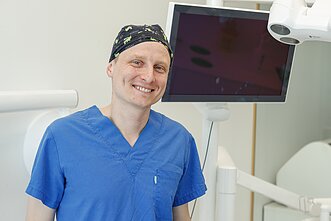
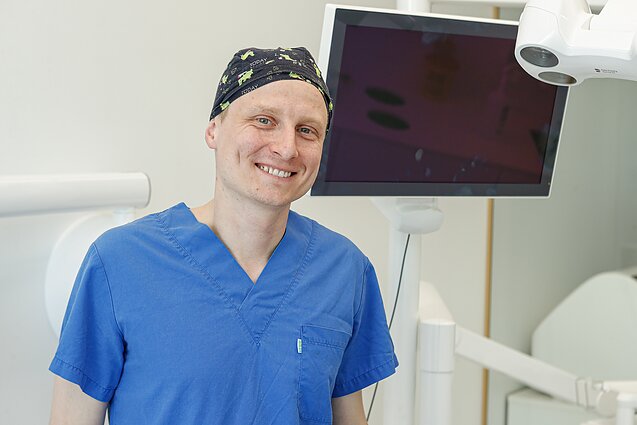
Povilas Ancevičius holds a degree from the University of Freiburg, one of Germany's most prestigious institutions. Yet when he tried to enter medical residency back in Lithuania, he was rejected – not because of his clinical record, but because of differences in curricula.
His German dental programme did not include mathematics, which counts towards Lithuanian residency admissions scores. A zero in that subject placed him at the bottom of the rankings.
He applied for medical residency in Lithuania several times. It never worked.
"It sounds absurd, but this has been the main reason several colleagues of mine have not returned to Lithuania," he said. Doctors who begin residency abroad, he adds, tend to stay there – drawn by better pay and working conditions.
The Lithuanian government has publicly committed to luring young professionals back home, yet the admissions rules for residency appear not to have been designed with returning graduates in mind at all.
Seimas health committee member Jurgita Sejonienė, who holds a medical degree herself, said she was shocked when Ancevičius raised the issue with her.
"We are accrediting doctors and nurses from third countries, while creating barriers for our own people to return, all while the government publicly states it wants to bring young Lithuanians home from abroad," she said.

Sejonienė promised to raise the matter with both the health ministry and the government.
Shut out twice over
For Ancevičius, the residency barrier was not his only obstacle. Having decided to remain in Lithuania regardless and open a clinic in his home city of Šiauliai, he encountered a second problem – one shared by young doctors across the country.
Lithuania's National Health Insurance Fund - VLK, controls which clinics may treat patients using state funds. Without a VLK contract, a clinic cannot accept the state dental allowance that Lithuanian pensioners receive, currently €670 every three years.
The Fund issues contracts based on its assessment of local need; if it judges that existing providers are sufficient, no new contracts are granted.
Ancevičius invested around €560,000 in his new clinic, drawing on employment agency subsidies, a national bank startup scheme, municipal support, and EU structural funds. He acquired equipment he says is not available anywhere else in Lithuania. The VLK still would not sign a contract with him.
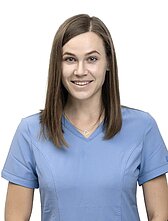
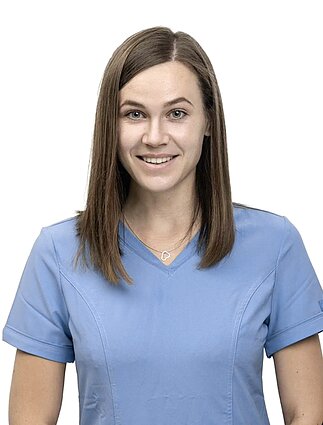
Dentist Goda Sutkutė, who trained at the Lithuanian University of Health Sciences and is opening her own clinic in Vilnius this summer, faces the same situation.
She has worked in the field for seven years and currently sees around ten state-insured patients a month through her mother's practice. She says she could provide a full set of dentures for both jaws within the €670 state allowance – something larger clinics, weighed down by administrative overheads, typically cannot manage. At bigger establishments, the same treatment can cost patients up to €2,000 out of pocket.
"It is very strange," she said, "because the ones who suffer most are the patients. They end up significantly overpaying for treatments that are covered by state funds."
A closed circle
Both doctors argue the effect of the system is to protect established clinics from competition, regardless of whether newer entrants could offer patients better value or quality.
Sutkutė notes that workarounds exist – arrangements between clinics to effectively trade access to VLK-funded patients – but questions why such informal systems should be necessary.
"The amount of money doesn't change, the number of pensioners receiving it doesn't change, so it's strange that it can only be spent within a closed circle," she said.

Ancevičius draws a contrast with Germany, where similar restrictions on new clinic contracts exist in cities, but are deployed explicitly to encourage provision in underserved areas. In Lithuania, he says, new contracts are unavailable in cities and smaller regional centres alike.
The VLK, for its part, denies that the system amounts to a restriction on competition.
Vita Lyskoitienė, a spokeswoman told LRT.lt that no formal prohibition exists on new providers signing contracts, and that new entrants are admitted when assessed need outstrips existing supply.
Asked whether the system might prevent pensioners from accessing state-of-the-art equipment available only at newer, uncontracted clinics – and whether that amounted to a denial of the best possible care for treatments like dental prosthetics at the lowest price – Lyskoitienė did not address the quality argument directly. She said only that roughly 1,150 contracts for dental prosthetics are already in place nationwide, suggesting that patients have enough options regardless.

Lyskoitienė also confirmed that the right to provide state-funded care is tied to a specific legal entity and cannot be transferred through purchase or merger – closing off one potential route for new entrants to acquire market access.
Meanwhile, Sejonienė said she does not find the current arrangements defensible. "It does not seem right to me that state money is distributed this way. It is absurd if a person cannot choose which clinic to be treated at," she said
She added that the pattern reflects a broader tendency: "Everyone can see that private medicine is being ignored, with the exception of a couple of very large networks."

Newsletter
Every Friday morning.