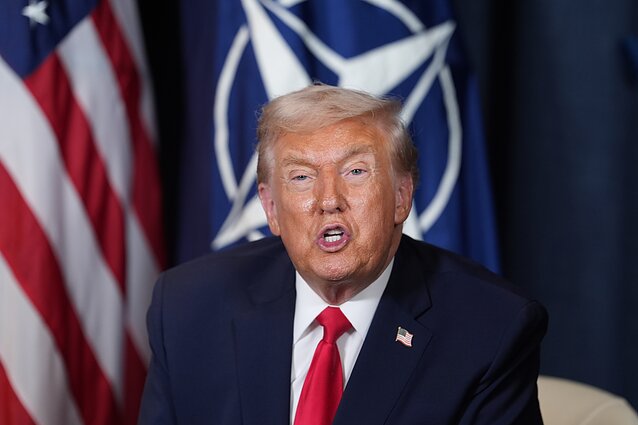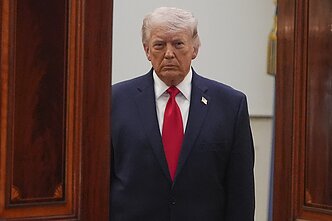












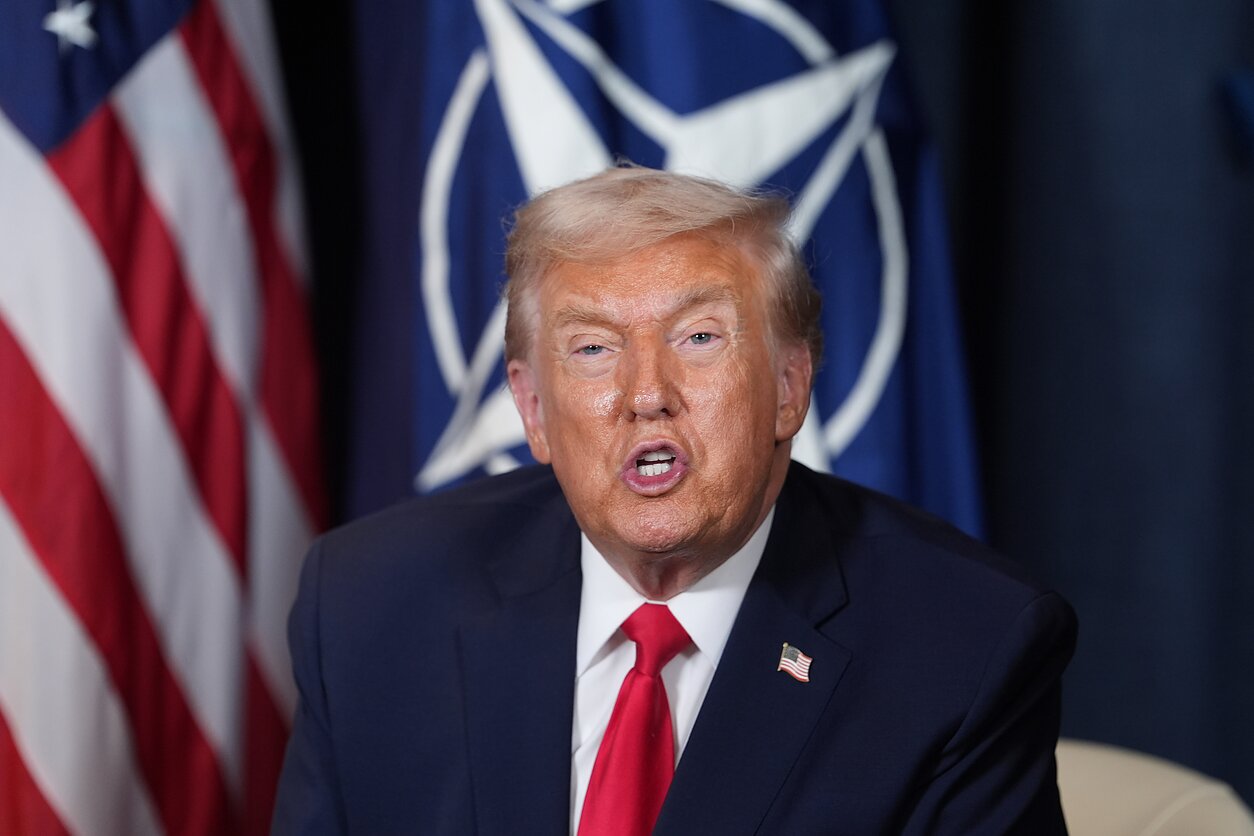
After years of attacking NATO's effectiveness, assailing its members for failing to spend enough on their own defence, and, most recently, raging at their refusal to back Washington in its war with Iran, Donald Trump now appears to be on the verge of doing what once seemed unthinkable: withdrawing the United States from NATO.
A law passed by Congress in 2023, and spearheaded in part by Marco Rubio, now the Secretary of State, bars the president from doing so without congressional approval. But that might not stop Trump from trying to pull the U.S. out of the 77-year-old alliance.
Main questions
- What is NATO? A 32-member defensive alliance built around Article 5 – the principle that an attack on one ally is an attack on all.
- Why is Trump considering withdrawal from NATO? He was angered by allies' refusal to back the US in its war with Iran, though in the past such threats have proved an effective lever for pressuring member states.
- Can the US president withdraw the counrtry from NATO? Congress passed a law requiring a two-thirds Senate majority for any withdrawal – but Trump could attempt to sidestep it by invoking executive authority.
- What would US withdrawal mean for Lithuania? Without America's nuclear umbrella and military might – which dwarfs that of all other members combined – Lithuania and the Baltic states would be left significantly more exposed.
What is NATO?
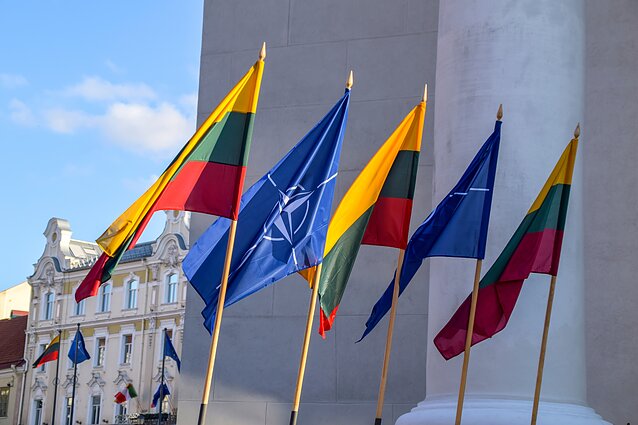
The North Atlantic Treaty Organisation (NATO) is a defensive alliance designed to keep the U.S., Canada and Europe safe in the wake of World War II. Formed in 1949, the alliance initially included 12 countries, but has swelled to 32 members. The latest countries to join NATO include Finland in 2023 and Sweden in 2024.
NATO's aim is to "guarantee the freedom and security of its members through political and military means." At its core is Article 5, which states that an attack on one NATO ally will be considered an attack on all.
Lithuania joined NATO on March 29, 2004.
Why is Trump considering withdrawal from NATO?
Trump’s animosity towards NATO goes as far back as 2017, when he dismissed the body as “obsolete” and accused its members, especially European countries, of “ripping off” the US by failing to spend adequately on their defence budgets.
The recent trigger for Trump's anger has been his allies' refusal to back the US in its war against Iran – with many members denying Washington access to their airspace or airfields, and others rebuffing calls to send ships to reopen the Strait of Hormuz. Yet nothing in NATO's founding charter obliges its members to come to America's aid in this instance: Iran did not attack the US, and Washington did not consult its allies before launching the war.
Asked by Britain's Telegraph newspaper on Wednesday whether he'd reconsider US membership in NATO after the Iran war, Trump said it's "beyond reconsideration," implying that his mind is made up, while calling the defence alliance that the US helped forge a "paper tiger."
He has also repeatedly said that NATO would not protect the US, in the same way the US shields Europe – an assertion undermined by the alliance's steadfast support for the two-decade-long war in Afghanistan.
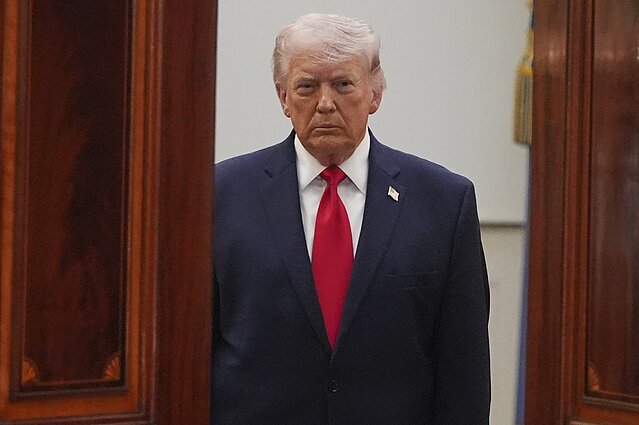
Whether Trump's remarks reflect a genuine intention or are simply part of a pressure campaign against his allies remains unclear. In the past, threats to withdraw from NATO have proved an effective tool for bending allies to his will.
While running for his second term in 2024, Trump put intense pressure on NATO members to increase their defence spending, going so far as to threaten to tell Russia to do “whatever the hell they want” to any European country that did not meet his defence spending demands. At the time, he pledged not to withdraw the US from the alliance if other countries paid their fair share.
Ultimately, the pressure led member countries to agree to increase their defence spending target to 5% of GDP by 2025. A decade ago, some countries were failing to meet even a target figure of 2% of GDP.
Can the US president withdraw the country from NATO?
Article 13 of NATO's founding treaty allows any member state to withdraw from the alliance one year after notifying the US government of its intention to do so. However, Congress passed legislation in 2023 barring the president from doing so unilaterally – without the approval of the legislature – amid concern that Trump might attempt precisely that if he returned to office.
Senate Minority (democrat) Leader Chuck Schumer said in a post on X on Wednesday that the Senate "will not vote to leave NATO and abandon our allies just because Trump is upset they wouldn't go along with his reckless war of choice." A number of Republican senators are also expected to oppose any such move.
But some experts argue that the president could cite executive authority to sidestep the law, which would almost certainly prompt legal challenges.
Meanwhile, even without an official exit, the president's increasingly hostile stance toward the alliance may leave it weakened. Already, the US has taken on a smaller role in military exercises, and the alliance could lose its deterrence power completely if the US appears unwilling to honour its Article 5 obligations or continue to extend its nuclear deterrence to member countries.
What would US withdrawal from NATO mean for Lithuania?
Despite Trump's dismissal of NATO as a "paper tiger", the alliance's support for Ukraine – through military assistance from both the US and European members – has played a crucial role in grinding down Russia's invasion, now in its fifth year. In doing so, it has helped deter Moscow from moving against actual NATO members, including Lithuania.
Russia’s President Vladimir Putin has never concealed his desire to dismantle NATO or sever the alliance from the US. Shortly before launching his full-scale invasion of Ukraine, he demanded that NATO halt its expansion and roll back its military presence to its 1997 borders.
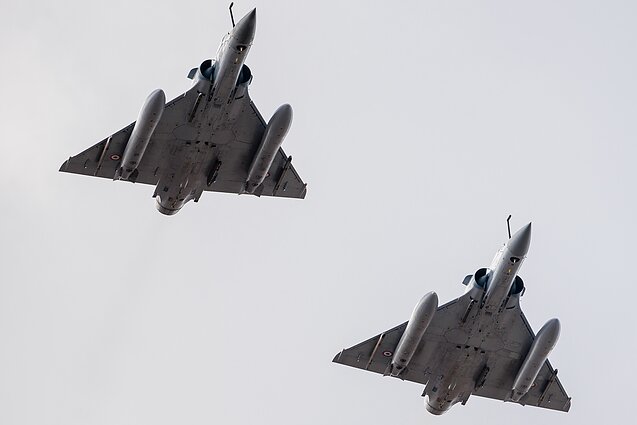
Without the US, NATO would still include countries with considerable military strength – among them Turkey, Poland and Germany – as well as nuclear-armed members in Britain and France. But America's nuclear arsenal and conventional military power dwarf those of all other members combined, making US deterrence the cornerstone of European security.

Newsletter
Every Friday morning.