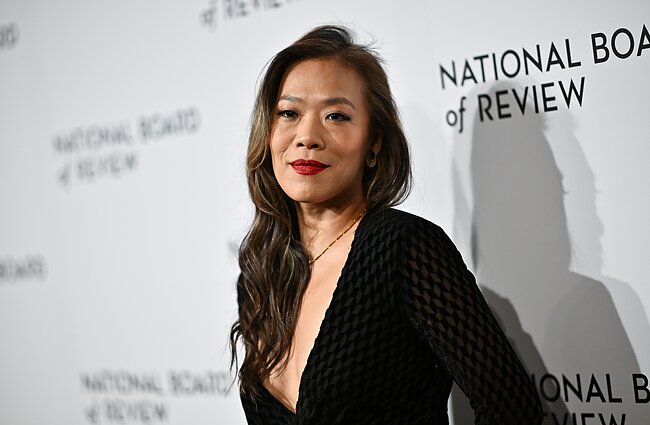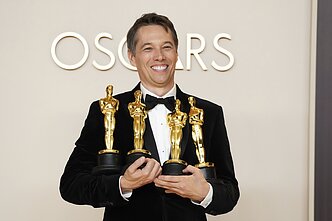











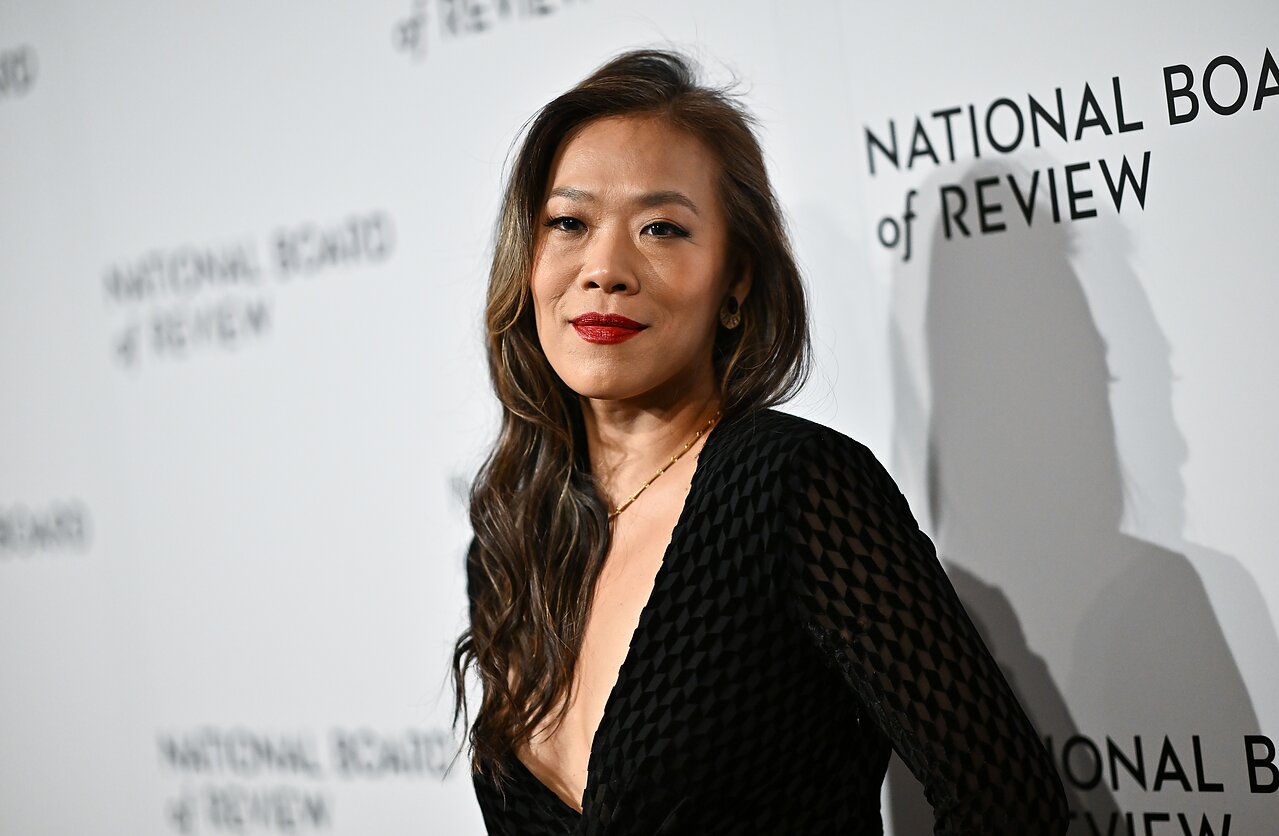
“It’s surprising to me that it’s that political. Wow,” says Taiwanese director Shih-Ching Tsou upon hearing that Anora, the 2024 film by her creative partner Sean Baker, was not screened in Lithuania. It came as news to her that the film awarded five Oscars, including best picture, was boycotted by Lithuanian distributors because it portrayed Russian characters and features Russia-based actors.
Shih-Ching Tsou came to Lithuania to present her first original project – the highly personal film Left-Handed Girl.
Once, when she was a young girl, her grandfather told her: don’t use your left hand, because it is the devil’s hand. This superstition left a deep mark on her memory and, many years later, inspired a film. Left-Handed Girl tells the story of three women – a mother and her two daughters – who move to Taipei. The younger daughter hears the same phrase from her grandfather and begins to believe that her body does bad things against her own will.
Left-Handed Girl had its world premiere in Cannes, while its Lithuanian premiere was at the Vilnius International Film Festival (Kino Pavasaris) and continues to screen in cinemas across the country.
In an interview for LRT RADIO, the director talks about her creative partnership with Sean Baker and what she put into her first solo feature film.
Left-Handed Girl could have been made about 25 years ago. You had the initial idea in the early 2000s and even went to Taiwan with Sean Baker. But because of fundamental issues, it was shelved. Let’s speculate a bit – what if this movie had been made 25 years ago? How different would it be?
Oh my God, it would be so different. This film was shot on an iPhone – 25 years ago there was no iPhone, so the look would be completely different. On top of that, our young actress wouldn’t even have been born yet, and the actress who plays the older sister would probably have been about five years old.
I think the whole film would be entirely different. Different cast, different camera. And also, I’ve become a mother. I have a ten-year-old daughter, and she inspired me a lot during the creative process. So yes, it would be a completely different film.
What is your daughter’s impression of the movie? Has she seen it?
Well, she was on set, and she’s also in the film. She plays the little girl’s friend. During the editing process, she saw me working every day for about two years, so she definitely saw parts of it.
But she’s still underage, and the film is rated R in both the US and Taiwan, so she couldn’t watch it in theatres. Still, she’s seen bits and pieces here and there, and I think she really likes it.
So becoming a mother had a major influence on the whole process. What is the importance of motherhood in the film, and specifically in Taiwan? Did you have particular ideas you wanted to explore?
The film is largely inspired by my own memories of growing up in Taiwan, especially my relationship with my mother and the dynamics between mothers and daughters. That had a huge impact on me.
Now that I have a daughter, I try very consciously not to repeat the same patterns, because it’s a different generation and a different society. My daughter was also born in New York, so I try to give her more freedom. That perspective really helped me while directing the film, especially in portraying the mother-daughter relationship.
What does it mean to be a mother in Taiwanese society? Maybe you could compare it to your experience raising your daughter in New York.
In Taiwan, family dynamics are quite different. People express love differently – they don’t usually say “I love you”. It’s more of a tough love. They show care through criticism, by pushing you to do better. So it’s a different kind of parenting, a different way of expressing love. With my daughter, I tell her “I love you” all the time. It’s more gentle, more tender, and I respect her individuality more.
In Taiwan, that wasn’t really the case, at least in my experience growing up. You can really feel the difference between Eastern and Western cultures in how families treat each other and what they expect.
Your grandfather’s words also inspired this film. Is he still alive?
No, he passed away about 20-25 years ago.
Tell me about being a left-handed girl during your childhood. Were you discouraged from using your left hand? What was your experience?
I was born left-handed, but I was “corrected” very early, in kindergarten. When my grandfather later told me that the left hand is the devil’s hand, I was already used to using my right hand.
But there were small things that hadn’t been corrected, like how I held a knife or scissors. As a child, you don’t use those tools much, so I was still using them with my left hand. When he said that, I realised I might actually be left-handed.
I asked my mother about it, and she didn’t even remember. That stayed with me for a long time, until I went to New York for my master’s degree. Then I told Sean about this memory, and he thought it would make a great idea for a script. That’s how everything started.
Have you ever thought about what your grandfather would think of the film?
I don’t know what he would think. But something interesting happened with Nina, who plays I-Jing. She was also born left-handed and was “corrected”.
So it’s still happening?
Yes. I didn’t know that when I cast her. But on the first day on set, her mother told me that Nina was left-handed, and her grandmother didn’t like it, so she insisted that Nina use her right hand. During the film, we actually had to train her to use her left hand again. After the film was made, her grandmother found out about it and said, “How can you make a movie like that?” But eventually, she gave up trying to correct her. So Nina actually rediscovered her left hand through making this film.
There’s a moment in the film during a birthday party where someone mentions that one girl could maybe perform in China. Was that a deliberate reference to Taiwan–China relations?
Yes, definitely. At the time, many people from Taiwan were going to China for work. This was before the pandemic, when relations were relatively stable, and people could travel back and forth. A lot of people went there because there were more job opportunities and better pay. It’s very different now – the situation has changed a lot. But when we were writing the film, that movement was still very common.
You mentioned that the film was shot on iPhones, and you’d also worked on another iPhone-shot film before. What cinematic potential do you see in using this technology?
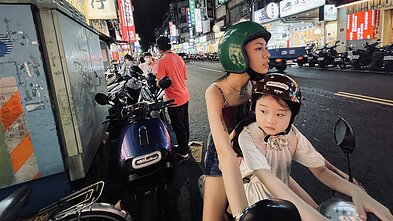
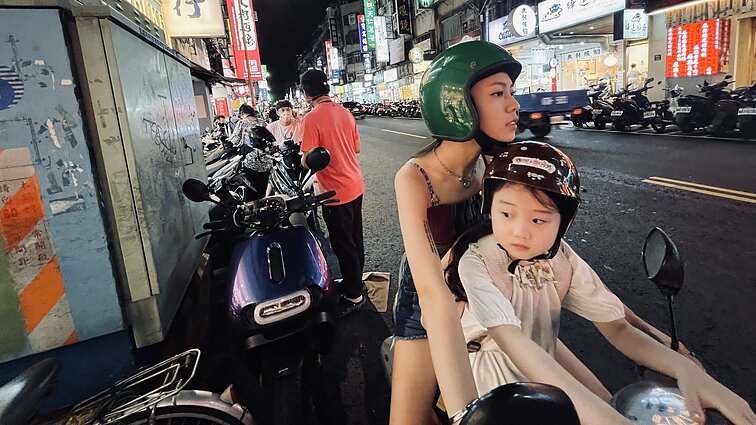
Before making Left-Handed Girl, I went back to Taiwan and spoke with several producers because I wanted to shoot in a real night market. But everyone told me it wasn’t possible, they suggested building a set and hiring extras.
I knew that wasn’t the way I wanted to capture the night market. Based on my experience shooting Tangerine on an iPhone, I knew it was a great tool for capturing realism, especially in street environments.
With an iPhone, you can shoot anywhere, even without lights. It allowed us to get down to the little girl’s level and follow her through a busy night market, creating an immersive feeling for the audience.
We could also shoot in very narrow spaces where big cameras wouldn’t work. And because the phone is so small, the actors don’t feel intimidated, they don’t feel like they’re performing in front of a big camera. That gives them more freedom.
We’ve mentioned Sean Baker a few times. Your creative partnership is often discussed, why do you think it works? What do you look for in a creative partner?
I never went to film school. When I met him in an editing class, he had already graduated and was editing his first feature. We connected because we loved the same kind of filmmaking – especially Dogme 95 films, with their focus on realism. We both wanted to make films in that style.
Left-Handed Girl was actually the first idea we had together, but we couldn’t find funding at the time. So instead we co-directed Take Out in 2003. That film was very important, we developed our approach to shooting in real locations, doing street casting, and working closely with communities to incorporate their stories into the script. I think our shared sensibility is what makes the partnership work so well.
Last year was a big year for him, especially at the Oscars with Anora. But the film wasn’t screened in our country due to the involvement of Russian actors, as a gesture of solidarity with Ukraine. Do you have any thoughts on that?
That’s interesting, I didn’t know that. I wasn’t aware of the situation. It’s surprising to me that it’s that political. Wow.

Newsletter
Every Friday morning.