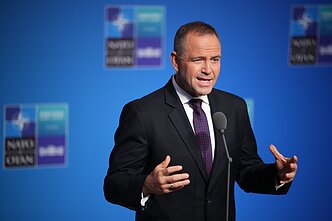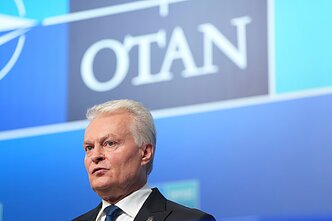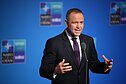
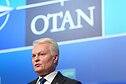









Lithuanian President Gitanas Nausėda said Thursday that the European Union is maintaining a firm and independent sanctions policy on Belarus, despite recent US moves to ease some restrictions.
“The United States may pursue its own policy toward Russia and Belarus, but the European Union’s policy is very clear and based on the principle that both states are responsible for what is happening in Ukraine,” Nausėda told reporters.
He noted that the EU recently extended sanctions against Belarus for another 12 months and has no intention of reconsidering them during that period.
“There are no possibilities and no political will to review sanctions on Belarus. The lifting of US sanctions is one thing, while EU sanctions policy is on a different track,” he said.
His remarks came after Belarus released 250 political prisoners following talks with Washington, including 15 who were brought to Lithuania. The step followed a meeting between Belarusian leader Alexander Lukashenko and US envoy John Coale.
In exchange, the United States lifted sanctions on key Belarusian entities, including potash producer Belaruskali, as well as Belinvestbank, the Development Bank and the Finance Ministry.
Nausėda said he had raised concerns directly with Coale, warning that such exchanges could create a harmful incentive structure for Minsk.
“This creates the wrong motivational mechanism – releasing some prisoners, detaining others, and expecting concessions again during the next visit,” he said.
He stressed that while Lithuania and the EU will continue to support the release of political prisoners on humanitarian grounds, sanctions policy should remain consistent.
“We will always support the release of people because it is the right thing to do from a humanitarian perspective,” Nausėda said, adding that EU and US policies should not be conflated.
The United States had already eased some sanctions on Belaruskali in December after Minsk released 123 detainees, prompting speculation that Washington could push the EU and Lithuania to resume transit of Belarusian potash through Klaipėda.
Lithuania halted the transit of Belaruskali products through its territory and the port of Klaipėda in 2022, citing US sanctions and national security concerns. The EU later imposed its own sanctions on Belarusian fertilisers, which were extended for another year in February.

Newsletter
Every Friday morning.