













Pilots have reported more than 300 cases of GPS signal interference in Lithuanian airspace since the beginning of the year, as authorities say satellite navigation jamming linked to Russia continues in the region.
The Communications Regulatory Authority of Lithuania said pilots filed 302 reports of GPS interference with air navigation service provider Oro Navigacija between January and early March.
The reports come after a recently published national threat assessment warned about Russia’s active use of jamming systems in the Kaliningrad Oblast.
“The situation remains essentially unchanged – GNSS signal jamming is constantly recorded,” said Darius Kuliešius, deputy chairman of the regulator’s council.
“Reports of interference are periodically received, and their impact on both aviation and shipping is observed,” he said.
According to Kuliešius, the interference temporarily intensified from late December 2025 to mid-January 2026, when the number of incidents involving misleading navigation signals for aircraft doubled. He said the level of interference has since returned to roughly the same level recorded in December.
“The intensity of interference fluctuates – the greatest impact is usually recorded at night,” he added.
Data from Oro Navigacija show pilots reported 169 GPS jamming incidents in January, 118 in February and 15 during the first five days of March. Last year, pilots reported 236 incidents in September, 209 in October, 128 in November and 122 in December.
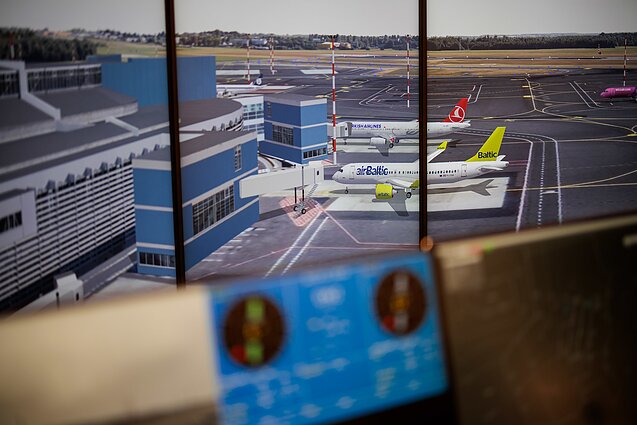
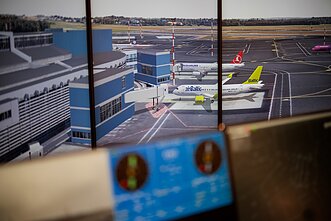
Ingrida Daugirdė, a representative of Oro Navigacija, said aircraft can still rely on ground-based navigation systems that allow safe takeoffs, flights and landings.
“Pilots can rely on reliable signals sent by ground-based navigation equipment, which allows aircraft to take off, fly and land accurately and safely,” she said, noting that the real number of disruptions could be higher because authorities record only incidents reported by pilots.
The problem intensified last year. In June alone, Oro Navigacija registered a record 1,022 pilot reports of disrupted communication, nearly twice as many as in May and about 1.5 times more than in April.
Kuliešius said the same types of signal jamming and spoofing that have been observed across the Baltic region for several years continue to occur.
According to the regulator, more than 1,000 aircraft on average were affected by signal interference each month in Lithuanian airspace during the first half of 2025. The number decreased by about 15% in the second half of the year.
Kuliešius said jamming systems deployed in Kaliningrad can affect aircraft at distances exceeding 400 kilometres, meaning many disruptions occur over the territories of Latvia or Poland before planes enter Lithuanian airspace.
He added that an expansion of jamming infrastructure in Kaliningrad led to a sharp rise in spoofing incidents early last year, increasing from several hundred cases per month to more than 3,000 between June and August.
Authorities estimate that more than 30 different GNSS jamming sources may have been operating in Kaliningrad and the Baltic Sea during 2025.
The recently published national threat assessment said Russia’s full-scale war against Ukraine has contributed to an increase in satellite communication jamming and spoofing.
In the Kaliningrad region, Russian electronic warfare systems are used to disrupt satellite signals at varying distances, durations and intensities, primarily to protect Russian military facilities and critical infrastructure.

Newsletter
Every Friday morning.