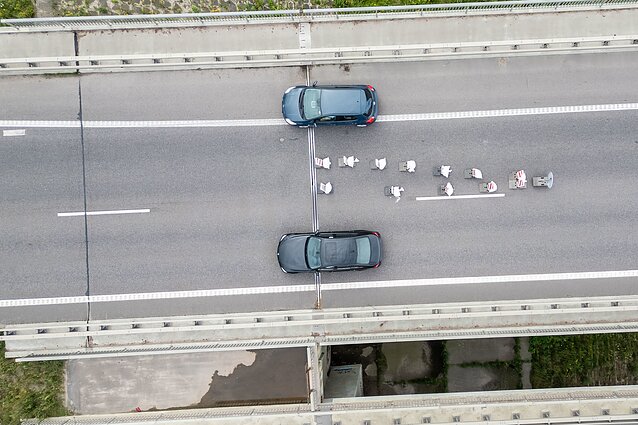













People in Lithuania have noticed construction work taking place almost simultaneously on bridges close to the Belarusian border. The Lithuanian Armed Forces confirmed to LRT.lt that this is part of fortification measures agreed last July.
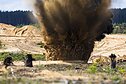
The military told LRT that the work is part of preparations for the Baltic defence line along the borders with Russia and Belarus. Under the plan, bridges are being fitted with “engineering structures for attaching explosive materials”.
“Bridges and roads are selected based on the location of natural obstacles and their strategic importance in Lithuania’s defence system,” the military told LRT.lt.
The armed forces said it had already established several dozen sites near the border to store anti-tank and other obstacles, while work is under way to plant trees for protection on key roads, as well as deepen irrigation ditches that would act as trenches and additional anti-tank barriers.
Further reading

Countering ‘war hysteria’
In the event of an armed conflict, the bridges close to the border would be demolished more easily, helping block the movement of military forces. Finland, which shares a 1,340 km border with Russia, has been preparing for this for decades.
Last year, Finland’s president told the Financial Times that there should be more action and less talk.
“I’m a little bit worried about this rather belligerent talk about Russia going to test [NATO’s] Article 5, and that Europe is next in line. We should prepare for that, but it’s highly unlikely,” President Alexander Stubb said last April.
“What I call on all European states to do is to become more Finnish. In other words, more prepared. You have to prepare for the worst in order to avoid it,” he said.
In Lithuania, populist politicians and members of the public that supporter them previously accused officials of “warmongering” and criticised rhetoric of preparing for war.
In October, Estonia’s armed forces commander, Lieutenant General Andrus Merilo, also spoke about “war hysteria”.
“Right now, I feel this war hysteria is seriously counterproductive. People tend to fear what they don't understand and easily fall into panic. But when someone is prepared for an event, they behave much more rationally. We still have work to do,” he told the public broadcaster ERR.
Further reading
Lithuanian officials are also trying to find ways to show that defensive measures are being taken, while avoiding causing panic.
“In peacetime, to say that border municipalities are unsafe, when we have NATO and partner nations’ commitments, would be madness,” Donatas Gurevičius, a representative of the Fire and Rescue Department (PAGD) working on civil protection, previously told LRT.lt.
“It would be irresponsible to unsettle people and talk about [insecurity at the border], but the reality is this – each of us has to find a way to approach this very complex subject of war, because that is the reality,” he added.
Preparations for conflict must be seen in society as a regular, long-term activity “like all other aspects of life”, according to Major Gintautas Ciunis, head of the Media Operations Centre at the Lithuanian Armed Forces Strategic Communications Department.
“We observe that the greatest positive response comes not from “good news” (for example, “there is no threat, we are all safe”), but from a consistent position and the timely presentation of real facts, together with an assessment of what those facts mean,” he said in a written comment to LRT.lt.
“The Lithuanian Armed Forces have always communicated the same position – first, that in the long term Russia’s threat remains constant. This is one of the downsides the Lithuanian state has lived with for hundreds of years and, most likely, will continue to live with.
Second, because of that conclusion, constant preparedness is essential, and the more intensive it is, the greater the likelihood of achieving effective deterrence,” Ciunis added.

Newsletter
Every Friday morning.