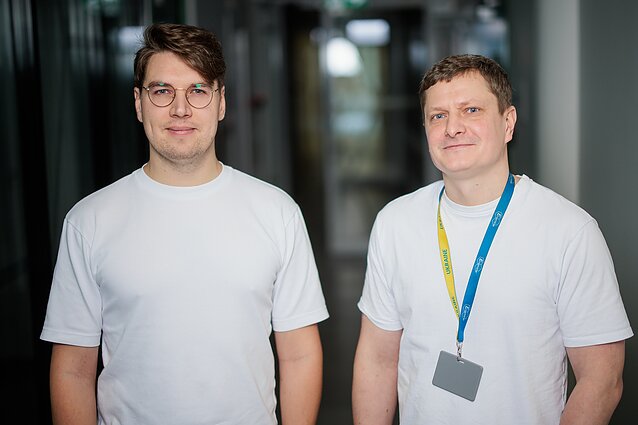













Though it is ony five years old, the Lithuanian life sciences start-up Delta Biosciences is already carrying out projects that others can only dream of. The company is currently preparing for a unique mission under which medicines developed in Lithuania for astronauts will be sent into Earth orbit for three years.
The company’s partners include space agencies such as NASA, the European Space Agency (ESA) and the UK Space Agency, with which Delta Biosciences signed a cooperation agreement in September.
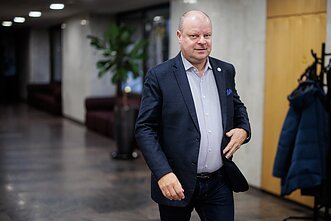
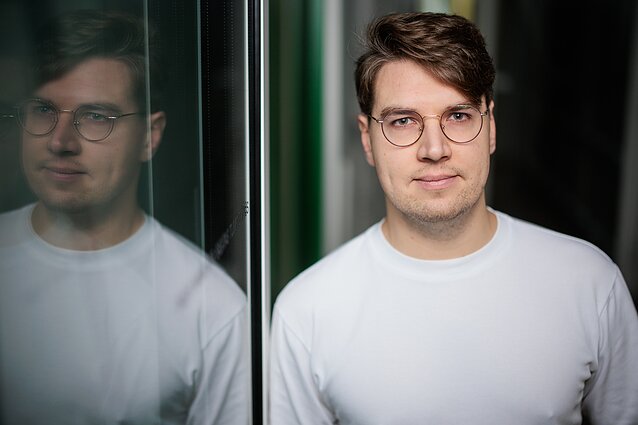
Company co-founder Dominykas Milašius told LRT.lt that the stability, safety and effectiveness of medicines in space is a major problem that is currently being addressed by very few scientific institutes and companies.
“At the moment, we are probably among around 20 active research groups worldwide. And I would say we are among 10 to 20 companies working on life sciences testing in space,” says Milašius.
Astronauts exposed to intense radiation
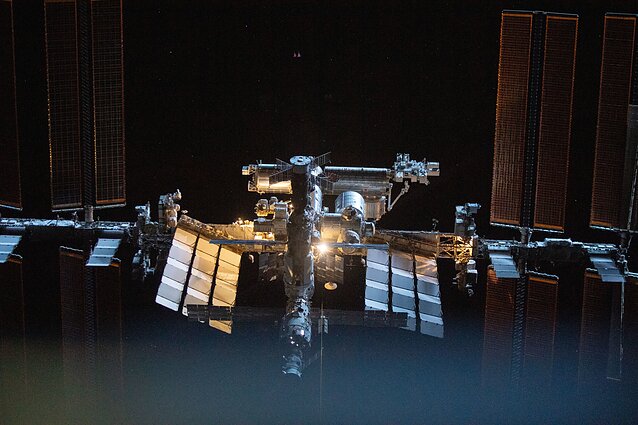
The International Space Station (ISS), a joint project of NASA, Roscosmos, ESA, the Japanese and Canadian space agencies, orbits the Earth at an altitude of 370–460 kilometres.

During a six-month mission, astronauts aboard the ISS are exposed to a cumulative radiation dose around 250 times higher than what is normally experienced on Earth, at sea level.
This is roughly equivalent to the dose received from more than 10 CT scans, astrophysicist Dr Vidas Dobrovolskas told LRT.lt. Such intense radiation increases the risk of damaging the DNA, which could lead to mutations and the development of cancer. It also affects the cardiovascular and nervous systems.
Still, the ISS lies within the Earth’s magnetic field, which shields astronauts from a large proportion of radiation. This protection will no longer apply when humans begin venturing further from Earth towards the Moon, Mars and beyond.
One of the key tasks for scientists preparing for long-duration space missions is therefore to protect astronauts from extremely high radiation levels.
That's where Delta Biosciences comes in – it is tackling the challenge by developing medicines designed to protect astronauts from radiation.
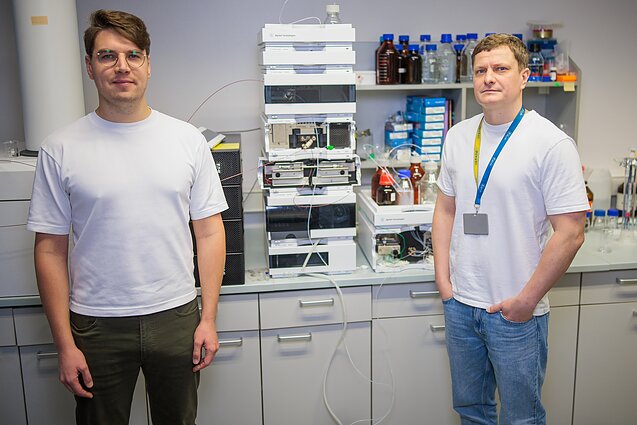
Milašius says the start-up is working with radiation experts, including the prestigious German radiation institute GSI Helmholtz Centre for Heavy Ion Research. Next year, together with GSI, they plan to carry out several experiments to test the stability, safety and effectiveness of radiation-protective medicines developed in Lithuania for astronauts.
Medicines degrade in space
Intense radiation in space affects not only astronauts, but also the medicines they use.
On average, astronauts and cosmonauts living aboard the ISS receive resupply deliveries around eight times a year, including food, equipment for scientific experiments and other items – including medical kits.
“These kits contain around 100 molecules that we can all buy at a pharmacy. They include emergency medicines, various painkillers and sometimes antibiotics,” Milašius says.

However, medicines degrade more quickly in space due to increased radiation.
“Over the past three to five years, scientists have discovered that adrenaline – epinephrine-based drugs – have a very short shelf life in space and stop working. According to scientific publications, ibuprofen becomes toxic after more than 100 or a couple of hundred days of exposure to space radiation. Even simple antibiotics and other medicines become very unstable – sometimes they work, sometimes they do not,” he explains.
Delta Biosciences is attempting to improve medicines used by astronauts. One way of doing this is by supplementing the active pharmaceutical ingredient with additional compounds that extend the drug’s shelf life.
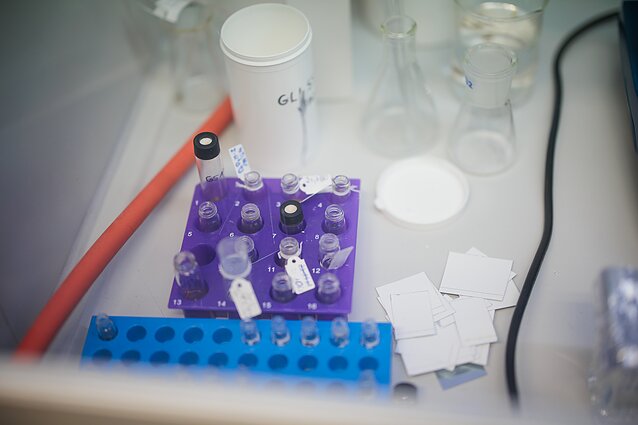
“When we buy an ibuprofen tablet, it contains several substances, one of which is the active pharmaceutical ingredient – ibuprofen – and several others that, for example, stabilise the ibuprofen, compress it into tablet form, make it white and so on. We are working with those additives, known as excipients, to extend protection of the active ingredient so that it remains stable for longer,” Milašius explains.

However, extending the stability of a medicine is not limited to adding chemical substances. According to Milašius, the company is also changing the physical form of some medicines.
“Because radiation affects liquid chemical compounds more quickly, we convert certain medicines into, for example, lyophilised or powdered forms, which also helps extend their lifespan,” he says.
A unique mission next year
In 2023, the company signed a cooperation agreement with the European Space Agency and next year will send 100 different chemical molecules to the ISS for experiments.
These will include newly formulated medicines developed by the company, including lyophilised versions, drugs enhanced with shelf-life-extending compounds, and radiation-protective medicines that are already commercially available.
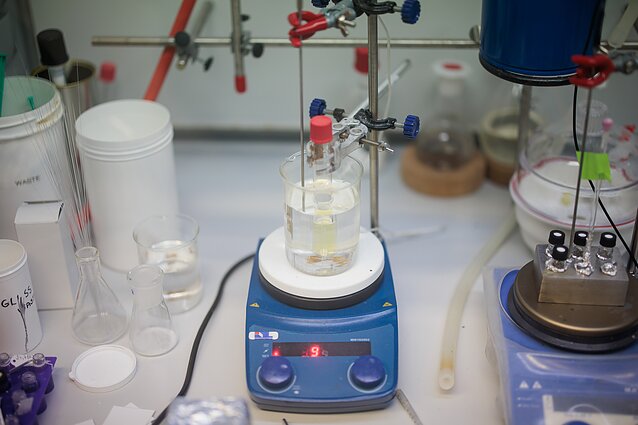
Furthermore, to understand how medicines degrade in space, standard emergency medicines (such as ibuprofen and epinephrine) and other substances found in the ISS medical kit will also be sent, along with vitamins and nutrients included in astronaut protocols.
The degradation of all these chemical substances – the rate at which they deteriorate due to space radiation – will be monitored over a three-year period.
“We seek to confirm that we have certain antidotes to radiation-induced degradation and that we can extend the lifespan of medicines, molecules, food, vitamins and other chemical categories,” says Milašius.
British anti-ageing medicines to be tested as well
Just a year after signing their agreement with ESA, Delta Biosciences became the first company in the European Union to be invited to NASA’s Space-H accelerator programme.
Founded in 2012, Space-H focuses on new autonomous health and medical systems needed for missions to the Moon and Mars, as well as for commercial space travellers spending longer periods in low Earth orbit.
Alongside the Lithuanian company, 11 international space health firms were selected, including the British firm LinkGevity, which is developing a drug to inhibit uncontrolled cell death (necrosis) and aims to launch it as the world’s first anti-ageing medicine.
In September 2025, Delta Biosciences, LinkGevity and the UK Space Agency signed a cooperation agreement to jointly implement the project Astro-SANITAS (Stable Anti-Necrotic for In-space Tissue Augmentation and Survival).
There is growing evidence that biological organisms age faster in space than on Earth. This is relevant not only for astronauts preparing for long missions, but also for testing medicines in living organisms in Earth orbit.
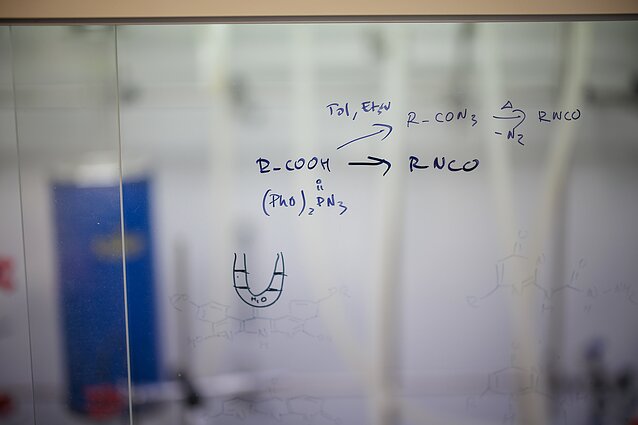
Accelerated ageing allows researchers to see results more quickly in biological models grown in space – such as cells, tiny worms (Caenorhabditis elegans), or even mice – and to grow organoids for transplantation on Earth more rapidly. Organoids are simplified, miniature models of real organs grown in the laboratory.
“It is believed that organoids would not only grow faster in space, but also develop more refined three-dimensional structures – in other words, be more effective – because Earth’s gravity compresses their growth into a more two-dimensional form. Such improved models could help address transplant challenges for patients on Earth, particularly issues of availability and compatibility,” Milašius explains.
However, organoids are highly sensitive even on Earth. To protect them and extend their lifespan in space for future drug research, the Lithuanians partnered with British researchers developing anti-ageing medicines. The first step is to test whether these drugs function in space, the main goal of the Astro-SANITAS project.

In addition to testing their own radiation-protective medicines and British anti-ageing drugs during a three-year mission starting next year, the Lithuanians have agreements with other international companies that have likewise entrusted them to test their chemical compounds in space.
“While preparing for the European Space Agency mission, we realised we had developed a very well-designed payload of experimental equipment sent into space. We also saw a demand in the biotechnology and pharmaceutical industries to send other companies’ medicines or chemical compounds into orbit alongside our ESA mission, to observe how they perform, test their stability and safety, and in future missions, their effectiveness,” adds Milašius.
“This is the basis of our collaboration with LinkGevity and several other companies worldwide, where we act as their Payload Integration Manager and mission partner to design the experiment, send their compounds into space, and use the data collected there to further improve their formulations on Earth.”
Benefits for use on Earth
Milašius claims that results from the space mission could also be valuable on Earth. By analysing how different medicines degrade and applying the company’s radiation-protective molecules, it may be possible to develop more effective drugs for cancer patients undergoing radiotherapy, as well as for soldiers and professions working in extreme conditions.
In addition, finding ways to extend the shelf life of medicines would reduce the need for frequent restocking of medical kits, particularly for people living in remote areas.
“This knowledge about excipients – chemical additives that enhance a drug’s shelf life, stability and other properties – is extremely valuable when access to medicines is limited. For instance, in Texas, many people live more than three to four hours from an airport,” Milašius says. “That makes it harder to obtain medicines that need refrigeration. Developing versions that can be stored longer without cooling could save time, effort and resources.”
More missions planned
Milašius says the three-year space mission the company is currently preparing for should begin in June or July next year.
“Next year will be very important for us because we will begin our first space missions and gain what the industry calls Flight Heritage – spaceflight experience, which is not easy to obtain. We will establish ourselves in the space industry and then, going forward, we will aim to launch more missions with different profiles,” he concludes.