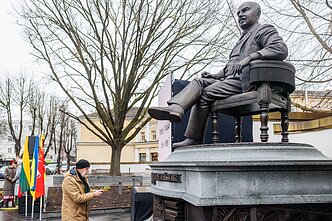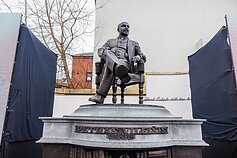

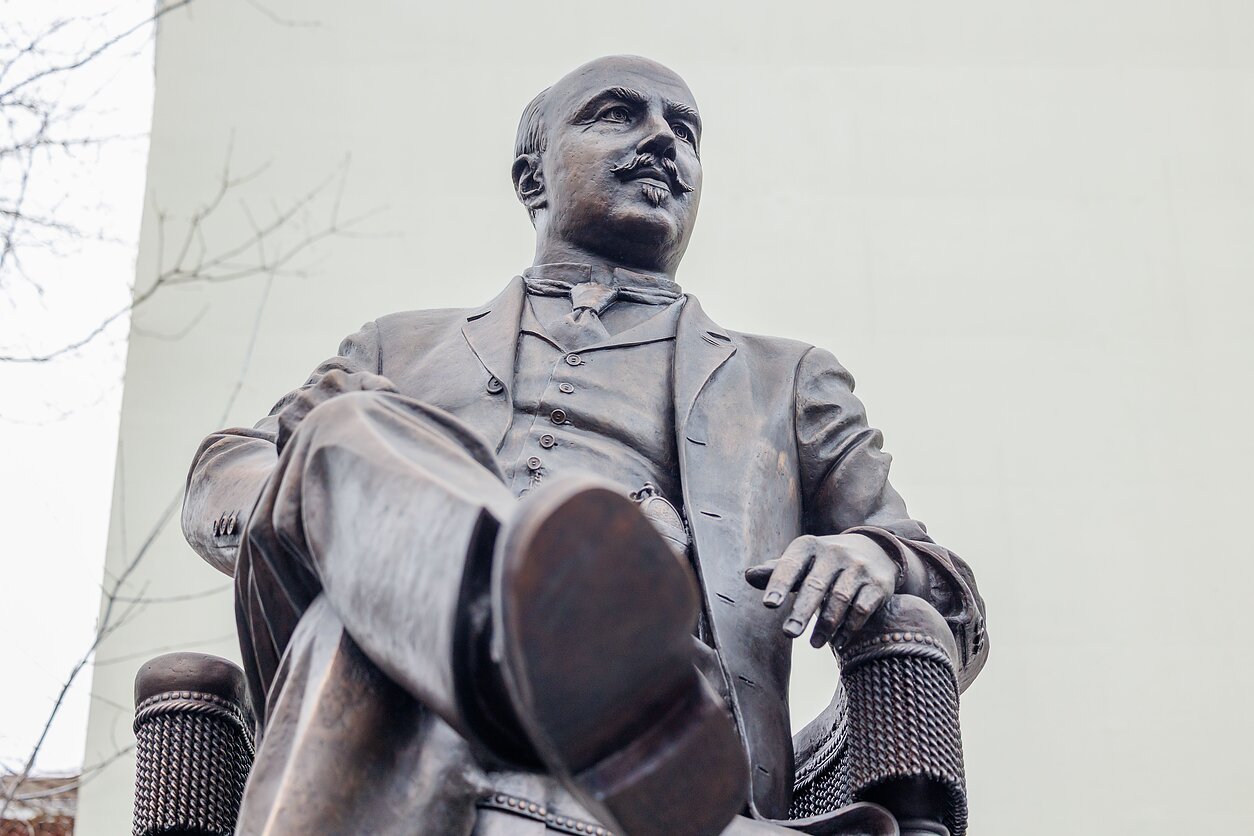
A new monument honouring Petras Vileišis, a prominent figure of Lithuania’s national revival, has been unveiled in Kaunas, drawing mixed reactions from residents over its design and location.
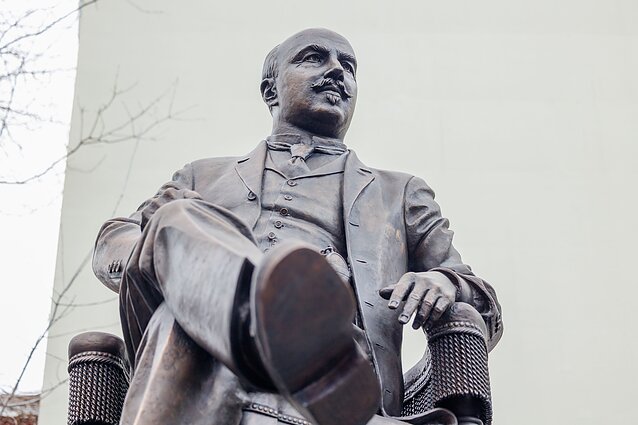
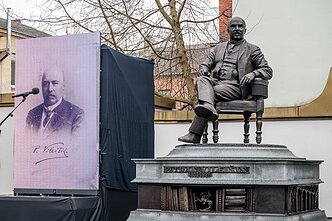
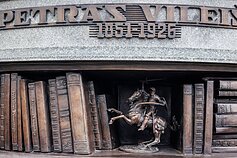
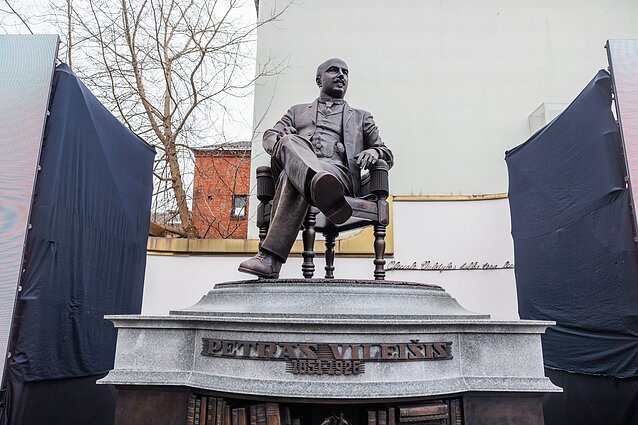
The granite and bronze sculpture stands at the intersection of Kęstučio and Gedimino streets. It was created by Ukrainian sculptors Oles Sydoruk and Boris Krylov and cast in Ukraine. The monument was financed entirely by private funds, with the city covering only the cost of preparing the surrounding area.
Vileišis, an engineer, publisher and philanthropist, is best known for designing roads and bridges. He spent his later years in Kaunas, served as Lithuania’s minister of transport and contributed as an engineer to the design of the Vytautas the Great War Museum.
A bust of Vileišis was erected in the museum’s garden during the interwar period, and a monument to his brother Jonas Vileišis, a signatory of Lithuania’s 1918 declaration of independence, stands on Laisvės Avenue.
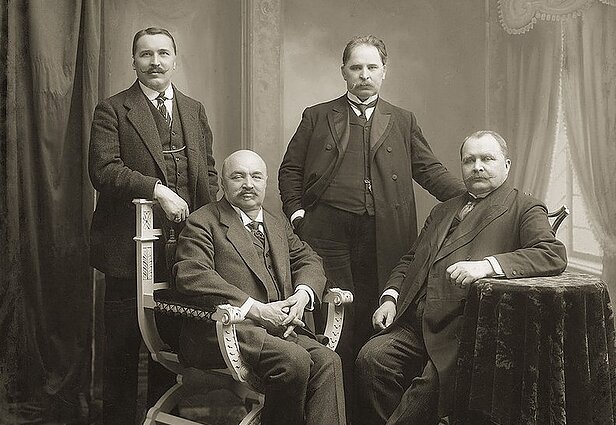
“Now we have a monument to Jonas Vileišis, and now also to his older brother, a major figure of the national revival – a patron, a man of the press, a businessman and an engineer,” historian Simonas Jazavita said. “There is a lot that can be said about Petras Vileišis.”
The initiative and funding for the monument came from benefactor Pranas Kiznis. The sculpture, created using historical photographs, stands about 4 metres tall and weighs roughly 26 tons.
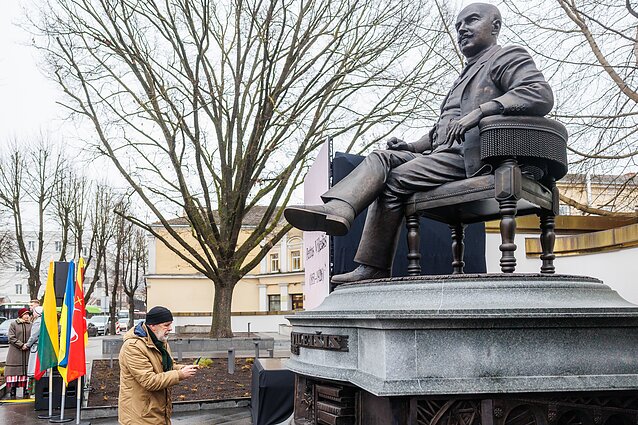
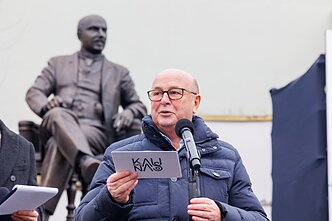
“The hardest part was combining bronze and granite so that two very different materials would merge harmoniously into a single composition,” Sydoruk said.
Kaunas Mayor Visvaldas Matijošaitis said artistic judgments should be left to professionals and the public. “What artists create is beautiful to me,” he said. “What matters most is whether residents like it.”
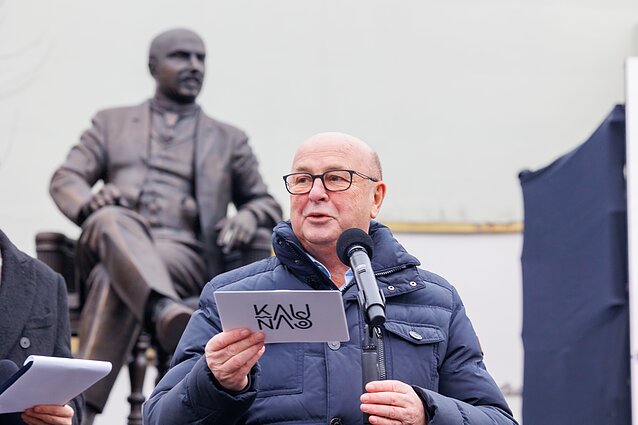
Public reaction has been divided. Some residents welcomed the addition, saying Kaunas can never have too many aesthetic public monuments. Others questioned the artistic value, the necessity of the sculpture or its placement. Some commented on a perceived resemblance to Soviet leader Vladimir Lenin, while others joked about similarities to the city’s mayor – remarks Matijošaitis brushed off with humour.
“Bald men all look alike,” the mayor said. “They’re handsome men – they say bald heads have solar batteries.”
Architect Linas Tuleikis offered a sharply critical assessment, arguing the monument clashes with its surroundings.
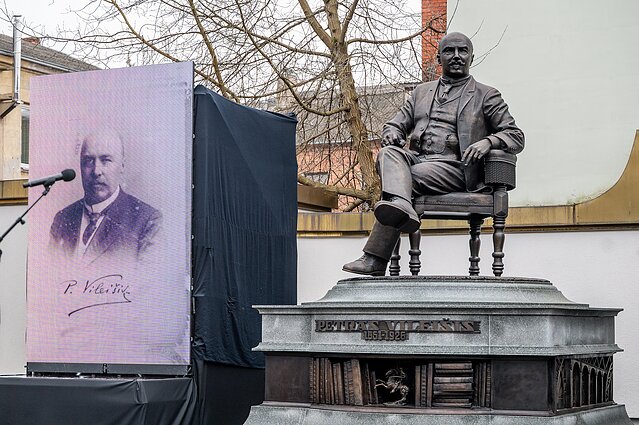
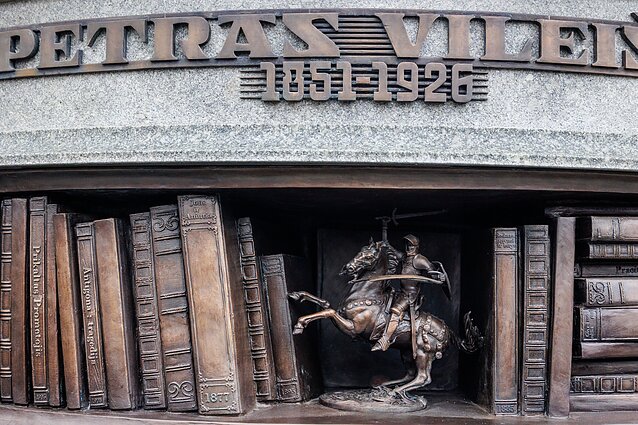
“The location is unsuitable, the space is full of unresolved elements from different periods, and the sculpture does not communicate with them,” Tuleikis said. He also criticised the monument’s proportions, saying the pedestal is more ornate than the sculpture itself.
Matijošaitis said Kaunas must balance differing opinions. “The city is a living organism with many different people,” he said. “All views must be heard, and decisions are made by our commission.”
Over the past decade, about 150 different public art installations have been added to Kaunas’ public spaces.

Newsletter
Every Friday morning.