












Belarusian opposition leader Sviatlana Tsikhanouskaya said Wednesday the release of political prisoners from Belarusian jails underscores the need for new leaders to emerge within the democratic movement, stressing that it should not revolve around a single figure.
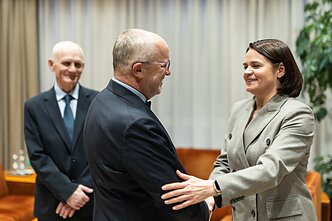
“In these turbulent times, it is time for new leaders to appear, because our movement is not about one person, but about communities and society,” Tsikhanouskaya told reporters after a meeting with Lithuanian parliament speaker Juozas Olekas.
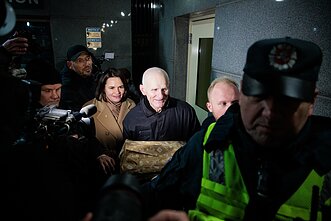
Her comments followed the recent release of dozens of political prisoners by Belarus after negotiations with the United States. Among those freed were prominent opposition figures Maryja Kalesnikava and Viktar Babaryka, whom Tsikhanouskaya said could play future leadership roles.
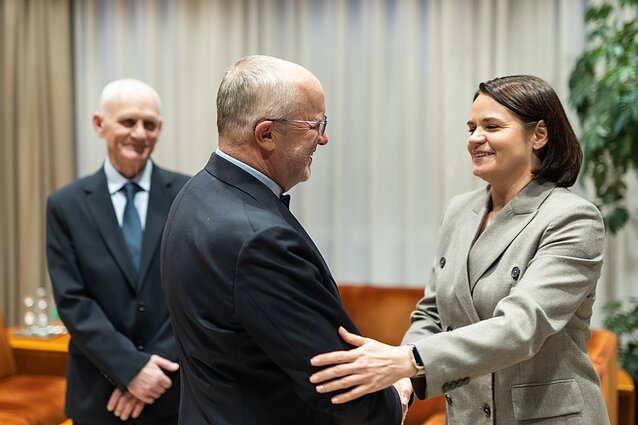
“Our organisation’s leaders are just people, and of course I am very happy that Masha – Maryja Kalesnikava – who was one of the leaders in 2020, and Viktar Babaryka are now back in our political arena,” she said. “We need to give them time to recover from prison, and then we will, of course, talk with them to understand what future they see for themselves and in what roles.”
Tsikhanouskaya said that if the former prisoners decide to continue political activity, coordination and cooperation within the opposition would be essential.
She also pushed back on reports that she plans to relocate to Warsaw, saying discussions are ongoing with the Lithuanian government on updated security arrangements for the Belarusian opposition based in Lithuania.
“The last thing I would want is to leave this wonderful country, which has provided a safe haven not only for me and my family, but for thousands of repressed people,” she said.

Asked about signs of a softer US approach toward Belarus, Tsikhanouskaya said the Minsk authorities continue to persecute citizens despite the recent releases.
“It is in Europe’s interest for Belarus to become free and democratic, because while some people have been released, twice as many have been detained,” she said. “This is not a change in regime policy.”
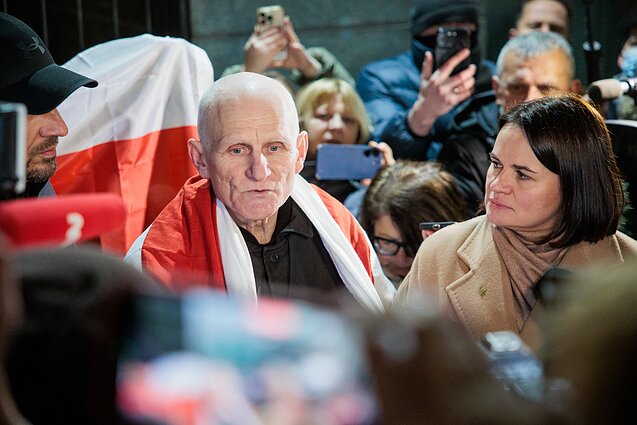
Nobel Peace Prize laureate Ales Bialiatski, who was released from a Belarusian prison over the weekend and attended the meeting with Olekas, dismissed suggestions that he might seek a political leadership role.
“I am a human rights activist, not a politician,” Bialiatski said. He added that Tsikhanouskaya’s status as the opposition’s political leader is beyond doubt. “Millions of citizens voted for her,” he said.
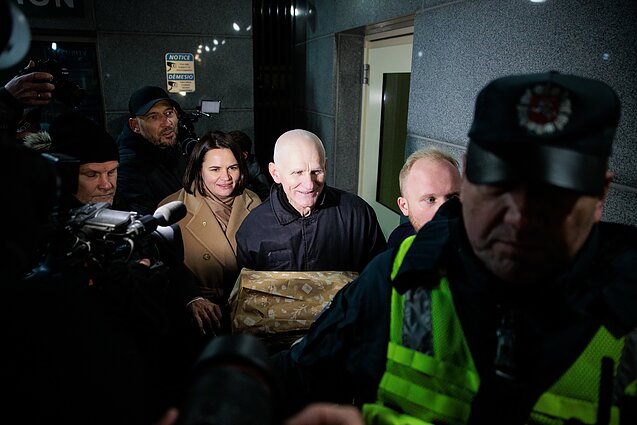
Olekas said he would not speculate about opposition leadership but encouraged unity among democratic forces.
“There are several leaders – Kalesnikava, Babaryka and others – and only joint work can bring real results,” he said.
Belarus released 123 political prisoners on Saturday following talks with the United States, including two Lithuanian citizens held unlawfully. Those freed included Bialiatski, Kalesnikava, Babaryka, opposition figure Maksim Znak and writer and civic activist Pavel Seviarynets.
Media reports said the United States lifted sanctions on Belarusian potash fertilisers in exchange for the releases. More than 60 prisoners were freed earlier this year, in June and September, also following negotiations with Washington, including six Lithuanian citizens.

Newsletter
Every Friday morning.