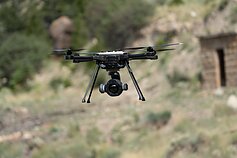














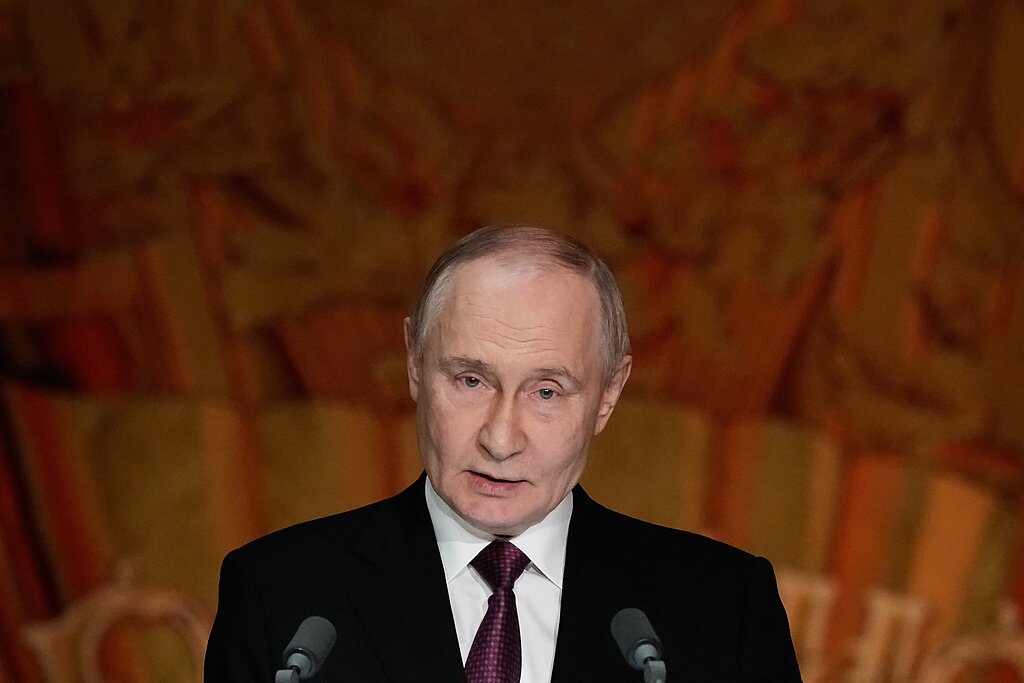
“Russia is playing with fire with these airspace violations, these low-cost probes, which may suit Putin’s personality, but he’s not good at judging long-term consequences, which could be disastrous,” said Kimberly Martin, professor of political science at Barnard College, Columbia University.
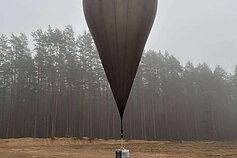
She described the repeated incursions by Russian drones, helicopters and even smuggler balloons from Belarus over the Baltic States. Known for her research on international security, Russian foreign policy, and hybrid warfare, Martin spoke with LRT.lt about the airspace disruptions in Estonia, Lithuania, and Poland - and what Moscow might be trying to achieve.
In September, Lithuania experienced several airspace disruptions involving Russian drones. Estonia saw similar airspace violations with Russian helicopters and drones. Poland has faced comparable disturbances as well. What do you think is going on here? What is Russia trying to achieve with all this?
I think several explanations are possible here, and they’re not mutually exclusive. Russia is likely trying to achieve more than one objective at the same time.
What we hear the most about is that Russia is trying to test NATO air defences. That's possible, but by testing NATO air defences, Russia is making them better, because the more NATO pays attention to this, the more resources they're going to devote. If Moscow truly believes a war with NATO is possible in the future, strengthening NATO’s readiness would actually work against Russia’s own interests.
A second possibility is that Russia is deliberately forcing NATO countries to divert resources - money, technology, communications, training - toward monitoring and responding to these incidents instead of using those resources elsewhere. If Russia can make NATO spend time and money addressing threats it wouldn’t otherwise have to, that alone could serve its purpose.
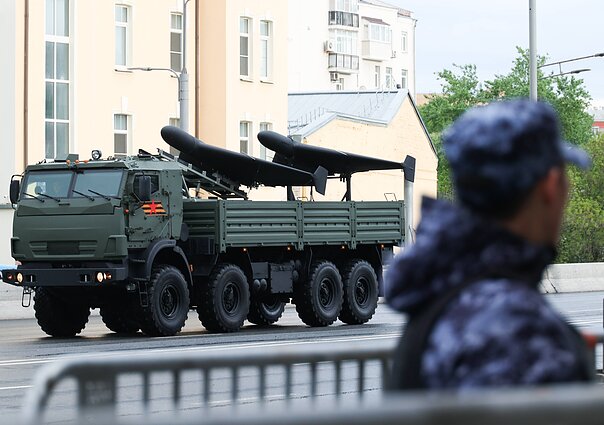
It might also be about intimidation. By creating constant pressure and signalling, “Don’t you dare give weapons to Ukraine, don’t even think about the possibility of attacking us,” Russia may be trying to deter NATO through fear. And if Russia genuinely believes NATO is preparing to attack, these moves could be intended as a form of pre-emptive deterrence. Moscow might also be just trying to get the populations all upset, perhaps create political crises.
Yet another possibility is that Russia is trying to get the NATO countries to get used to these disruptions and treat them as routine. It’s sort of a “cry wolf” scenario: after enough unarmed drones or minor incursions, NATO may simply stop treating them as significant. And in fact, that's when one drone flies over, and that’s the one that has a bomb on it.

Ultimately, this could all be accidental, I mean, it has been going on for so many years. These airspace violations didn’t just start this year. A decade ago, I had a student who wrote a master's thesis showing that Russian military aircraft cut briefly into NATO airspace simply because the routes were more convenient than going around. And so that could have been something that was not really directed from the top. It was just a matter of convenience for the military pilots.
So, I guess that all these airspace disruptions aren’t part of some grand master plan. It’s more likely all being cobbled together into a patchwork of different actions driven by different motives. Some parts may be deliberate, others accidental, and then Russia sees an opportunity and decides, “Let’s make something of this.”
Do you think the smuggling balloons coming from Belarus are connected to these incidents at all? Is Minsk involved?
The Belarusian government definitely knows this is happening, and they’re choosing not to stop it. That alone makes them tacitly complicit, even if they aren’t directing the launches. I wouldn't be surprised if they're not directing them at all, but with all these complaints coming from the Lithuanian government, and Minsk does nothing, that's an indication that they're supporting it.
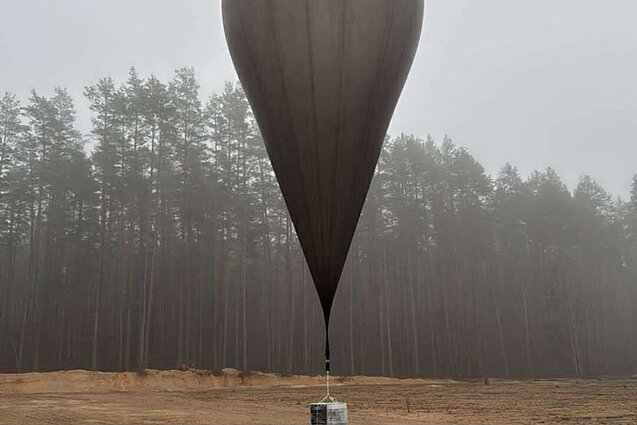
It’s entirely possible that initially, balloons crossed the border without any government intent. But once Belarus noticed they were slipping through unnoticed, they may have realised, “Hey, this could be a way to support Russia,” and started taking advantage of it.
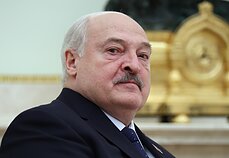
Remember, Belarus, in the past, at least, has been very good at playing two sides. And recently, we've had this appearance of thawing between the Trump administration and Belarus. And I wouldn't be surprised if that has caused President Putin, on the other side, to say, “Lukashenko, are you really joining the Americans?” Using these balloon incidents is one way for Belarus to signal independence from both sides: yes, they’ll talk to Washington, but they’ll also do things that please Moscow.

For Lithuania, the airport closures are commercially damaging. That’s another reason Russia might quietly encourage the activity: anything that undermines the Lithuanian economy at low cost ultimately benefits Russia. And even though these balloons are currently used for smuggling, we’ve seen examples elsewhere - China’s spy balloon over the U.S., or propaganda balloons between North and South Korea. So who knows if one day everybody just thinks it's smuggling balloons, and it's actually something else entirely.
You mentioned that Russia might be doing this as an intimidation tactic. How is Russia expecting to intimidate by disrupting countries’ airspaces?
What we see in much of what Russia does is that it experiments, right? And this is a really low-cost way of experimenting. The drones they send are cheap, and if they fail, it hardly matters. On the other hand, when you think about some of the response options they provoke - intercepting drones with missiles, for example, or even disrupting air traffic - that causes far greater losses for NATO countries than it costs Russia to launch an unarmed drone.
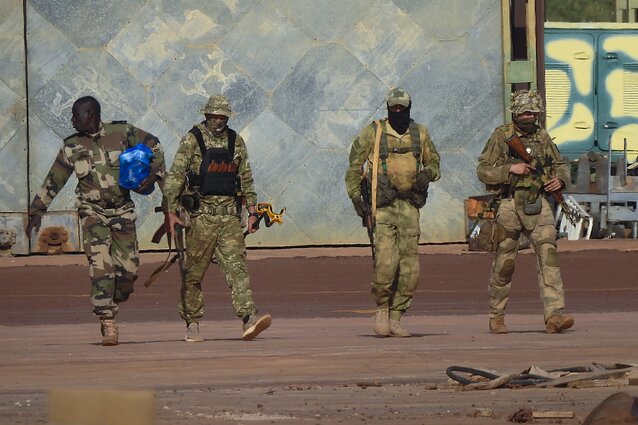
But I don't think that it's necessarily a well-designed Grand Master Plan. It’s more a reflection of how Russia often operates. We saw this with the Wagner Group: they were deployed anywhere Russia thought they might be useful, just to see what they could achieve. If a mission failed, it wasn’t a major loss - these were contract fighters, expendable.
These might be low-cost probes, but you also mentioned some reasons behind the airspace violations could backfire, strengthen NATO defences, for example. Why risk it?
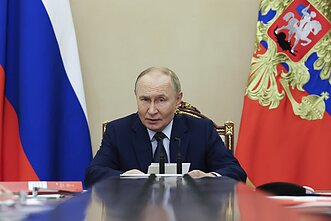
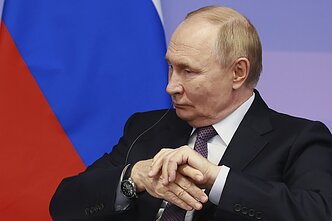
Putin is really good at tactics but not strategy. He is not a chess player. He's not good at thinking several steps down the line of what his opponent is going to do next.
I don't think he has a coherent strategy. He's not a long-term thinker. Why in the world did he invade Ukraine to begin with? It's been enormously costly for Russia. It has made NATO much more cohesive than it was before the invasion. Russia has arguably not actually gotten anything out of invading Ukraine, and yet he did it because he's not good at looking down the line at what's going to happen next.
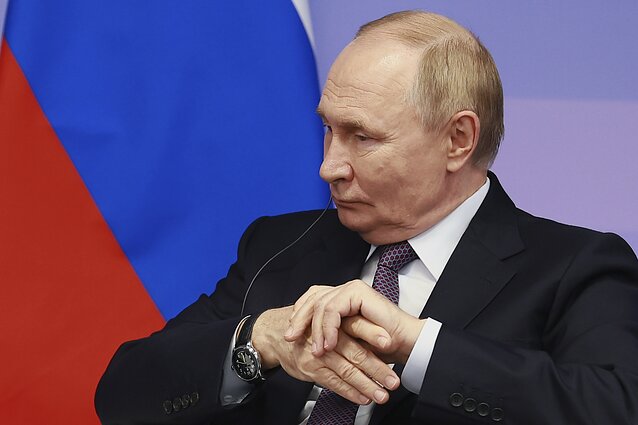
So I guess that this is just Putin being Putin, saying, “Let's try, let's see what happens, let's see what the tactic is here”. What happened to Putin in Syria was a long-term loss, allowing Assad to fall and letting the rebels that Russia had been fighting take Damascus. Now, Putin turns around and all of a sudden he's aligned with the rebels again. Well, that's very good tactical thinking. But what is it going to mean for the long term when Putin finds himself in alliance with all kinds of Islamist extremist regimes, not only in Syria, but also in Afghanistan? Is he really thinking about the long-term consequences of this?
Still, do these violations, these ‘hybrid attacks’, as our government has defined them, signal an escalation?
Well, that’s always possible, who can get inside Putin's head, right? He might be irrational enough to believe provoking a war with NATO is a good idea. But if he’s thinking rationally, he has to understand that such a war would be catastrophic for Russia. He would lose, and any legacy he hopes to build of making Russia “stronger” would be completely destroyed. Still, that doesn’t rule out the possibility of an accidental escalation, especially if he’s not fully considering long-term consequences or if he’s become increasingly detached from reality.
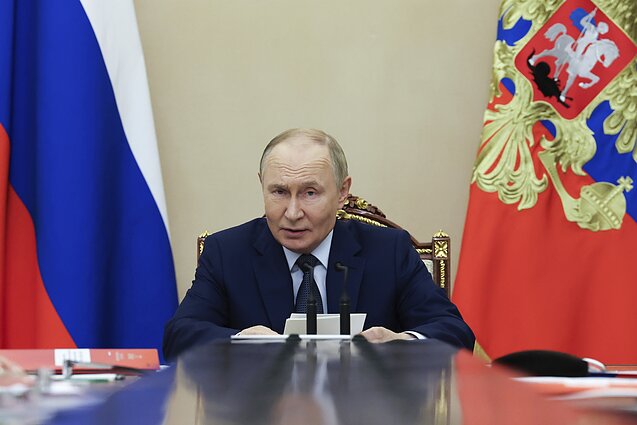
That’s why these provocations are dangerous. The more they occur, the higher the risk that someone misreads the other side’s red lines and miscalculates. A clear sign of intentional escalation would be if drones, balloons, or other objects began deliberately causing damage on NATO territory.
So far, the only drone that caused damage was in Poland - and that seems to have been accidental, part of a larger group of drones headed near the Ukrainian-Polish border. I would guess that Putin did not intend to cause damage on Polish territory. Maybe he did, but if we see more and more instances of these drones actually being armed and harming any part of NATO territory, or if the balloons end up being explosive, then we'd have to change our mindset.

Just two years ago, people were wondering whether Putin was going to use a nuclear weapon in Ukraine. That's not off the table. He's still making all of these very provocative statements about all of these new nuclear weapons that Russia has, that can do this damage that nobody can answer. So, who knows? It's so hard to figure out what's going on in his head.
You sound quite optimistic about NATO’s prospects in the war against Russia. But you also mentioned that NATO could be worn down. We’re already seeing signs of this, with talk of pulling troops from Eastern Europe.
Putin might be hoping for that outcome, but given the uncertainty around the U.S. role in NATO, we’re actually seeing more evidence of European and Canadian members coming together to do more without the United States. The Baltic and Polish cooperation is strengthening, and there’s growing coordination between the Baltic and Scandinavian states. Because of doubts about the U.S. commitment, countries like Great Britain and France are reconsidering, what their nuclear postures are going to be.
President Trump enjoys pulling surprises on people and doing things unexpectedly, keeping people wondering what his ultimate motives are. I wouldn't be surprised if that continues. He never seems to actually land on something. Though every time he takes a step that is overly extreme in foreign policy, it seems to be walked back a few weeks later.
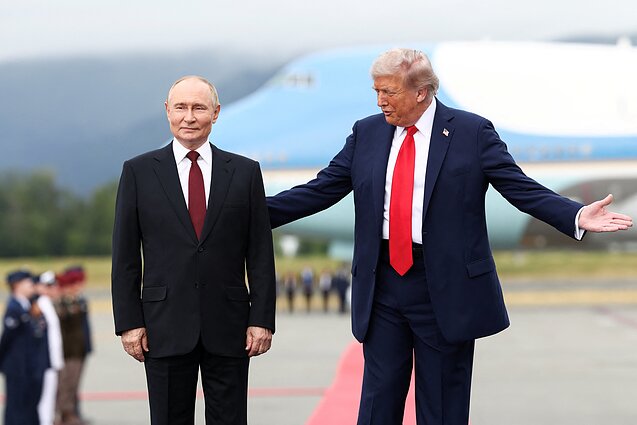
The one example that I'd keep in mind here is that the United States managed to step in and resolve the Armenia-Azerbaijan crisis under Trump, which was just amazing to me. I'm surprised that the Trump administration was paying attention to that at all. But they really cut Russia out of the whole picture, and they just did it very quickly and very silently, and boom, it was over. So, I wouldn't put it past the possibility that the Trump administration, in its foreign policy towards areas surrounding Russia, could actually do some very good things for the West against Russian interests.
That may be the case but the Trump administration also promised to end the war in Ukraine in a matter of weeks, how come it’s taking them so long?
I think Trump tried with Russia and Ukraine, and he realised that he was wrong, that both sides have a very strong incentive to keep on fighting. Wars often end when both sides agree that they have nothing more to gain, or at least one side has to believes that it has nothing more to gain by fighting. At this point, both Russia and Ukraine believe that they will gain more if they continue fighting, and there's nothing that can be done about that.
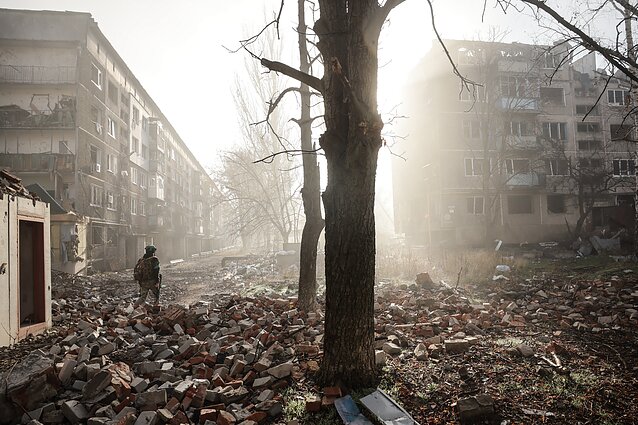
For the tables to turn, the U.S. would have to take actions that are extremely provocative toward Russia. In that sense, the Trump administration would face the same dilemma Biden has repeatedly confronted. Any step - like sending longer-range Tomahawk missiles to Ukraine - could risk crossing Russia’s red line, which no one wants to trigger. There’s a clear limit to how much support can realistically be provided. Under the Biden administration, aid to Ukraine has gradually increased, but the underlying concern remains: when does it become too much?
There's this very dangerous, deadly game that gets played, because nobody wants a full-scale war with Russia. Still, something completely unintentional could be misinterpreted or misperceived by either side. Russia is playing with fire with these airspace violations, these low-cost probes, which may suit Putin’s personality, but he’s not good at judging long-term consequences, which could be disastrous.
So, I don't think that an outside player can do anything to stop Russia from wanting to continue its attacks. And that's especially true because the Russian economy is now effectively a war economy, with an increasing share of its budget devoted to weapons and military technology. If all Russian soldiers suddenly returned home, it’s unclear how the economy or society could absorb them, or how it would handle the resentment of those who sacrificed so much for a war that ended abruptly. On top of that, because Putin has tied his legacy as president so closely to “winning” in Ukraine, he is likely to keep fighting, no matter what.

On the other hand, for Ukraine, this is survival. This is an existential war. And so they're not going to stop unless they get driven absolutely into the ground. Both sides have a very strong incentive to keep on fighting. And as long as those incentives are there because of the strength of Russia, I don't think there's any. There's not much that outside players can do to stop it. We can always increase sanctions and Russia can always continue finding ways around them.
So, do you believe that sanctions are effective?
I think one mistake some commentators have made is assuming that sanctions would stop Russia from fighting or trigger the overthrow of the Putin regime. That might have been an idealistic hope - perhaps even for the Biden administration - but it wasn’t the primary goal. From what I understand, the main purpose of the sanctions has been to make it harder and more costly for Russia to wage war.
And so if you think about it this way, sanctions could have long-term consequences that were really, really negative for Russia, even if they don’t produce immediate effects. By making the war more difficult and expensive, they may have prevented Russia from taking over all of Ukraine. It’s a positive benefit, even if sanctions hadn't stopped the fighting.
Circling back to the Baltic States, could the drone incursions serve the same purpose in Eastern Europe as sanctions do in Russia? I mean, sanctions are meant to chip away at Russia's economy by forcing it to spend more on the military. We're now seeing this very thing happen on the Baltic side too.

Yes, and Russia does this all over the world, making low-cost inroads just to see what happens. But in recent years, technology has been developing so rapidly that the Ukraine war, particularly the use of drones, is driving much greater attention to drone and anti-drone systems. Over time, this could actually make drone defence technology cheaper, not more expensive, because there’s a strong incentive to innovate.
Taiwan, for example, is watching closely out of concern over China, which further motivates the U.S. defence sector to develop new anti-drone capabilities. And so, in the long run, perhaps even in the medium run, these expenditures may not be wasted at all; they could lead to real technological breakthroughs.

Newsletter
Every Friday morning.