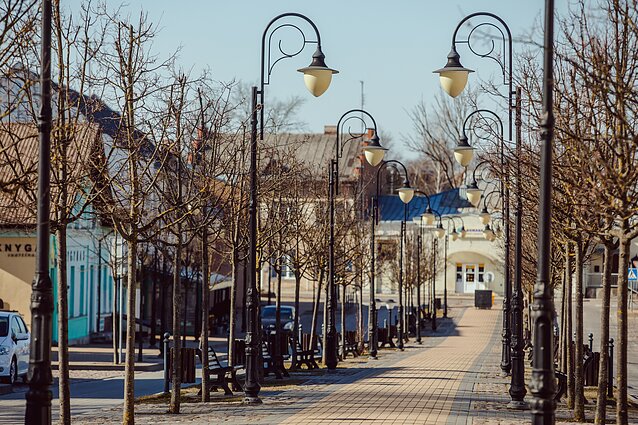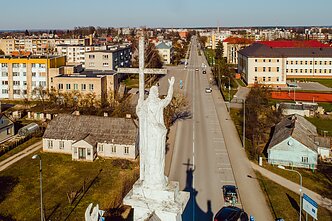












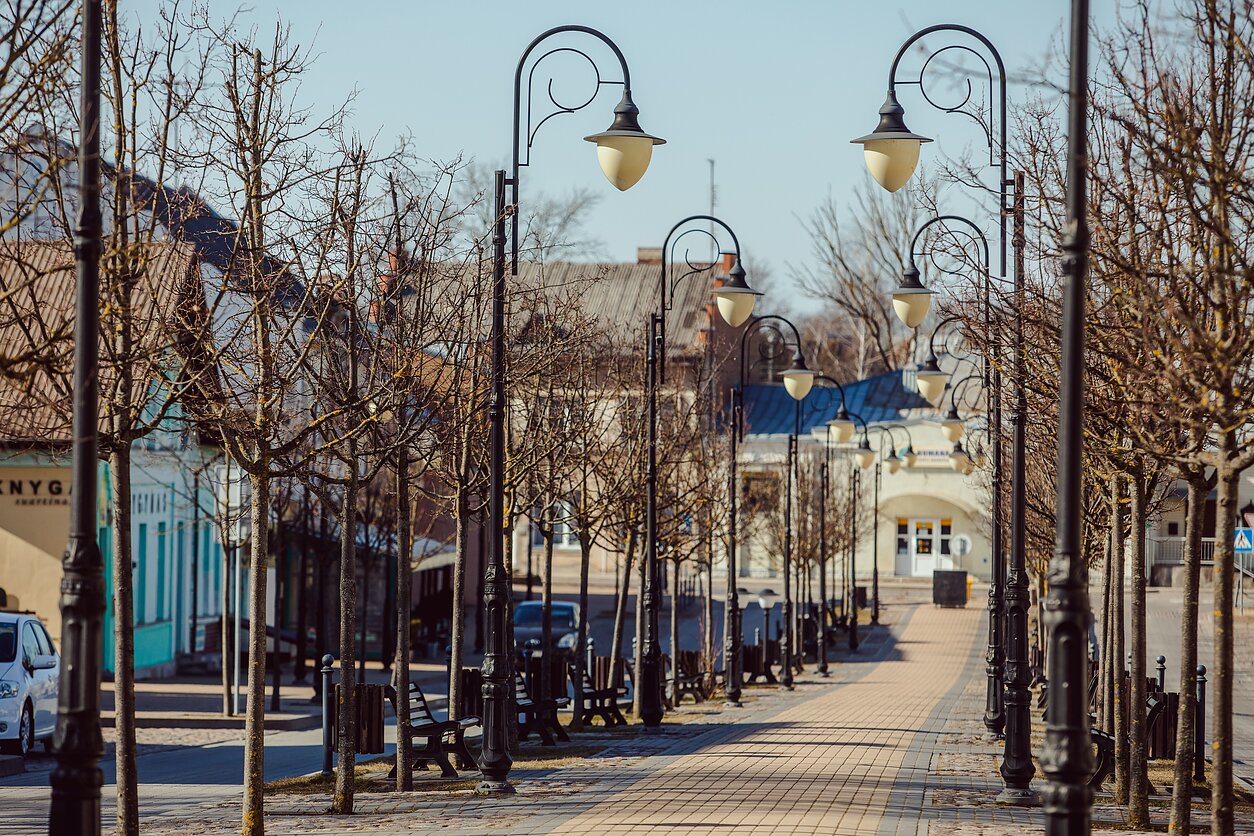
The small town of Ukmergė in northeastern Lithuania has run out of housing space amid a growth in population fueled by returning members of the diaspora, as well as families relocating from the country’s major cities.
Armintė Imbrasienė returned to her hometown of Ukmergė after spending 12 years in Northern Ireland. She worked as a social media administrator abroad and found the same job back home.
“Everything here is within reach. The same preschools and schools, everything is easily accessible, the hospital is close, and there are no traffic jams, which is most important compared to big cities,” Imbrasienė said.
“That was the biggest advantage. And family – everything is nearby, there’s support, and the city feels familiar,” she added.
But finding housing for her family wasn’t easy. Supply is low, and prices have risen sharply.
“When we started looking, we couldn’t believe prices could be so high in Ukmergė. There are no new homes here at all, so we bought an apartment in an old building, renovated it completely, and now we’re happy living here,” she said.
As there are largely no apartments left to buy or rent, developers are building new housing blocks after a three-decade hiatus.
According to Ukmergė District Mayor Darius Varnas, the need for new apartments is enormous. Members of the diaspora are returning, and new factories are opening, creating more jobs.
“I calculated that in 2027 alone, we will have about 2,500 vacant jobs, and people need somewhere to live. Right now, companies are bringing workers from all towns within a 100-kilometre radius – Molėtai, Panevėžys, Anykščiai, and others – to meet labour demand,” Varnas said.
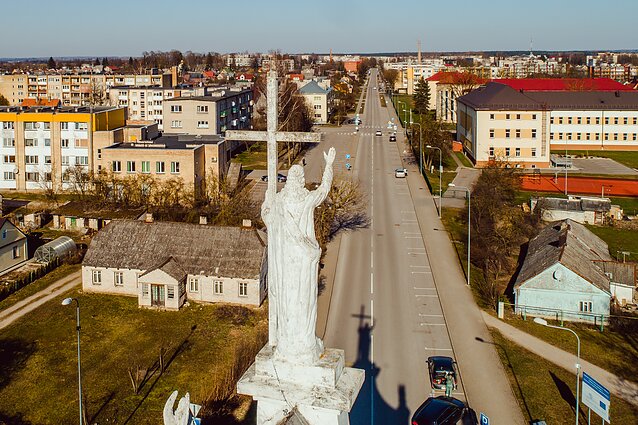
Ukmergė’s municipality was the first in the country to begin offering financial incentives to newcomers moving to the city. The goal was to attract as many residents as possible, and it produced results.
“The population is increasing. I think over the past three or four years, it has grown by about 2,500. Our aim is to reach 40,000 residents by 2030. That’s not far off – only 3,500 to go,” Varnas said.
The apartment buildings in Ukmergė will be built by Acinus, marking the first time the developer has expanded into a rural market.
“Ukmergė was chosen for the development of a new residential apartment project because we see the growing potential of this area. The city is renewing itself but still lacks high-quality residential real estate, and Ukmergė is in a strategically attractive location – it is easy to reach the major cities of Vilnius and Kaunas, which are about 70 kilometers away,” said Juliana Stanišauskienė, head of Numo Property Management.
New apartment buildings are now being constructed more actively across the regions, according to Mindaugas Statulevičius, president of the Lithuanian Real Estate Development Association.
Part of the reason is that more manufacturing companies are setting up operations, job numbers are increasing, wages are rising, and this is attracting investors.
Additionally, municipalities are making construction easier, for example, by waiving certain taxes or providing infrastructure.
“It is economically efficient to build there, and companies are taking on such projects,” Statulevičius said.
“That means regions are supported not only by renovations improving the housing stock but by new development as well, which is also very beneficial. People don’t move away; they don’t abandon their homeland. They study, return to these towns, start families, and continue to strengthen the vitality of the region,” he added.
“In some municipalities, for example, they could form a municipal housing fund from these newly built apartment blocks – buy or rent apartments for residents who need municipal housing, not social housing, the most vulnerable and cheapest type that has special support, but municipal-level housing,” Statulevičius said.
“These are people who earn salaries but need some assistance to acquire or rent quality housing. Municipal support would be very well targeted here,” he added.
Over the past two years, after a long pause, new apartment buildings have been constructed in the Utena and Molėtai districts. In some regions, new single-family home communities are also actively emerging.

Newsletter
Every Friday morning.