















Lithuanian President Gitanas Nausėda will appoint Vaida Aleknavičienė as culture minister, his adviser confirmed Monday, as protests from the cultural community continue over the leadership crisis at the ministry.
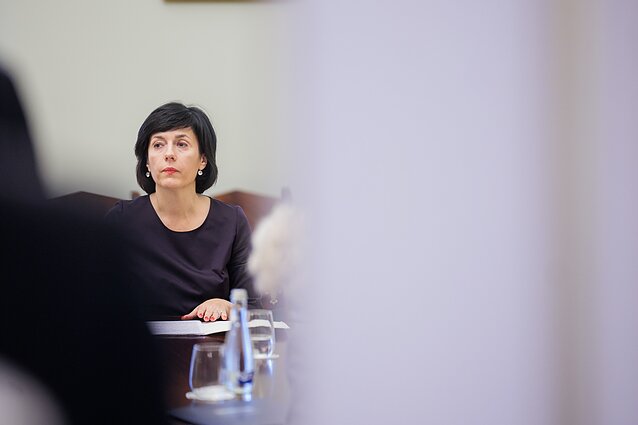
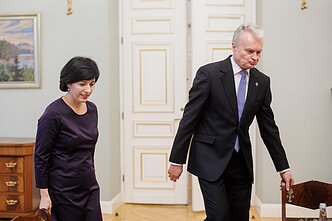
“The president will approve Vaida Aleknavičienė’s nomination as culture minister,” Jolanta Karpavičienė, Nausėda’s chief adviser on education, science, and culture, told reporters after the president met with the Social Democrat nominee.
Karpavičienė described the meeting as “very businesslike, constructive, and to the point,” adding that it focused mainly on the tensions within the cultural community caused by the prolonged and disorganised search for a new minister and the formation of a political team.
According to the adviser, the president “understands and respects the civic and moral stance expressed by the public”.
“He stressed the need to find common ground as soon as possible and to ensure that culture becomes not a divisive, but a unifying force that strengthens the state and civic spirit,” Karpavičienė said.
She added that Nausėda and Aleknavičienė also discussed the composition of the incoming minister’s team, which will exclude members of the Nemunas Dawn party, whose involvement had sparked the protests.
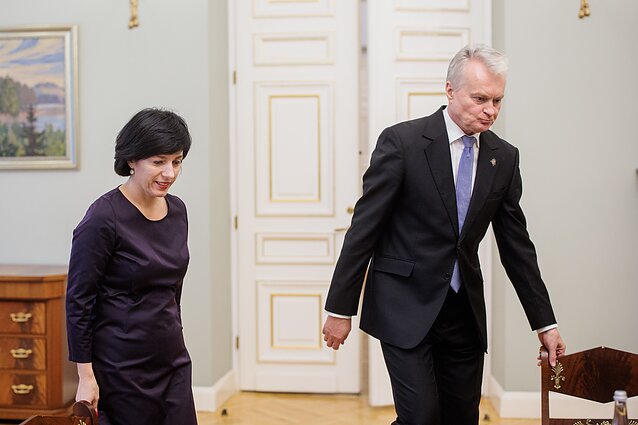
Speaking after the meeting, Aleknavičienė said she was ready to lead the ministry and confirmed that her team would not include Nemunas Dawn representatives.
“I am ready to carry the banner of culture with dignity,” she told reporters. “In the near future, I will initiate a national cultural dialogue involving representatives of cultural organisations, artists, regional centres, and state institutions. Our goal will be to ensure that decisions are made not on behalf of the community, but together with it.”
Aleknavičienė thanked the president for his confidence and said their discussion centred on the future of Lithuania’s cultural policy.
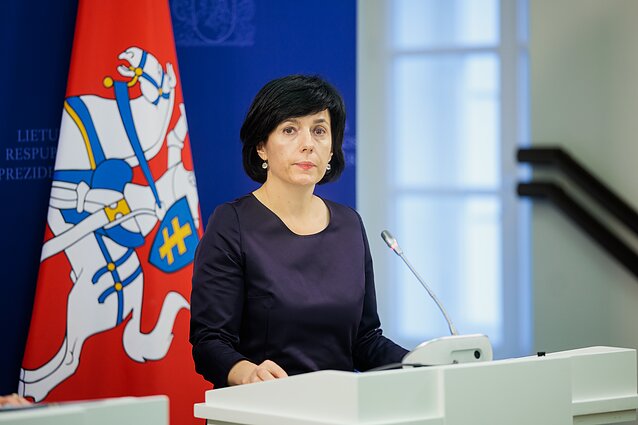
“The meeting was sincere and constructive. We talked about the need for cultural policy to be grounded in dialogue, respect, and a shared sense of responsibility,” she said.
The Social Democrat added that culture should be viewed as a matter of national importance and moral strength.
“Culture is not only the concern of the ministry, it is the foundation of the state and its moral compass,” Aleknavičienė said. “People in the cultural sector should not be bystanders, but partners in decision-making.”

Newsletter
Every Friday morning.