












Lithuania and Poland formally opened a newly reconstructed section of the Via Baltica highway this week, completing a key stretch that now fully connects the two nations’ main motorways.
Both presidents hailed the project as a vital step for military mobility and regional security, while drivers welcomed the faster, safer route linking Kaunas and the Polish border.
“This is not only an essential artery for the movement of goods and people but also for military mobility,” Lithuanian President Gitanas Nausėda said during the ceremony on Monday, held on one of the new viaducts near the border. “As we speak, military transport trucks are crossing the border and already using this highway.”
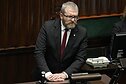
Polish President Karol Nawrocki said the upgraded route would strengthen both economic cooperation and defence readiness between the two countries.

“Our task, together with our friends from Lithuania, Latvia, and Estonia, is to view this project through the lens of Baltic and Polish security,” Nawrocki said. “Poland is taking responsibility for safety not only in the Suwałki Corridor but across the entire Baltic Sea region.”
Truck driver Aleksej, who stopped at a new rest area along the highway, said the improvements have cut travel time significantly. “From Kaunas to the border now takes just over an hour – before it was much longer. The road in Poland is also ready, everything’s in order,” he said.
The 40-kilometre stretch between Marijampolė and the Polish border included the construction of connecting roads, viaducts, interchanges, and tunnels for both vehicles and wildlife, said Martynas Gedaminskas, head of the state road company Via Lietuva.

“The fourth section, where we stand today, cost a little over €180 million,” Gedaminskas said. “Altogether, the 40 kilometres built since 2020 have cost more than half a billion euros.”
Lithuania now plans to continue the Via Baltica project northward, building the section from Kaunas to the Latvian border by 2033. The estimated cost could exceed €1.5 billion, though final figures will depend on technical designs and contracts yet to be completed, Gedaminskas said.
Transport Minister Juras Taminskas noted that funding for the next phase could come from three sources: the national budget, the European Union’s upcoming funding period, and the EU’s Military Mobility program.
Via Baltica is part of the Trans-European Transport Network (TEN-T), connecting Warsaw and Tallinn over a total distance of about 970 kilometres.

Newsletter
Every Friday morning.