







As debates over Russian-speaking migrants intensify, Lithuanian politicians warn of potential threats to society, while others point to structural barriers that make integration difficult, particularly the lack of accessible Lithuanian language courses.
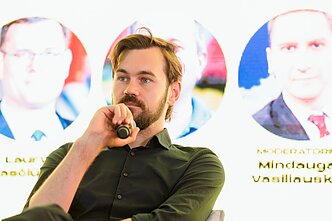
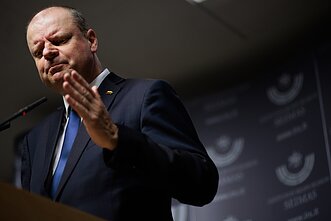
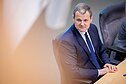
Speaking at the Būtent! festival, Seimas member Laurynas Kasčiūnas of the conservative Homeland Union party (TS-LKD) said Lithuania previously “underestimated the challenges of legal migration”, including the influx of Ukrainian war refugees. He estimates that around 204,000 foreigners currently live in Lithuania, including 70,000 Ukrainians, 40,000 political refugees, and others arriving for work. About 50,000 employed foreigners are from Belarus, who now face stricter residency requirements.
“The main driver is business interests, especially in sectors eager to open our doors,” Kasčiūnas insisted. He argued migrants should only be admitted if local workers are unavailable, and warned that quotas pressure businesses to request more foreign labour.
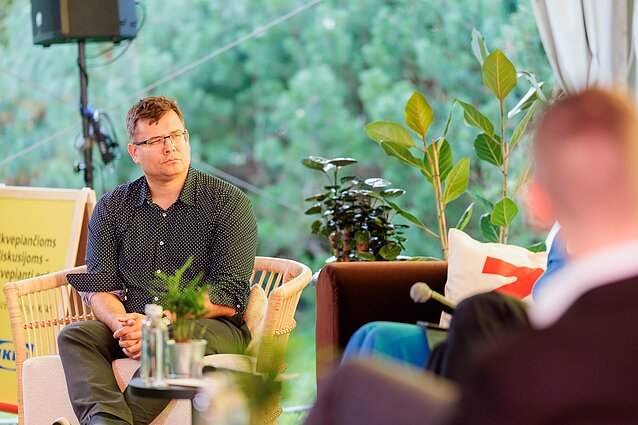
Kasčiūnas, who plans a stricter migration stance as head of the TS-LKD party, has proposed requiring migrants to learn Lithuanian.
Integration hurdles
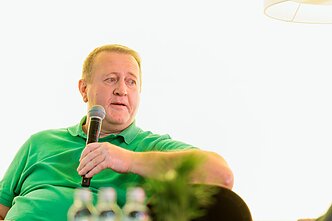
Evelina Gudzinskaitė, director of Lithuania’s Migration Department, emphasised that most Russian-speaking migrants are Ukrainian war refugees. “We should not expect them to speak Lithuanian immediately,” she said, noting that 85% of all foreigners in Lithuania come from former Soviet states, with Belarusian migration declining. About 200–300 new Ukrainian refugees still arrive weekly.
Of the 14,000 Russians living in Lithuania, half are long-term residents since independence. Newly arriving Russian citizens are rare and often have Lithuanian roots, Gudzinskaitė said.
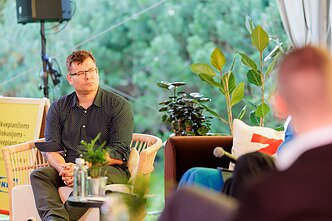
Viktor Vorontsov, a Russian citizen living in Lithuania for 20 years, said complaints about Russian being spoken in Vilnius overlook marginalisation faced by Russian speakers. He acknowledged gaps in the system, such as “phantom” student migrants who enrol in universities, receive residency permits, and then disappear.
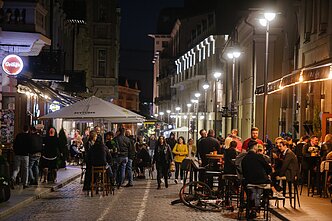
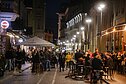
“I see nothing wrong with speaking Russian with my wife in a café or on the street,” Vorontsov said, referencing a recent post by the journalist Edmudas Jakilaitis who argued he was hearing too much Russian in Vilnius.
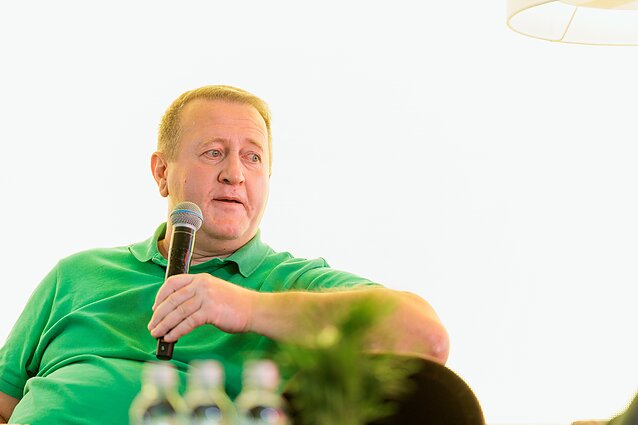
Vorontsov noted that his own business hires six foreigners who all speak Lithuanian, and his office even has a humorous sign fining employees who fail to use the national language.
Vorontsov stressed that migrant language learning is hampered by the behaviour of locals, who often switch to Russian when foreigners speak Lithuanian. “I once decided to insist on speaking Lithuanian, because otherwise I couldn’t learn the language,” he recalled, citing difficulty buying groceries without being accommodated in Russian.
While he agreed that long-term residents of Lithuania should know the local language, he suggested looking at the situation with more understanding. For many, even if they want to attend Lithuanian classes, there are precious few options after office hours or on weekends.
“Imagine, people [from Ukraine] have lost everything and the mental stress they are under. You come to another country, people speak a different language, you have to work two jobs, take your children to school. Ukrainians ask if there could be Lithuanian language courses in the evenings, on Saturdays and on Sundays,” Vorontsov said.
Calls for policy reform
Kasčiūnas has proposed requiring a state language exam to extend work-based residency permits, typically issued for five years. He also raised concerns about family reunification after two years of residency, suggesting migrants should demonstrate Lithuanian proficiency in those cases as well.
Kasčiūnas expressed worry over 9,000 foreign students in Lithuania, proposing they limit work to 20 hours per week rather than the current 40, prioritising study over employment.
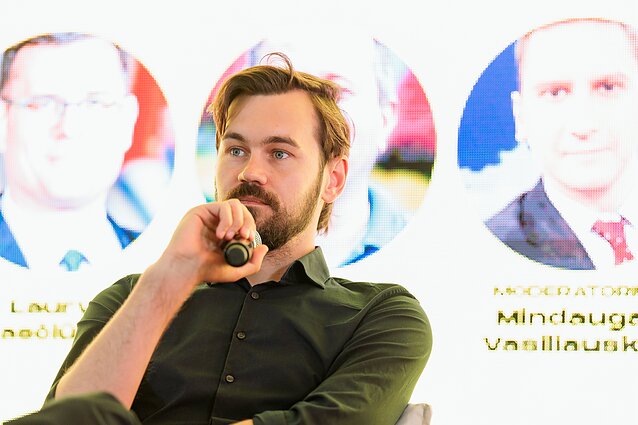
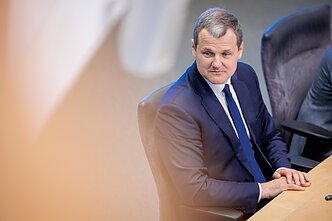
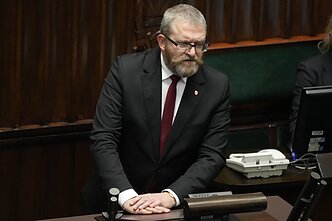
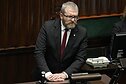
Seimas Social Democrat Ruslanas Baranovas agreed with some of Kasčiūnas’s points but cautioned that the Migration Department must first improve its operations. He noted that the department experiences a 30% annual staff turnover, with low pay and limited capacity; currently, only about 3,000 migrants can be examined per year.
Lithuania’s integration policies are “chaotic” and, frankly non-existing, Baranovas argued. For instance, there is no one body in charge of Lithuanian language courses that are currently offered by the Employment Service, Vilnius University and some private initiatives.
“We need to approach the problem earnestly, not via populism,” Baranovas argued, insisting there will be no easy solutions.

Newsletter
Every Friday morning.