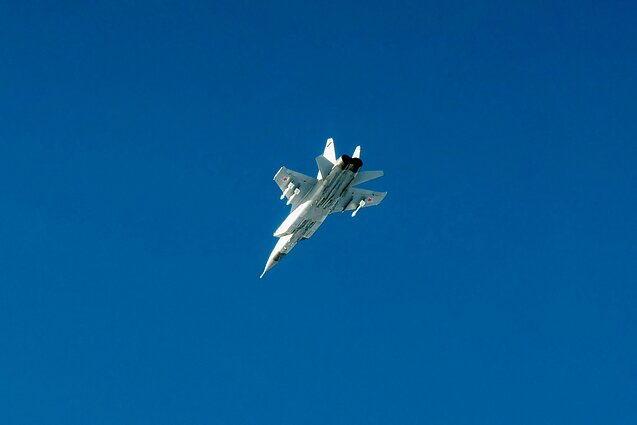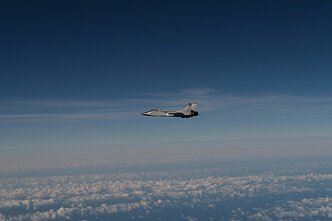














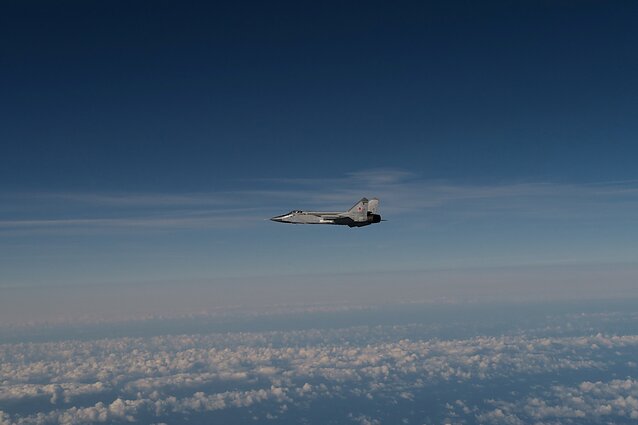
Three Russian MiG-31 fighter jets violated Estonian airspace over the Gulf of Finland on Friday, remaining there for 12 minutes, Tallinn has said.
The Russian aircraft acknowledged receiving warnings from Italian F-35s scrambled to intercept them, but ignored their instructions.
Italian F-35s are deployed to the Baltic states as part of NATO’s air policing mission.
Sweden and Finland also launched quick reaction jets, according to a spokesperson for NATO’s Supreme Headquarters Allied Powers Europe (SHAPE).
On Saturday, Russia’s defence ministry denied that the MiGs breached Estonian airspace.
The Russian aircraft had flown from an airbase near the north-western Russian city of Petrozavodsk en route to Kaliningrad, Moscow’s exclave on the Baltic coast between Lithuania and Poland.
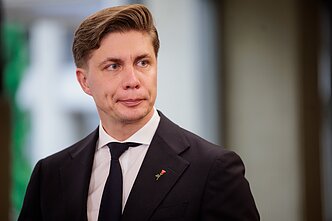
Estonian Defence Minister Hanno Pevkur rejected the claim, saying Estonia and its NATO allies had “ample radar and visual identification means” confirming the jets had entered Estonian airspace.
He said the purpose of such violations – along with hybrid warfare and cyber-attacks – was to distract Western attention from Ukraine.
Moscow, he suggested, may be trying to provoke NATO members into diverting additional air defence resources to Estonia, hoping that Kyiv’s allies will then focus more on “our own defence” rather than supporting Ukraine.
‘NATO's ability to respond’
According to Estonia’s military, three Russian MiG-31 fighter jets entered its airspace at 09:58 local time on Friday in the area of Vaindloo – a small island in the Gulf of Finland – and remained there until 10:10.
They were initially tracked by two Finnish jets, before being shadowed by two Italian F-35s launched from Estonia’s Ämari air base, which followed them through Estonian and then international airspace, Colonel Ants Kiviselg, head of Estonia’s military intelligence centre, explained.
Estonian foreign ministry stressed it was already the fourth such breach by Russia this year.
Col Kiviselg told the Associated Press it still had to be confirmed whether the violation was intentional. However, he added the Russian pilots “must have known they were in Estonian airspace”.
The incursion came at a time of heightened tension on NATO’s eastern flank, after Warsaw reported last week that around 20 Russian drones had breached its airspace – a claim Moscow denied.
According to the Estonian Defence Forces, the jets had no flight plans, their transponders were switched off, and they did not maintain radio contact with Estonian air traffic control.
NATO spokesperson Allison Hart described the incident as “another example of Russia’s reckless behaviour and NATO’s ability to respond”.
NATO Secretary General Mark Rutte said the alliance’s response had been “swift and resolute”.
“I just spoke with Estonian Prime Minister Kristen Michal about Russia’s airspace violation today. NATO’s response… was swift and resolute,” Rutte wrote on X.
Later on Friday, Estonia’s prime minister said the Baltic state had “decided to request NATO consultations under Article 4” following the “unacceptable” breach.
The military alliance told AFP in Brussels that talks could take place “early next week”.
It is the second time in less than two weeks that a NATO member has invoked Article 4, which allows urgent consultations if a member believes its “territorial integrity, political independence or security” is under threat.
Poland triggered the clause after it shot down several Russian drones on 9 September. Romania also lodged a complaint days later following a similar incident.
‘Not a coincidence’
US President Donald Trump told reporters he had been briefed on the incident and would be updated by his national security advisers.
“I don’t like it,” he said. “I don’t like when that happens. It could be a big problem, but I’ll let you know later.”
Ukrainian President Volodymyr Zelensky condemned the intrusion, accusing Russia of deliberately fuelling tension with Europe and NATO more than three and a half years after its invasion of Ukraine.
He called the 12-minute incursion “outrageous” and part of Moscow’s “systematic destabilising campaign”.
“This is not a coincidence. This is a systematic Russian campaign against Europe, against NATO, against the West. And it requires a systematic response,” Mr Zelensky wrote on X.
“Decisive action is needed – collectively and individually by every country,” he added, calling for tough global sanctions and greater military support for Ukraine.
European Commission President Ursula von der Leyen said Europe stood with Estonia in the face of Russia’s “latest violation of our airspace”.
“As threats grow, so does our pressure,” she added, after presenting the EU’s 19th package of sanctions against Russia to member states for approval.
EU foreign policy chief and former Estonian prime minister Kaja Kallas condemned the incident as “a highly dangerous provocation by Moscow”.
Following similar incidents in Poland and Romania, the latest breach “further increases tensions in the region,” she said, pledging that the EU would “continue to support its member states in strengthening their defence”.
“Putin is testing the resolve of the West. We must not show weakness,” Ms Kallas added.
Ukrainian Foreign Minister Andriy Sybiha described the incursion as “another act of Russian escalation and a direct threat to transatlantic security”.
“Until truly tough measures are taken, Moscow will only grow more arrogant and aggressive,” he warned.
Testing readiness
As Russia’s war in Ukraine continues, Western officials say Moscow frequently tests NATO’s air defences. Tallinn says such incidents have become more provocative in recent months.
Estonian Foreign Minister Margus Tsahkna said Friday’s incursion represented “unprecedented brazenness”.
“Russia has already violated Estonian airspace four times this year, which is unacceptable in itself. But today’s intrusion […] is unprecedented in its audacity,” he said.
“Intensifying Russian probing and growing aggression must be met with rapidly increasing political and economic pressure.”
Estonia’s foreign ministry summoned Russia’s chargé d’affaires to lodge a formal protest and deliver a diplomatic note.
Earlier this month, Tallinn reported that a Russian Mi-8 helicopter had entered its airspace near Vaindloo Island without permission, remaining for almost four minutes. Its transponder was switched off and no radio contact was established.
Similar incursions were reported on May 13 and June 22.
Last week, Poland and its NATO allies Italy and the Netherlands scrambled jets to intercept about 20 Russian drones that had violated Polish airspace. Some of the drones were shot down.
The UK, Germany and France have since announced plans to step up joint air patrols and deploy additional fighter jets along NATO’s eastern flank.

Newsletter
Every Friday morning.