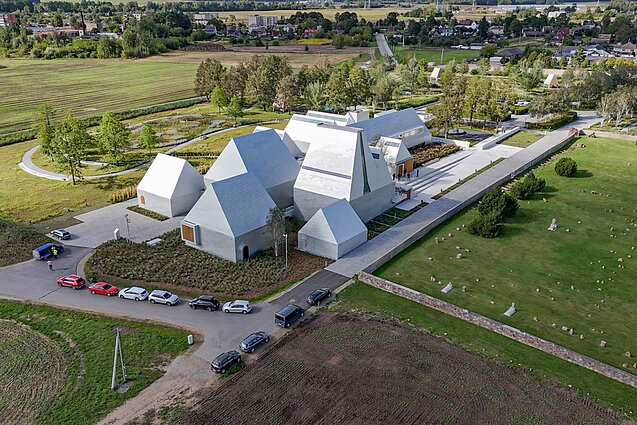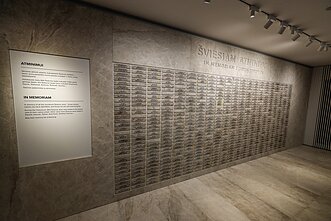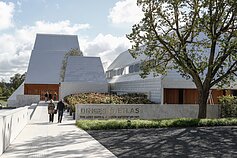








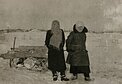


The largest Jewish history museum in the Baltic states, the Lost Shtetl (Dingęs Štetlas), opens its doors this weekend in Šeduva, northern Lithuania. The 3,000-square-metre complex recreates an entire interwar Jewish town.
Eight decades ago, small towns with Jewish communities were known in Yiddish as shtetls. During the interwar period, there were more than 200 such towns in Lithuania, where Jews and Lithuanians lived side by side.
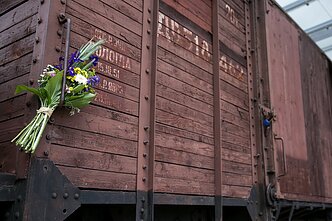
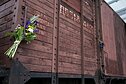
The history of the shtetls ended when the Nazis occupied Lithuania and, aided by local collaborators, murdered most of the Jewish population.
The Šeduva shtetl was destroyed on August 25–26,1941, when nearly 700 men, women, and children were driven into the Pakuteniai and Liaudiškiai forests and killed.
The idea of restoring the vanished Šeduva shtetl developed gradually. While work was underway to preserve the old Jewish cemetery, Sergejus Kanovičius conceived the plan to establish a museum nearby.
The project was funded through the Switzerland-based FSU Education Association by a descendant of a Jewish family from Šeduva, who wishes to remain anonymous.
Initially, the foundation’s funds were used to commemorate Holocaust sites, where memorials by sculptor Romualdas Kvintas were erected.
Finnish architect Rainer Mahlamäki was invited to design the museum. The professor also created the POLIN Museum of the History of Polish Jews in Warsaw, which was nominated for European Museum of the Year by the European Museum Forum in 2016.
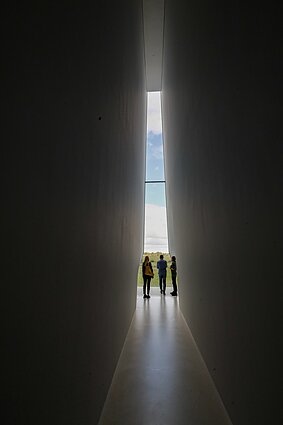
The architect still recalls his first visit to Lithuania in May 2016: “When I first saw [Šeduva], I felt the spirit of the place. This cemetery was one of the elements that shaped how I organised the mass and architecture of the building. But the Lithuanian landscape was perhaps my most important source of inspiration.”
Mahlamäki, captivated by Lithuania’s scenery, worked with local partner Studija 2A, while Augustas Audėjaitis served as executive architect. He notes that the building and the exhibition were developed together.
According to the architect, it might seem that the project was slow to materialise, but that was not the case: “The task was, you could say, a living organism. That is why the park emerged, even though it was not in the original concept.”
The design was handled by a team from US firm Ralph Appelbaum Associates, while the vast Memorial Park, which has become a living monument, was created by Italian landscape architecture company Enea Landscape Architecture.
This unprecedented project in Lithuania took nearly a decade and involved 36 companies from eight countries, bringing together specialists of 18 nationalities.
Museum representatives do not reveal the project’s cost, but professional architects estimate the distinctive development may have cost as much as 200 million euros.
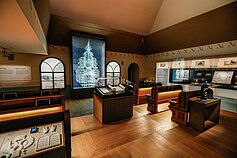
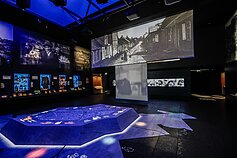
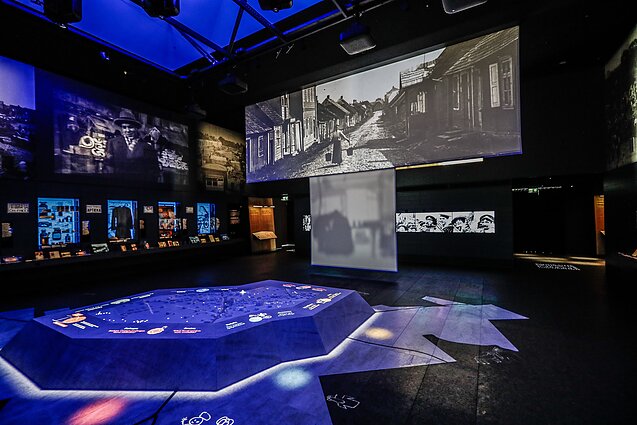
The meticulously installed museum exhibition comprises 10 spaces, each devoted to a different theme. The creators at Ralph Appelbaum Associates say they found inspiration in the novel A Romance of a Small Town by writer Grigorijus Kanovičius, which tells the story of another lost shtetl, Jonava.
The tour begins in the Market Square, where there is a model of Old Šeduva. Visitors then move on to areas illustrating the interwar period: Jewish businesses, youth issues, migration, and the rise of antisemitism.
According to Jolanta Mickutė, head of the museum’s Education Department, visitors are first introduced to the golden era, before moving into the dark period of Soviet and Nazi occupation.
“In two days, the shtetl was simply wiped out – 664 Jews were murdered. Only a handful survived – those who had left earlier and those sheltered by Lithuanians,” says Mickutė.
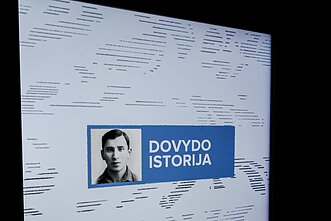
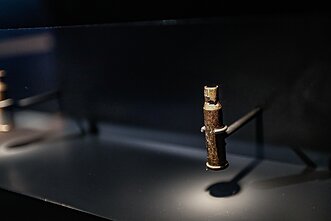
The exhibition draws visitors into a lost world, where they can view historic photographs, preserved artefacts, and hear and see personal testimonies.
Among the exhibits is the memoir of a girl who emigrated to the United States, containing good wishes written by both Jewish and Lithuanian classmates.
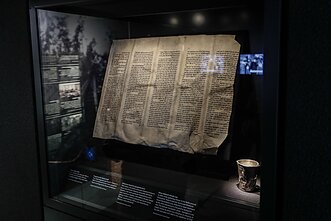
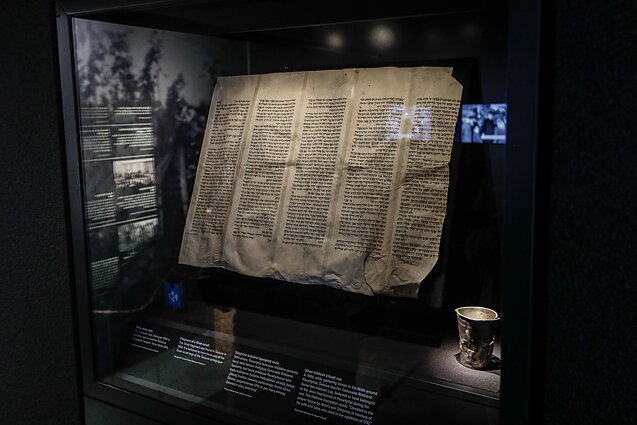
Another exhibit is a fragment of a Torah scroll, evidence of vandalism. “We have heard reports that the Torah, written on treated parchment, was cut up and the pieces used as insoles,” says Mickutė.
At the end of the tour, visitors are warned that children under 12 may find the sights, sounds, and smells disturbing.
Here they walk along the “path of death” recreated by the exhibition’s authors. It evokes the victims’ final steps to the execution site in the forest.
Visitors walk on glass floors beneath which the forest floor is visible. As they proceed through the dark corridor, they hear forest sounds, smell woodland scents, and see documentary footage shot in the Šiauliai ghetto.
Retracing the journey
The new museum is remarkable not only for its design and content but also for the vast Memorial Park beside it, which was not part of the original plans.
Marija Dautartaitė, the museum’s head of communications, says that landscape designers from Italy’s Enea Landscape Architecture first visited the killing sites.
“They walked, recording what they saw: Lithuanian fields, farmsteads, gardens, beehives, marshes, mature trees, young trees. And they sought to recreate all this in the park,” says Dautartaitė.
Advance booking advised
The museum opens to the public on Saturday, September 20.
During its first year of operation, visitors will be able to view the Lost Shtetl exhibits collected from around the world, take part in educational activities, and join professional guided tours free of charge.
However, visitors are urged to book in advance, as only a limited number can join guided tours through the museum.
Mickutė, head of the Education Department, says that at weekends guided tours are already booked up until December, but places remain available on weekdays.

Newsletter
Every Friday morning.