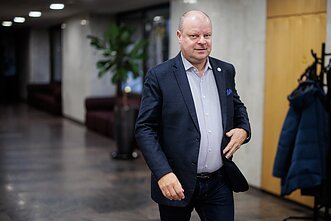













Mikola Statkevich, one of the most prominent opposition leaders in Belarus and a former presidential candidate, was released along with 51 other political prisoners. However, he refused to cross the border into Lithuania. In an interview with LRT.lt, his wife Marina Adamovich recounts why he chose not to leave the country.
The prisoner release took place on September 11, following a meeting between US presidential envoy John Cole and Alexander Lukashenko, the authoritarian ruler of Belarus.
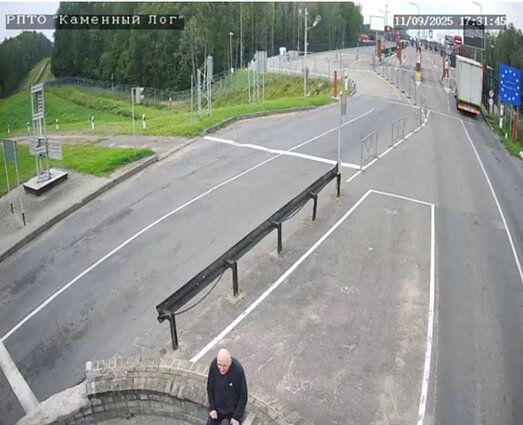
While other freed detainees arrived in Vilnius, Statkevich was seen standing for several hours on the Belarusian side of the border crossing with Lithuania before being escorted back by Minsk officials.
There is still no official confirmation of his whereabouts, although Lukashenko acknowledged on Thursday that Statkevich had refused to leave, so officials “took him away”.
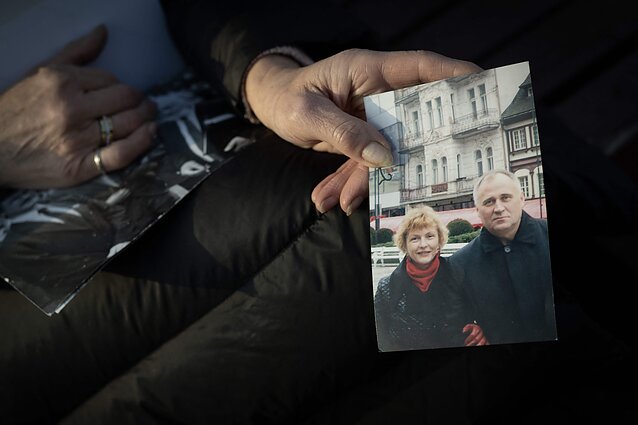
‘I began screaming’
Statkevich had been in prison since May 2020, even before the August 9 presidential election that saw a short-lived uprising against Lukashenko.
Adamovich first learned about her husband’s release from prison – and his decision not to leave Belarus – from her son Yury, as she was abroad at the time.
On the phone, Yuri shouted to her in Belarusian: “He is coming back, he is coming back to Belarus.”
“At first, I didn’t understand what he meant. It was completely unexpected. Then he shouted that Mikalai had been released and was returning to Belarus. And I just… well, then I just shouted, ‘No!’ I simply began screaming ‘No!’ with all my strength,” she said.
Adamovich was then able to reach him by phone.
“He confirmed that since February 2023, he’d had no contact with anyone. But he kept writing to me, as I did to him. And neither of us doubted for a second that we would continue to support each other.”
“I won’t describe our personal feelings, the words we said to each other. But he managed to say he was returning to Belarus. I said, ‘Please wait for me, wait for me. I so want to hug you; I haven’t seen you for so long.’ But he said, ‘That’s impossible, it would be a one-way trip.’” Adamovich said.
“He also told me that he watched patriots being taken away and asked, ‘What will happen to this country then?’ To be honest, we hardly had time to say anything else to each other. The only thing he told me was how worried and anxious he had been about me all that time,” she added.
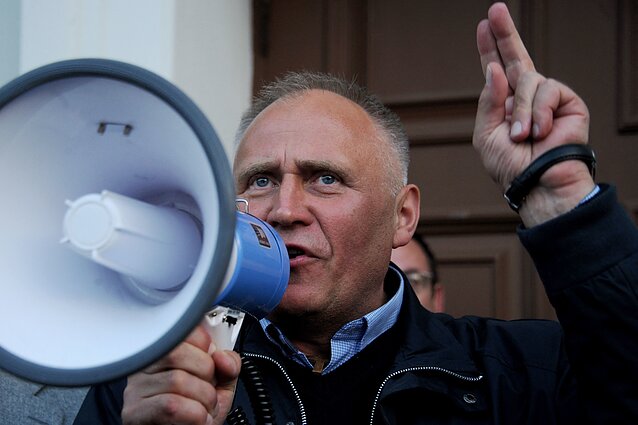
Adamovich said hearing his voice felt as if they had never been apart.
“There was incredible energy and strength in his voice. It was the voice of a completely unbroken person, despite spending nearly all of his five years and three and a half months in the colony in solitary confinement,” Adamovich said.
“I had no doubt that if there were an attempt to deport Mikalai, he would do everything to return to Belarus. Aterwards, of course, his release would become even more complicated. Perhaps that’s why I shouted ‘no’ when I heard they were trying to take him out and he was coming back,” she sid.
Statkevich has a long history of facing regime violence and arrests.
In 2004, he was detained for taking part in a protest against the referendum that allowed Lukashenko to run for a third term. He was given a three-year suspended sentence.
In 2010, after the presidential election and the dispersal of a demonstration in Minsk, Statkevich was again detained. In 2011, a court sentenced him to six years in a high-security colony. He was released only in August 2015, when the authorities announced a pardon, though Statkevich did not sign a request for clemency.
As soon as he was freed in 2015, Statkevich said he would never leave Belarus, Adamovich recalled.
“He always believed that any values or convictions are worth only as much as a person is willing to pay for them – that was one of his core beliefs. If someone who declares values important to society later shows that personal safety matters more, there is usually a mass rejection of those values, their erosion. Mikalai cannot allow that. This is another reason he stayed in Belarus,” she said.
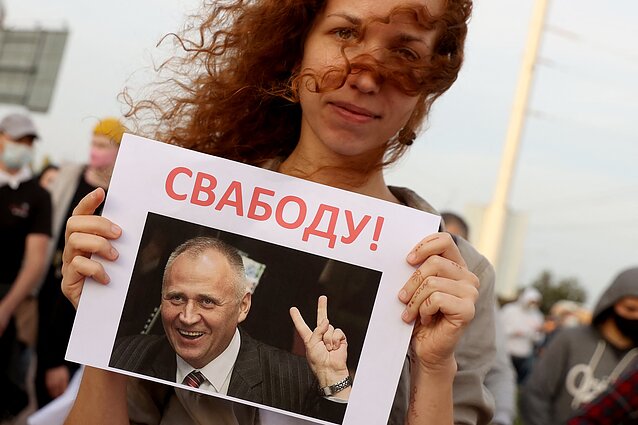
According to Adamovich, his priority was to preserve his inner freedom, dignity, and the right to choose, as well as to “change the game” – to keep his free will and stay in the country.
“This really has nothing to do with fear of losing respect. Even if he were completely alone – and during these long five years, he was indeed completely alone – it would not have affected his decision, even if no one had ever found out about it. It is his inner dignity, his inner conviction and his values, which he is not willing to abandon,” she said.
Adamovich said she will always support her husband.
“These days I often repeat: in 2015, when Mikalai was released, many people in the city came up to us, shook his hand, and asked to take pictures with him. Many asked: ‘You won’t leave, will you? You won’t abandon us?’ Mikalai would answer: ‘No, I will not leave,’” she recalled.
According to her, she has always felt a sense of fortunate fate: the right people have always been by her side.
“All those I loved and still love were next to me. I am endlessly grateful to fate for that and will always be grateful. And if we talk about how worrying and difficult it is – yes, it is very worrying and very difficult.”
“Even in the best of times, when we are together, if Mikalai suddenly disappears from my sight, I am seized by panic, even horror – there’s no other word for it. I understand it is irrational, but that endless fear never goes away. However, that does not contradict what I said earlier,” Adamovich said.

Newsletter
Every Friday morning.