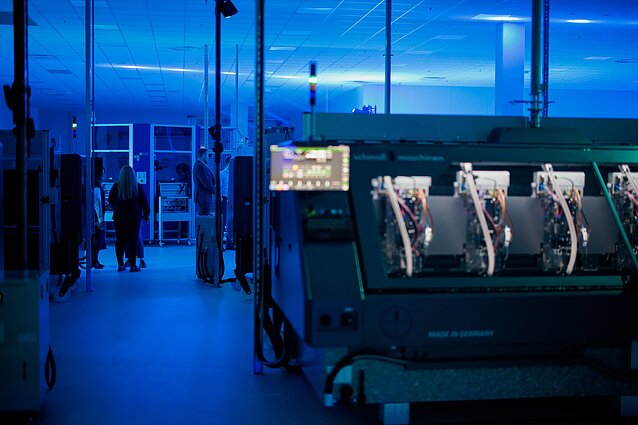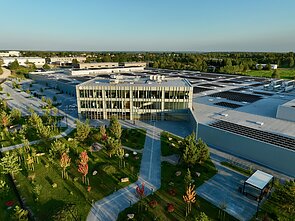















Lithuanian technology company Teltonika has opened four new factories in the capital as part of a €320 million investment aimed at boosting domestic production of electronic components and reducing reliance on imports.
The plants – for printed circuit boards, plastics and mechanical components, electronics assembly and components – mark the completion of the first stage of the company’s High-Tech Hill industrial park project in Vilnius.
The 55-hectare park in Liepkalnis is expected to house around 10 industrial and administrative buildings by 2028, creating 5,000 to 6,000 jobs. Total investment in the project could reach €3.5 billion, the company said.
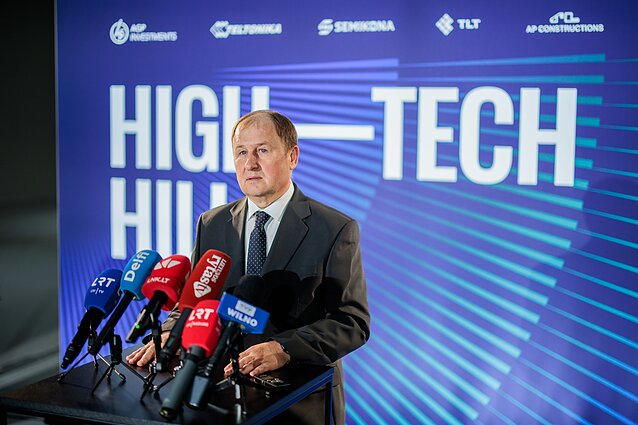
“Our goal is to keep competencies and people in Europe and Lithuania who can create such technologies,” said Arvydas Paukštys, founder of Teltonika IoT Group and head of its parent company, AGP Investments. “If we moved everything to Asia, we would be very vulnerable.”
Paukštys said Teltonika currently produces about 10 million devices annually but will now be able to triple capacity to 30 million. The company aims to manufacture all the critical components for its products domestically.

Future plans include an artificial intelligence factory to complement chip production, he added, noting that the company already consumes 74 megawatts of electricity and is becoming “probably the largest electricity user in Lithuania”.
Paukštys said the park could eventually generate 9–10 billion euros in annual exports and contribute about 5% of Lithuania’s GDP. By 2027, when sufficient electricity capacity is in place, the project’s contribution could exceed 1% of GDP, rising to more than 3% as production expands.
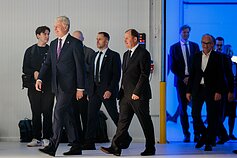
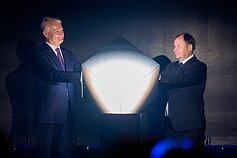
President Gitanas Nausėda, speaking at Thursday’s opening ceremony, said the investment would strengthen Lithuania’s security and competitiveness by reducing dependence on imported components.

“This is more than a business project; it is an investment in Lithuania’s technological independence and economic security,” Nausėda said. “Highly qualified chemists, physicists, graduates and doctoral students will now have opportunities to apply their talents here, rather than going overseas.”
Construction of additional facilities, including research and development centres and laboratories, is scheduled to begin in November, with the entire park expected to be completed by 2028.


Newsletter
Every Friday morning.