









The government on Wednesday approved draft changes to aviation and military force laws intended to let the armed forces more quickly and easily neutralise drones that threaten the country’s airspace, but the measures must still be adopted by parliament.
The Cabinet backed amendments prepared by the Ministry of Defence that would allow the defence minister – or a person she or he authorises – to order military force against unmanned aircraft in designated restricted zones if the drones are flying in violation of rules for unmanned flights.
The move comes after a series of regional incidents involving drones and reflects what the ministry described as a growing need to create faster, more effective conditions for using military force against such threats to national and public safety.
Under current rules, military force could be used only against aircraft employed as weapons inside already prohibited zones, officials said. The proposed changes would streamline the process for establishing restricted zones so decisions could be made in minutes rather than days.
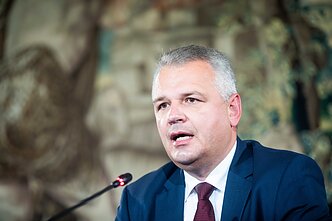
“Already the minister has signed an authorisation allowing air force duty officers to make such a decision. We will keep that speed,” Deputy Defence Minister Karolis Aleksa told reporters. “What we will have is another mechanism to establish restricted zones – not in several days, but within minutes.”

The draft would require air-traffic service providers to ensure information about activation of specific restricted zones is transmitted as quickly as possible – no later than 10 minutes before a zone becomes active – to aircraft in the provider’s area of responsibility. Any aircraft receiving notice of an activated restricted zone would be required to leave it immediately.
In zones declared under the proposal, civil aircraft would be barred from flight unless they obtained permission, officials said.
Transport and Communications Minister Eugenijus Sabutis said the new concept of “restricted zones” is intended to give authorities a tool for fast operational decisions when unmanned aircraft are detected and their intentions and trajectories are unclear.
The Defence Ministry emphasised that even if the legal basis for the use of military force against drones is created, force would not be applied routinely. It would be used “only where there is an absolute military necessity to do so, taking all possible precautions to avoid serious harm to people or property,” the ministry said.

Newsletter
Every Friday morning.