















Lithuania’s economy is on track to expand steadily in the coming years, though reforms and global trade tensions will shape its path, the country’s central bank said Tuesday.
Presenting its latest outlook, Bank of Lithuania Governor Gediminas Šimkus said the economy should grow 3.2% in 2026 – 0.4 percentage point more than forecast in June. This year’s growth is projected at 2.7%, a slight downgrade, while 2027 growth was lowered to 2.3% from 2.9%.
“Over the summer, uncertainties in Lithuania and the global economy have eased somewhat, and now we see a clearer picture of the future,” Šimkus said. “Although pension reform, tax changes, and higher trade tariffs will affect growth in the short term, they will not change the overall direction – the economy will remain on a growth path. Wages will continue to rise faster than inflation, meaning households will have more room to save and spend.”

Pension reform to drive consumption, then slow it
The upward revision for 2026 reflects Lithuania’s second-pillar pension reform, which allows participants to withdraw savings early. The central bank expects about 20% of participants to cash out in the first wave, totalling around €1.13 billion.
Most of the withdrawn money is expected to go into goods and services, lifting private consumption by 6% in 2025. But growth is forecast to slow to just 0.8% in 2027 once most of the funds have already been spent.

“Much greater private consumption is expected next year, but in 2027 it will shrink significantly because most of the withdrawn funds will already have been used,” Šimkus said.
Private consumption is projected to increase 2.2% in 2025 overall – 1.6 percentage points lower than forecast in June – as spending recovers from a weak start to this year.
US tariffs to weigh on exports
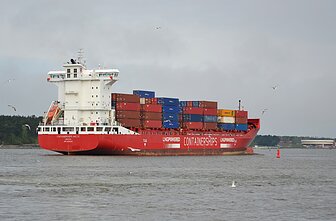
American tariffs are also expected to curb Lithuania’s export performance, trimming 0.3 percentage point from growth between 2025 and 2027, compared to 0.2 points in the June forecast.
The effective US tariff rate on Lithuania rose from 8.3% to 13.3% after a recent US-EU trade agreement. As a result, Lithuanian exports are expected to grow more slowly than in the past decade – 3.8% this year, 2% in 2026 and 3.4% in 2027. Rising competition from Chinese producers in Europe could pose additional risks.

Investments, however, should offset some of the drag, rising 5.7% this year, 5.4% in 2026 and 3.1% in 2027, mainly in equipment upgrades, production capacity and modernisation by the private sector. Public investment will be boosted by EU funds, especially for green transition, digitalisation and defence.
Jobs, wages and inflation outlook
Slower growth has already affected the labour market, with employment falling in several sectors and unemployment rising to 7.1% this year, above June’s 6.7% forecast. Joblessness is projected to ease to 6.6% in 2026 and 6.5% in 2027.
Wage growth is expected to remain strong but moderate compared with recent years. Average wages, which rose 10% last year, are forecast to grow more than 8% in 2025, nearly 9% in 2026, and under 7% in 2027. Since pay will still outpace inflation, purchasing power is expected to improve.
Inflation is forecast at 3.5% this year, 3.1% in 2026 and 2.6% in 2027, approaching levels seen in Western Europe. Food and services will contribute most to price growth, particularly alcohol, dairy, meat and tobacco, reflecting both higher costs and taxes.
The bank said about a quarter of consumer price growth from 2025 to 2027 will come from recently adopted tax changes, including those set to take effect in January.

Newsletter
Every Friday morning.