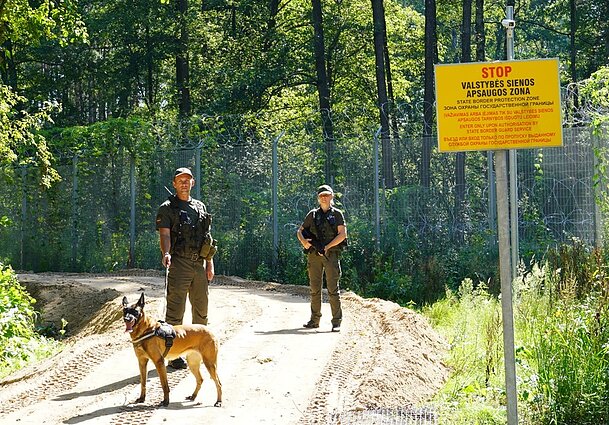














The situation on Lithuania’s border has remained calm since Russia and Belarus launched their joint Zapad military exercise on Friday, the State Border Guard Service (VSAT) says, noting that irregular migration has been down.
“The first weekend of the active phase of the Zapad drills was fairly calm, both in terms of illegal migration and other incidents at the state border. Border guards did not record any unusual activity along the borders with Belarus and Russia,” VSAT chief Rustamas Liubajevas told LRT RADIO on Monday.
“As for illegal migration, no flows were recorded either. It can be said that the numbers went down during the drills on the border with Belarus,” he added.
However, Liubajevas noted that there were more attempts to cross the border in the middle of last week, just before the active phase of the exercise began.
“Overall, when we look at the regional picture, tensions remain and the flows of illegal migration are still quite high,” he said.
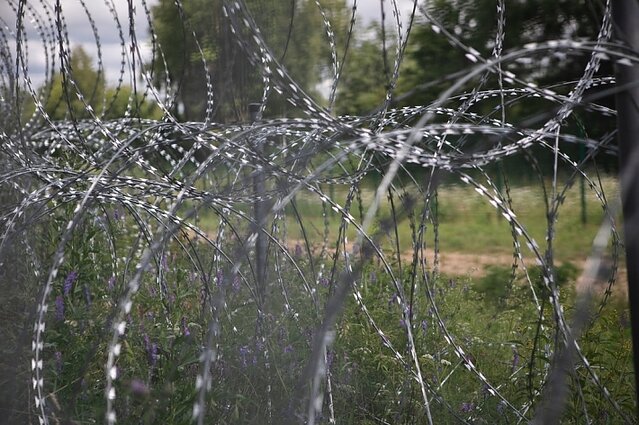
Zapad 2025 kicked off on Friday and will run until Tuesday.
In the run-up to the drills, Lithuania last week launched its Thunder Strike 2025 exercise, involving about 17,000 Lithuanian and allied troops.
Chief of Defence Raimundas Vaikšnoras has said that around 40,000 troops will be training across the Baltic states and Poland during Zapad.
The VSAT has announced tighter security on Lithuania’s borders with Russia and Belarus, with stepped-up surveillance and patrols, supported by the defence system’s structures and the paramilitary Riflemen's Union.
In late August, Lithuania also closed part of its airspace along the Belarusian border until October, ahead of the Russian-Belarusian drills and following two incidents over the summer when Gerbera drones entered the country’s airspace.
Lithuanian intelligence estimates that up to 30,000 troops are taking part in Zapad 2025.

Newsletter
Every Friday morning.