














Russia and Belarus on Friday began their joint Zapad 2025 military exercises, a move closely watched by NATO allies concerned about potential provocations along the alliance’s eastern flank.
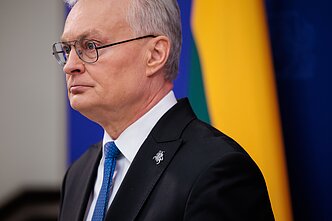
Lithuanian President Gitanas Nausėda said Thursday that while the drills do not appear to signal imminent aggression, the risk of drone incursions, airspace violations, or other provocations cannot be ruled out.
“We have taken measures, and we have no information suggesting that these exercises could be used for aggression against Lithuania,” Nausėda said.
Scale of the drills
Belarusian Defence Minister Viktor Khrenin announced in May that the drills would be scaled back and shifted from the country’s western border to central Belarus. Minsk has said around 13,000 troops are participating, though Lithuanian intelligence estimates the real figure could be closer to 30,000, including about 2,000 Russian soldiers.

Analysts say the reduced scope reflects Moscow’s preoccupation with its war in Ukraine. In 2021, the last time Zapad was held, around 200,000 troops took part. Russia went on to use both its own and Belarusian territory to launch its full-scale invasion of Ukraine months later.
Belarus has invited representatives from NATO and the Organization for Security and Cooperation in Europe to observe the exercises. Strongman President Alexander Lukashenko has recently spoken about a potential “thaw” in relations with the West.

Military scenarios
Belarusian officials have said the exercises will test nuclear weapons planning and deployment of the Oreshnik ballistic missile system. They will also feature air defence drills, scenarios to repel incursions, and tactical aviation support.
The drills are also intended to test the military readiness of the “Union State”, a political and defence pact between Moscow and Minsk established in 1999.
Risks for the Baltics
For Lithuania, Poland and other NATO neighbours, the main concern is not a full-scale attack but smaller-scale incidents. Analysts warn that the drills could also be used to intensify Russia’s operations in Ukraine.

Polish Prime Minister Donald Tusk announced this week that Poland would close its border with Belarus during the exercises. Warsaw has already deployed 40,000 troops along its frontier with Belarus and Russia following repeated drone incursions.
Lithuania will not shut its border but has imposed a 7–8 kilometre no-fly zone along Belarus, boosted NATO troop presence, and stepped up patrols and border checks. Lithuanian forces are conducting parallel drills with allies, while border guards and internal security services are on high alert.
Latvia has also declared a state of emergency along its border, citing both defence exercises and increased irregular migration pressure.
Analysts in Warsaw have suggested the Zapad manoeuvres are partly designed to simulate an operation targeting the Suwałki Gap – a 65-kilometer stretch of land linking Poland and Lithuania that separates Belarus from Russia’s heavily militarised Kaliningrad exclave. NATO has long considered the area one of its most vulnerable points in the event of a Russian attack.

Newsletter
Every Friday morning.