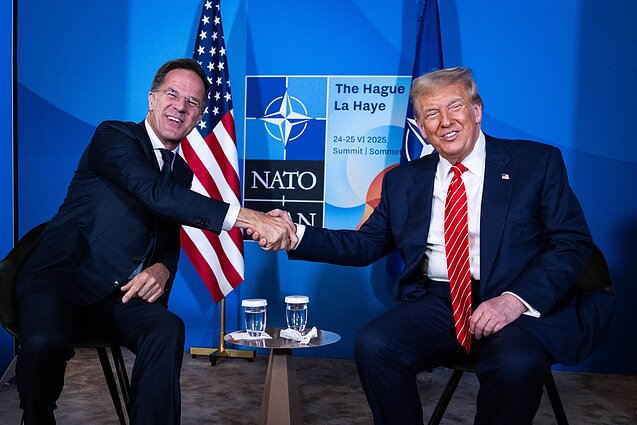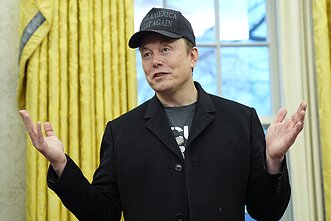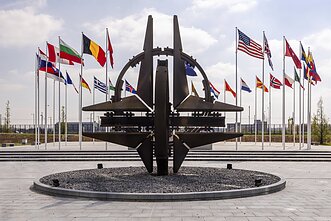














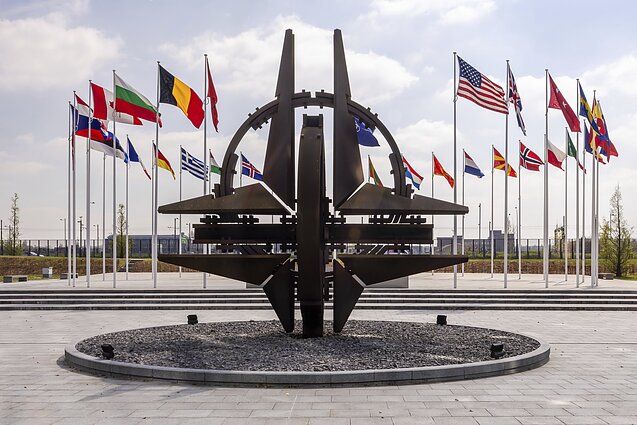
Starting in September, NATO is implementing organisational changes: some positions at its headquarters are being cut, the chain of command is shifting, and other structural adjustments are underway. Some critics argue the reforms are aimed at appeasing Donald Trump, drawing on methods reminiscent of Elon Musk’s controversial DOGE (Department of Government Efficiency) approach, while others insist they are intended to streamline NATO and reduce bureaucracy.
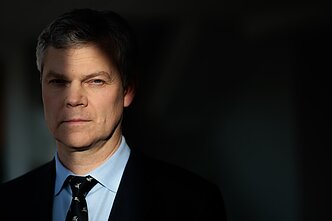
“NATO Secretary General Mark Rutte seeks to appease Donald Trump via, among other things, sweeping reforms of NATO Headquarters,” wrote Gerlinde Niehus, a former long-serving NATO official and now independent expert, on social media in mid-July. “How? In an avidly opportunistic anticipation of “Daddy’s demands”, NATO Headquarters (HQ) is subject to a so-called “efficiency exercise”, including staff cuts and merging functions. However, in essence it is largely a reform to ensure that NATO HQ is “Daddy’s home”. Taking inspiration from the ill-conceived US “DOGE” exercise, it is largely seeking ingratiation aligned to US MAGA politics.”
Although some former NATO officers and experts have supported this critique, the reforms are set to take effect in September. At least two deputy positions to the NATO Secretary General will be eliminated, the Secretary General’s Special Representative for Women, Peace, and Security will move to the Political Affairs Division, and the Climate and Energy Security Division will be transferred from the Innovations, Hybrid and Cyber Technologies branch to the Defence Policy and Planning Division. Public Diplomacy will be significantly reduced, and external project funding will be halted.

NATO officials did not comment to LRT.lt on the reforms, but inside the alliance’s headquarters, they are being described as measures to improve efficiency.
“Let’s start with the fact that we have a fairly new and energetic Secretary General. Naturally, every new leader coming into an organisation they’ve been selected or appointed to wants to make it as efficient as possible,” explained Lithuania’s NATO ambassador Darius Jauniškis. “The structure here [in NATO – LRT] is massive, with a lot of bureaucracy, and I believe Rutte wants to make his entire staff – essentially all the units that help him carry out his functions and keep NATO running – as efficient as possible.”
The prevalence of bureaucracy within NATO was also acknowledged by former Deputy Secretary General Giedrimas Jeglinskas.
“On one hand, the apparatus isn’t as large as, say, the European Union. At the same time, it’s very difficult to find metrics to assess the speed or relevance of bureaucracy. But I would say one aspect is that NATO lags behind the constantly changing geopolitical realities by roughly three years,” he told LRT.lt.

According to Jeglinskas, NATO’s decision-making process, which requires approval from all 32 member states, has contributed to bureaucracy, along with the fact that the alliance’s headquarters is in Belgium, where labour law is rigid and process-focused rather than result-oriented. “These factors together mean that NATO may not be a victim, but a hostage of all these processes, and it is therefore often difficult to expect major breakthroughs from NATO bureaucratic decisions.”
He added: “Speaking behind closed doors with colleagues, we used to say that you could probably lay off a third of the staff and cut 25% of functions that don’t directly contribute to deterrence or defence capabilities, and NATO would hardly change. We might have a leaner, cheaper organisation this way, but our efficiency would be far greater.”
Jauniškis describes the current NATO reforms as structural modernisation, introducing levers and mechanisms designed to manage the organisation more efficiently and make NATO less slow.
However, Niehus, who worked at NATO for more than 25 years, notes that despite the alliance admitting more member states over recent decades and countries expanding the scope of its tasks, the alliance’s international staff did not grow proportionally, meaning more duties had to be carried out by roughly the same-sized team.
However, Niehus, who has worked for NATO for more than 25 years, points out that even though the Alliance has accepted more and more members in recent decades, and countries have increased the scope of tasks, its international staff has, until recently, not grown in a commensurate manner, meaning more duties had to be carried out by roughly the same-sized team.
“This changed with nations agreeing at the Madrid summit on the so-called NATO 2030 process. Now, it seems that the headquarters finds itself in a situation where it's turning the clock back on what was a long and ultimately also quite successful journey led by consecutive Secretary Generals in building up a more robust international secretariat,” she told LRT.lt, adding that current attempts are being made to show US President Donald Trump that they also want to become more effective, similar to DOGE, and are apparently no longer fighting for well-equipped NATO headquarters.
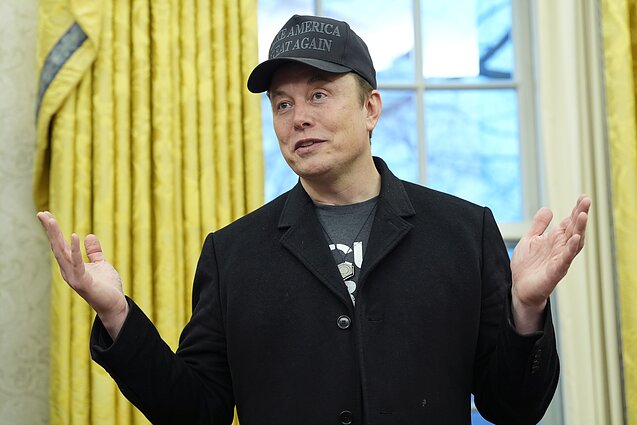
“DOGE itself also claims that [the cuts – LRT] are done to enhance efficiency. And I can understand NATO's official position, but there are simply too many actions that show an alignment with MAGA and Trump for me to accept that argument. So I think there is a US-driven political agenda behind this,” Niehus said.
In fact, the review of the chain of command for the climate and equality departments could reduce their visibility and influence. Earlier this spring, NATO also changed certain terms in its documents; for example, “green technologies” became “innovative technologies” and “climate” was changed to “operational environment”. Additionally, the Public Diplomacy Division disbanded the team responsible for providing information in Russian on social media channels, which was intended to counter Russian propaganda.
“Another case in point: The team specifically devoted to pushing back on Russian propaganda seems set to be dissolved. And again, it mirrors pretty well Trump’s move to shut down a similar function in the State Department earlier this year,” Niehus said.
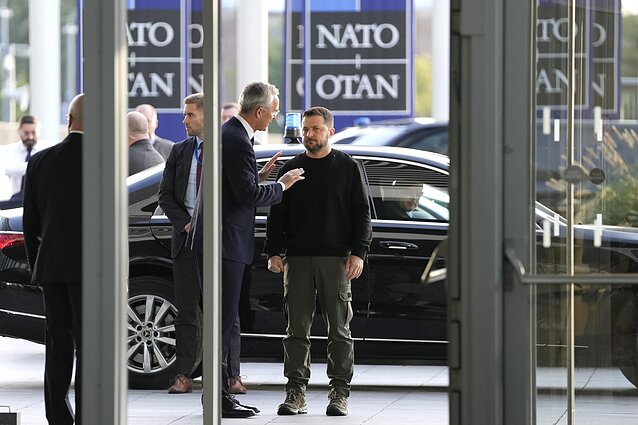
Jauniškis offers a different view: “It is very hard for me to comment on remarks that are based purely on speculation. But let’s look at the reality: as far as I know, women’s rights are not disappearing – they remain. And all these changes, from what I have observed in discussions, honestly give me no reason to believe this is some attempt to curry favour with anyone or anything else. […] I believe, as I mentioned, that the Secretary-General and his staff genuinely want to be efficient and make the entire organisation more effective, so it can respond to future challenges – and there will certainly be many. I see this as a genuine desire to be more efficient, not to appease anyone.”

According to Giedrimas Jeglinskas, even if the NATO reform is driven by pressure from Washington, that is not necessarily a bad thing: “We can deny it, but the reality is that the United States is NATO’s leading nation. It is the most important country, with the largest capabilities, and it sets the trends, tone, and agenda. And if there is a desire – if the White House itself is trying to make operations more efficient in Washington, in federal institutions, or within the military – then for NATO not to do the same would simply be disrespectful.”
He concludes: “Bureaucracy always wants to survive; it just changes its exterior to appear as though real change has occurred.”
“We’ve seen quite a few reshuffles. One division is reduced, another placed under a different structure, but the people are just moved elsewhere. Will we really get a more efficiently functioning organisation?” said Jeglinskas. “It’s a big question mark. Ultimately, the clearest measure, in my view, is the speed of decision-making and the organisation’s relevance across deterrence and defence. Bureaucracy always wants to survive – it just changes its skin, swaps its clothes, and relocates, creating the optical illusion that things have changed. The changes appear to have happened, but in reality, nothing really changes.”

Newsletter
Every Friday morning.