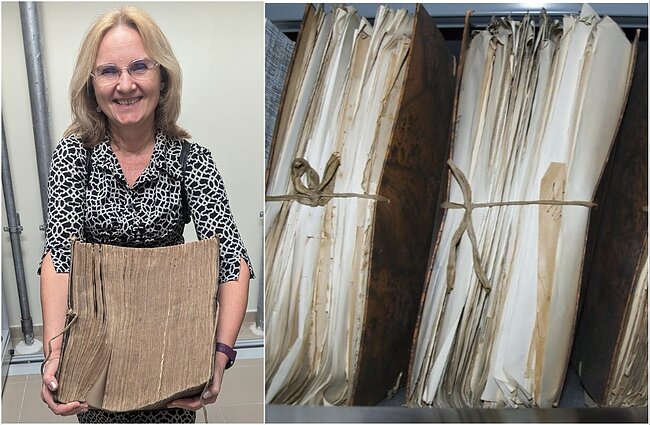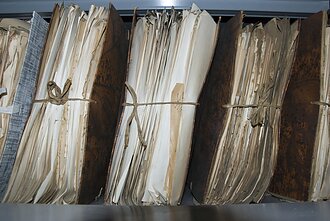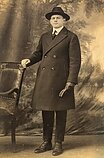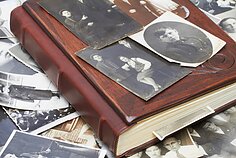















Karilė Vaitkutė, a genealogist who lives in the United States, spends her days poring over countless documents, navigating surname puzzles, census records, and ship passenger lists. She helps Americans interested in their Lithuanian roots rediscover the lost threads of their family history.
“People often burst into tears when I uncover, for example, a record of their great-grandmother’s birth or baptism in some parish archive,” Vaitkutė tells LRT.lt.
Daily requests
Vaitkutė has been involved in genealogy for more than a decade. She is the Head of the Genealogy Department at the Balzekas Museum of Lithuanian Culture in Chicago and also runs a private practice, having completed special courses at Boston University.
According to Vaitkutė, interest in Lithuanian roots among Lithuanian-Americans is immense. She receives one or more new requests every week.
“When Lithuania regained independence, interest grew tremendously. People realised they could finally visit the country from which their grandparents or great-grandparents had left behind. And, of course, the internet helped a lot,” she comments.
“Nowadays, you can discover more and more just by sitting at your computer; you don’t even need to go into the archives. The number of people who are researching on their own, some with real diligence, actively searching for various documents for many years,” says the genealogist.
The maze of surnames
Still, Vaitkutė notes that most people run into the same roadblocks – language being the first.
“Lithuanian Americans rarely expect that the records will be in Russian, Polish, or Latin. Because the first wave of immigrants left before World War I, when Lithuania was part of Tsarist Russia, all their entries were in Russian,” she explains.
Another hurdle is changed or incorrectly spelt surnames and mistranslated or garbled place names. However, Vaitkutė says it’s usually not too difficult to reconstruct a changed surname. She also explains why certain letters might be missing or why the spelling might have been altered.
“There were various reasons. Some families simplified their names to make them easier to pronounce; others wrote them the way they sounded in Lithuanian, which meant the spelling often shifted. I explain everything, for example, why there’s a ‘ch’ or a ‘c’ and ‘z’ in place of what was once ‘š’ (sh).”
“When I pronounce their surnames, they often say, ‘Yes, my grandmother used to say it like that too. How do you say it?’ This is because many often don’t know how to pronounce their surname in proper Lithuanian. There are also cases where families translated their surname into English – for example, someone like Zlatarinskas became Golden,” Vaitkutė recounts.
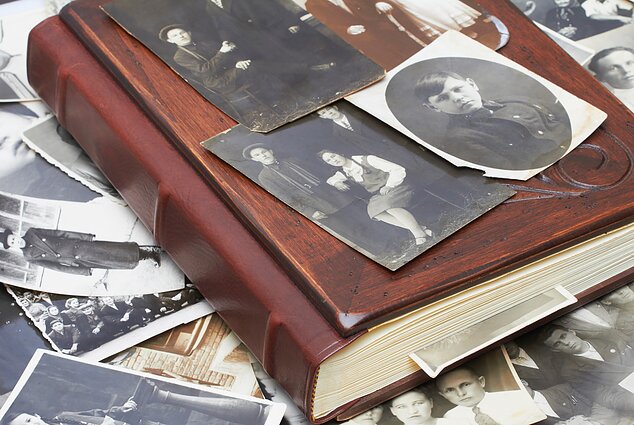
The biggest revelation for many, Vaitkutė notes, is the Lithuanian system of endings. Few expect just how many variations there can be.
“Not just masculine and feminine – married and unmarried women – [The same Lithuanian surname will have a different ending depending on whether it is male or female, and whether the female surname is a maiden name or a surname she took from her husband – LRT], but there are seven grammatical cases, in both singular and plural. I enjoy being able to teach them a little about the basics of the language and history while we work. Genealogy always goes hand-in-hand with language and a country’s history,” she says.
Discoveries followed by tears of joy
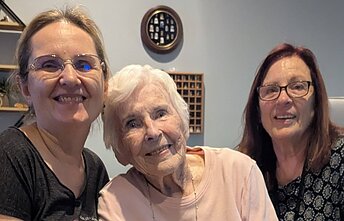
Lithuanian Americans come to Vaitkutė with different hopes. Some want to know which part of Lithuania their ancestors came from, others wish to delve deeper into their family history, and some hope to find relatives still living in Lithuania.
Vaitkutė has also seen a growing number of clients wanting to restore their Lithuanian citizenship. Some may have practical reasons, perhaps wanting to ensure their children can study in Lithuania or elsewhere in the EU. However, she believes most are genuinely seeking a deeper connection with Lithuania.
“They are very proud of their Lithuanian heritage, especially those who say they are one hundred percent Lithuanian – that both their parents and all four grandparents were of Lithuanian descent. Even if they don’t speak the language or know the history, they are very proud of their heritage,” the genealogist notes.
Successful discoveries are followed by incredible emotions. “People cry when I find, for example, a record of their great-grandmother’s birth or baptism in some parish archive. The emotions are truly heartfelt, with tears in their eyes,” she says.
Vaitkutė also receives queries from Lithuanians looking for relatives in the United States. She says that for the search for living relatives to be successful, interest must be mutual. Although some people do not respond or are not interested in their Lithuanian roots, there are also beautiful discoveries and reunions.
Researching times before WWI
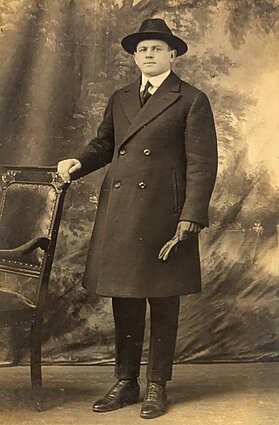
Most often, Vaitkutė has to follow the trail of Lithuanians who arrived before World War I. She describes each case as a puzzle that needs to be solved.
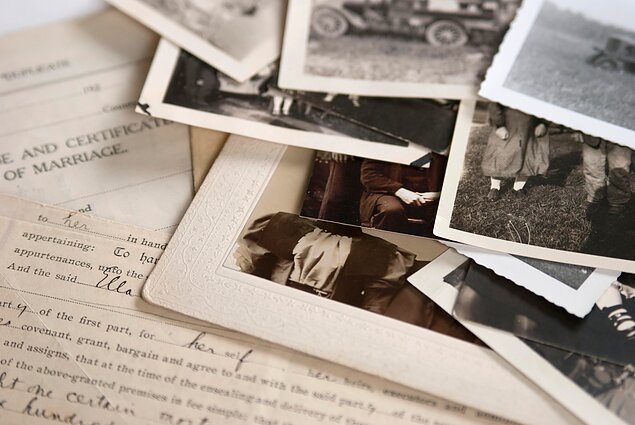
“If a person hasn’t done any research themselves, we start with the American side and try to find all possible documents available here: we start with the client, their parents, then their grandparents. Birth records, death records, names, parents’ surnames. Many Lithuanians who arrived in the US lived in close-knit Lithuanian communities – went to Lithuanian churches. Sometimes in those parish records, you find beautifully written Lithuanian names, and in some cases, even the parish where they were baptised in Lithuania,” the genealogist explains.
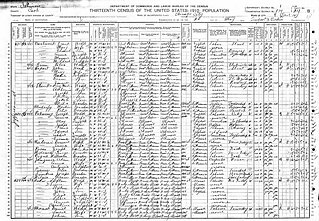
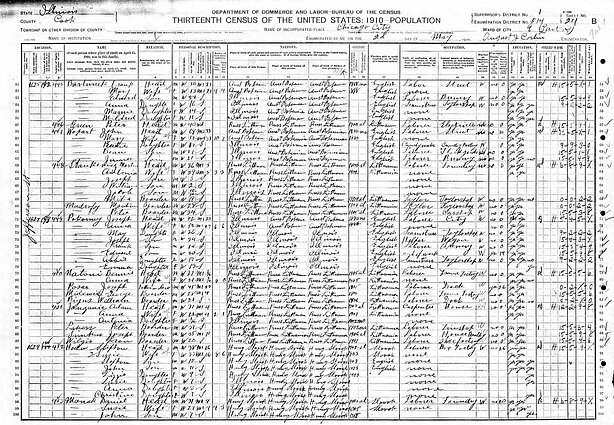
She also examines census data, which typically indicates when a person arrived in the US, and then analyses ship passenger lists.
“These lists often state where they were born and where they lived most recently in the old country. Sometimes it’s a very precise village name, and other times it’s so distorted you can’t understand it until you dig deep,” she explains.
However, there are also cases where the threads of a long-lost story simply cannot be found. This is most difficult when relatives arrived in the US very early, in the late 19th century, around the 1870s to 1880s. The genealogist explains that at that time, ship passenger lists contained little information, and if a person did not live long after arriving in the US, the chances of finding them in census records are slim.
“The 1890 census is gone – it burned down. The 1900 census provides very little information, and if a person died young, there is little hope of finding anything. Especially if there was an accident, for example, they were crushed in a mine. Then the records would often list the father and mother as ‘unknown’. And if there is no family memory left, no one alive knows anything – it may not be possible to trace anything further,” Vaitkutė explains.
It’s also true that family stories told by her clients aren’t always reliable. For example, some have heard their family was of noble descent and believe that if they had stayed in Lithuania, they would be high-borns. Whether such stories are confirmed, she notes, depends on the region.
“In Samogitia, this is often confirmed. There were a lot of minor nobility there, and sometimes you find a Russian entry for ‘dvorianin’ (lord). People often think they’re practically princes or kings, but then I have to explain that these nobles were sometimes poorer than prosperous peasants. So they bring these family tales and are convinced they are second only to royalty, but we just can’t find any proof in the archives,” she laughs.
Continuing to follow Lithuanian trails
According to the genealogist, the duration of the search depends on how deep a person wants to explore their family history. Some are satisfied with birth, death, and marriage records, while others want to know more. Searches can go on for years.
“Sometimes everything is completed in a month or so, while others come back six months later and say, ‘I’ve found new information, can we continue?’” Vaitkutė says.
However, such a genealogy service is not cheap. Vaitkutė notes that genealogists usually have hourly rates, with a minimum cost in the US now around $50 (about 43€).
“Everything depends on the genealogist, their experience, and their specialisation. Not everyone does everything. For example, I only work with Catholic church records. I don’t do Jewish genealogy, I can sometimes search a little for Lutherans, but I tell everyone that I work with the territory of Lithuania because I have a lot of experience here,” she explains.
Often, successful genealogical searches inspire Lithuanian-Americans to visit and see the land of their ancestors with their own eyes. The genealogist admits that she sometimes fears such visits might be a disappointment, as many of the places from the past, especially in rural areas, no longer exist.
“Some might imagine that their old family houses are still there, but they’re usually not. So it’s already a blessing if the church where their great-grandparents were baptised still stands, but even that isn’t always the case,” Vaitkutė says.
Still, she is pleased that her clients’ interest in their heritage is not a temporary obsession – many begin learning the Lithuanian language and return to Lithuania again and again to follow their family’s footsteps.
Translated to English by Smiltė Titovaitė.

Newsletter
Every Friday morning.