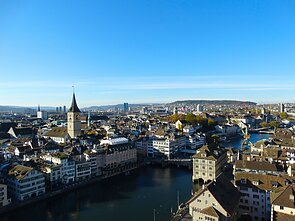








A long-contested Soviet military burial site in the centre of Šiauliai is set to be removed, with the remains of Red Army soldiers due to be relocated to a municipal cemetery on the city’s outskirts later this year.
Architect Vytenis Rudokas presented plans for the redesign of the site during a public consultation at the Šiauliai city municipality. With no objections raised, the project is expected to proceed without further delay.
Municipal administration director Antanas Bartulis confirmed that the final go-ahead is pending government approval, after which an inter-agency task force will be formed and begin its work.
“Funding won’t be an issue. The work isn’t complex, so we expect to finish within the year,” said Bartulis.
A burial ground in the city centre
After the Second World War, in Šiauliai, like in many towns across Lithuania and the Soviet Union, authorities set up war memorials and burried soldiers of Red Army soldiers.
In Šiauliai, the burial site was established beside the city’s cathedral and municipal building, right next to present-day Prisikėlimo (Resurrection) Square.

However, the architect overseeing the project, Rudokas, stated that he had identified an eyewitness who claimed the remains of 52 soldiers were relocated to the site after the end of the war. An obelisk was later erected there, along with an eternal flame.
An elderly former resident of Šiauliai, now residing in Radviliškis, recounted that, following directives from the Soviet authorities, some locals from nearby areas exhumed human remains that had been buried for several years and transported them to the city centre.
Redesigning public space
The memorial is next to the square in front of the Municipality building, a space that has now been designated for a centrepiece monument.
“This is a symbolic, representative site of public reverence, and the area currently being redeveloped must not compete with it,” said architect Rudokas.
His design restores the transit corridor along Aušros Walk. Previously, the pedestrian route was blocked by a raised platform created for the memorial, forcing people to walk around it.

“The entire space [where the memorial currently is] will serve as a complementary feature to the main square,” noted the architect.
As part of the redevelopment, two mature maple trees will need to be removed, as they were planted directly over the tombs.
Delayed process
Discussion about relocating the Soviet memorial, situated in the very heart of the city – between Šiauliai Cathedral and the municipal building – began long ago.
Architect Rudokas recalls that the issue was raised ahead of the renovation of Prisikėlimo Square:
“In 2015, after winning the redesign competition for the square, I proposed relocating the graves. It seemed we had succeeded in persuading decision-makers, but everything ground to a halt following a meeting with three deputy ministers.”

The burial site – once listed in the Register of Cultural Heritage – was excluded from the Prisikėlimo square redevelopment plan and handled as a separate matter.
Under that separate scheme, an obelisk was eventually dismantled and the gravestones laid flat. Yet, this failed to resolve the tensions which continued to rise over the graves' continued presence in the centre of Šiauliai.
Following Russia’s invasion of Ukraine, the Lithuanian government launched a campaign to remove Soviet symbols from public spaces, including Red Arm burial sites. Local authorities in the Pasvalys District relocated a Soviet military cemetery from the centre of Pumpėnai.
However, this did not set a precedent. Even though Šiauliai City Council member Zakiras Medžidovas drafted a proposal to do the same, it gained little traction.

Neither the amendments to the Human Remains Burial Act passed by the Lithuanian parliament, nor a public consultation, were enough to spur action. Of the 1,538 residents who took part in the survey, nearly 82% supported relocating the remains from the city centre to the outskirts.
However, the results failed to convince all local politicians. Vytautas Juškus, a representative of the ruling majority and former mayor, publicly questioned whether enough residents had voiced their opinion.
Conflicting histories
The official Soviet version of the liberation of Šiauliai has its own history of contestation. Soviet Air Marshal Ivan Pstygo once confided to a Russian journalist about how the city was taken from the German forces.
According to the marshal, in July 1944, the Germans withdrew from Šiauliai without a fight but left behind large reserves of alcohol. After taking the city, the Red Army celebrated so heavily that when German forces returned during the night, they easily captured the intoxicated soldiers.
Upon learning of the loss, Joseph Stalin was furious and ordered General Ivan Bagramyan, commander of the Baltic Front, to retake Šiauliai within three hours.
According to Marshal Pstygo, Šiauliai was levelled in just 90 minutes, as – for the only time during the war – all three Soviet air armies bombed one city in five consecutive waves.

Newsletter
Every Friday morning.