



The past few years in Lithuania’s private medical clinic market have been marked by significant acquisitions: InMedica merged with Kardiolita, and Affidea with Synlab. All the major companies in this sector increased their revenues and operated profitably. However, concerns are growing over ongoing initiatives by the current government, which have already prompted considerations to halt some investments.
LRT.lt presents the top five private healthcare institutions operating in Lithuania. This list was compiled by combining data on personal healthcare licences from the State Health Care Accreditation Agency with financial reports submitted to the Centre of Registers.
According to this data, in 2024, by revenue, the leading company was InMedica. Its income grew by 22 percent last year, reaching €152.4 million, while profit increased by 65 percent, to €13.5 million.
Merged and changed shareholders
The last five years have been a period of change for InMedica, founded in 2004. In 2022, it merged with Kardiolita, and this year it passed into the hands of new shareholders – the Finnish company Mehilainen.
As stated in last year’s report, InMedica also owns the Vilnius, Kaunas, and InMedica Implantology Centres, Danta, Aukštaičių Šeimos Klinika, Panevėžio Odontologai, Druskininkų Pušyno Klinika, and the General Practitioner’s Office on Tilžės Street in Šiauliai. Additionally, last year it incorporated ARS Medica, which operated in Kaunas.
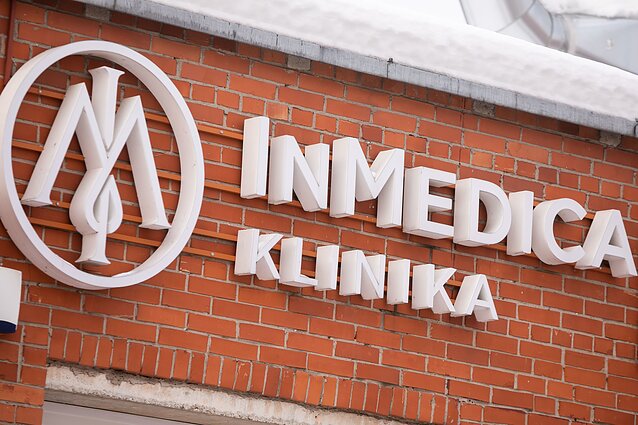
InMedica manages a total of 84 clinics and five laboratories across 27 cities in Lithuania, according to one of the company’s latest press releases. It states that more than 3,500 employees work at InMedica, providing healthcare services to over 310,000 registered patients.
The new major shareholder Mehilainen, belongs to the CVC investment fund network. CVC funds hold shares in companies operating in various industries, including finance, utilities, chemical production, manufacturing, retail, and distribution across Europe, the US, and the Asia-Pacific region.
Previously, the company belonged to the private equity fund INVL Baltic Sea Growth Fund, the healthcare and pharmaceutical group AB City, and Litgaja, controlled by InMedica’s founder and current CEO Kęstutis Broniukaitis.
The rebranding announcement swiftly followed the change in shareholders. Starting this May, InMedica and Kardiolita clinics have gradually begun to be renamed Meliva.
The financial report states that last year’s revenue growth was driven by acquisitions of new clinics and increased service volumes in existing units.
“This year, uncertainty remains regarding the sustainability of adequate healthcare funding, considering the rising necessary defence expenditures. There is also potential political uncertainty related to the continuity of Lithuania’s healthcare system, especially concerning the organisation and regulation of public health centres.
Like most European Union countries, Lithuania’s healthcare sector faces a shortage of medical personnel, making the adequate and timely provision of staff a key challenge for all healthcare providers,” the document states.
InMedica does not hide its intention to continue expansion and plans to acquire several new clinics.
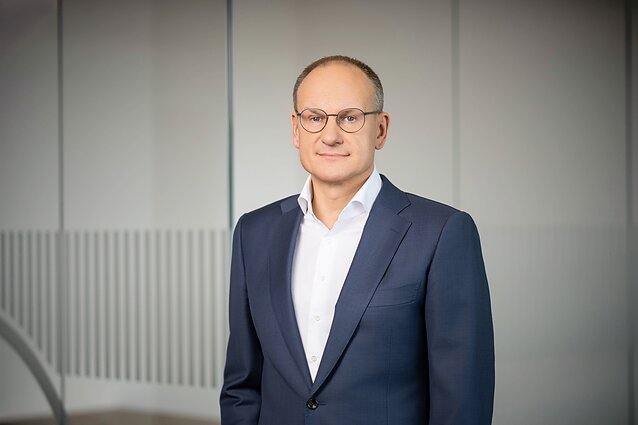
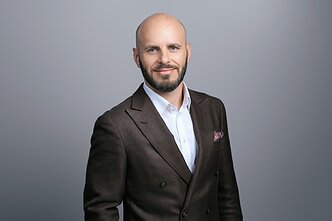
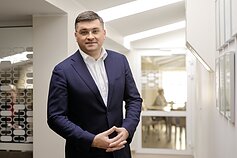
CEO of InMedica, Kęstutis Broniukaitis, said that although growth was observed in the first half of this year, significant uncertainty remains over the second half.
“This is due to the new procedures approved by the State Health Insurance Fund regarding the payment of over-contractual sums, as well as other proposed legislative amendments. We hope the regulatory changes will be balanced, so that it will not be necessary to restrict or even halt the provision of some services to patients,” he told LRT.lt.
Considering investment suspension
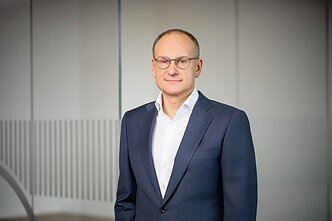
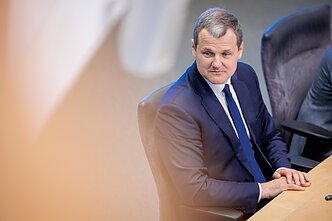
Vitalijus Orlovas, head of Affidea – Lithuania’s second largest private clinic – also spoke about unfavourable and restrictive government initiatives.
Affidea Lithuania reported 22 percent growth in revenue last year to €54.9 million, though its profit was 15 percent lower, at €4 million.
The company, established in Lithuania in 2006, is owned by Affidea Diagnostics, registered in the Netherlands and managed by investment company Groupe Bruxelles Lambert.
According to the latest financial report, Affidea had 16 branches across Vilnius, Kaunas, Klaipėda, Šiauliai, Panevėžys, Alytus, Druskininkai and Šilutė last year.
The company employed an average of 1,122 staff in 2024.
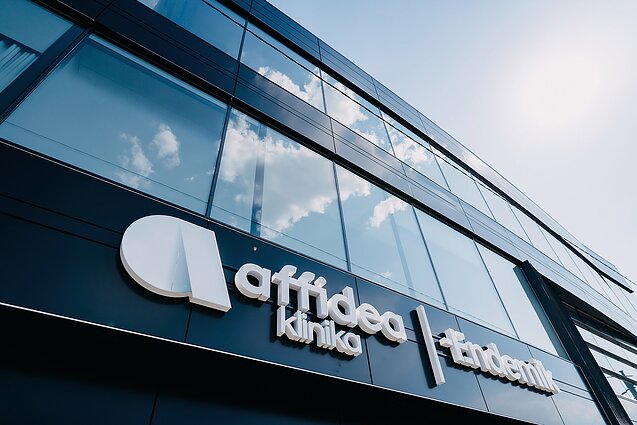
2024 was marked by a major acquisition – the purchase of the Synlab Lithuania laboratory network. This company operates a central and a regional laboratory, plus nine blood collection points across Lithuania.
Vitalijus Orlovas told LRT.lt that the business environment in the medical sector last year was politically stable and patient demand was growing.
“We observed steady increases in demand for outpatient, diagnostic and day surgery services,” he said.
He added that last year’s expansion had been planned and initiated before the new political restrictions emerged.
“Although unfavourable and restrictive government initiatives appeared abruptly during the year, they did not stop projects already underway. We are responsible for fulfilling planned projects, and so we continue, but openly acknowledge that given the current uncertain political climate, further corporate investments for next year are likely to be halted,” he said.
Orlovas singled out four recent government initiatives. First, the Health Ministry has already changed the priority groups for healthcare services. For example, outpatient consultations and day surgery, previously high priority, have lost that status.
“These changes have significantly reduced over-contractual payments for healthcare services from the Compulsory Health Insurance Fund budget. This affects district hospitals, private providers and other clinics with relatively small contractual sums,” he explained.
The second initiative is the planned restriction or removal of patients’ rights to choose better services and medical supplies.
“The ministry claims patients in private clinics are forced to pay twice for state-compensated services and thus announced this ‘fight against co-payments’ [...] However, their real aim is to prevent co-payments to lure doctors back to the public sector,” Orlovas said.
Thirdly, plans to remove private healthcare institutions from Lithuania’s National Health System (LNSS) may result in citizens losing or having severely limited rights to receive state-compensated services in private clinics.
Finally, he warned that authorities are also considering taking away the patients' right to state-compensated treatment and tests if these are prescribed during a paid doctor’s consultation in an LNSS institution.
Despite these challenges, Orlovas noted that Affidea’s results this year indicate growth.
Operating only in Vilnius
In third place in the top five is SK Impeks Medical Diagnostic Centre, owned by Malden Holding, a Dutch company controlled by Konstantinas Karosas, the sole shareholder of Urbo Bank.
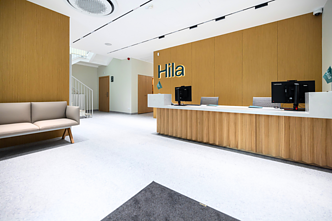
Founded in 1994, the company operates under the brand name Hila and, according to its website, has six branches all located in Vilnius.
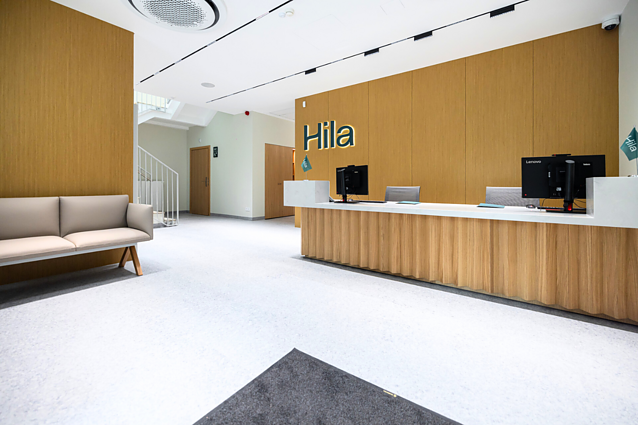
Hila’s revenue grew by 7 percent last year to €32.2 million, while profit fell by 25 percent, to €2.9 million.
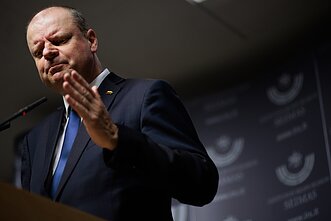
CEO Deividas Praspaliauskas said last year was active but required strategic focus.
“In 2024, we opened new Family Medicine and Rehabilitation & Sports Medicine units. One of the most significant steps was launching an advanced pain clinic. We also invested over €8 million in upgrading diagnostic equipment and improving working conditions,” he said.
Praspaliauskas also noted a rising number of patients coming from abroad. “We see more residents of Northern Europe discovering Lithuania as a country offering high-quality medical care,” he added.
The company employed an average of 555 staff last year.
According to the latest financial report, Hila also owns 30 percent of shares in the company Skaitmeninės Lankos.
An impressive network
Fourth on the list, Antėja (UAB Diagnostikos Laboratorija) boasts a sizeable network. According to its website, it operates about 60 clinics and procedure rooms across Lithuania.
Its services are delivered through branches in Kaunas, Vilnius, Klaipėda, Palanga, Marijampolė, Panevėžys, Druskininkai, Alytus, Vilkaviškis, Raseiniai, Šiauliai, Utena, Kelmė, and others, the financial report states.

Antėja’s shareholders are Darius Gaidukevičius, Vidas Gedutis and Eglė Marciuškienė.
In 2024, Antėja’s revenue grew by nearly 10 percent to €27.8 million, while profit fell 16 percent, to €1 million.
The company’s leaders were on holiday during the article’s preparation and did not comment.
“Sales increased by 9.5 percent in 2024 compared to 2023, driven by service and branch expansion. Owners and management plan to continue growing in 2025, so the 2024 financial statements were prepared on a going-concern basis,” the financial document states.
Last year, Antėja employed an average of 607 people. It also fully owns Tavo Profilaktika and holds 48 percent of Savanorių 402.
Targeting foreigners
Rounding out the top five is Nordclinic (formerly Artmedica), specialising in plastic and reconstructive surgery.
Founded in 2015, its indirect shareholders are Vilius Sketrys and Jonas Staikūnas.
Last year, Nordclinic’s revenue rose by 23 percent to €23.9 million, reversing previous losses to post a profit of €252,000.
Nordclinic director Jonas Staikūnas said similar growth is expected this year.
“Such results were mainly driven by the influx of foreign patients. They come to Lithuania from Western Europe and North America seeking the high-quality surgical services offered by the clinic. On the other hand, an increasing number of local patients are also turning to the clinic for surgical procedures.
Lithuanians are increasingly discovering the clinic’s unique surgical services, which the clinic has been able to invest in over many years, leveraging its leadership in medical tourism. For example, in July, the clinic became the first in the Baltic States to offer patients robotic knee joint replacement surgery. Such investments would not have been possible relying solely on the local market,” he explained.
Last year, the company had an average of 322 employees on its roster.
Nordclinic operates from three branches in the city of Kaunas, with its main clinic located on Kaunakiemis Street.

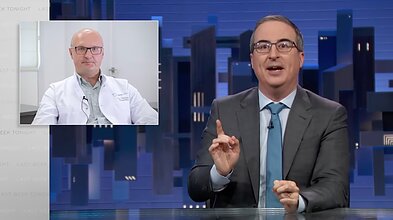
Recently, the Lithuanian company has attracted considerable attention in foreign media. For instance, in 2023, the British newspaper The Guardian covered three stories about orthopaedic patients’ surgeries at Nordclinic. The report was later discussed on the comedian John Oliver’s show Last Week Tonight.

Newsletter
Every Friday morning.