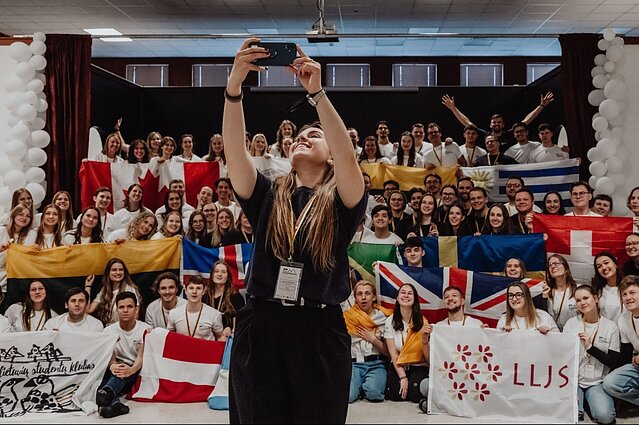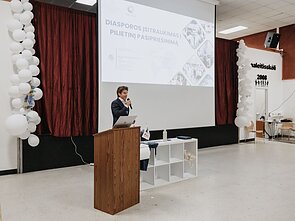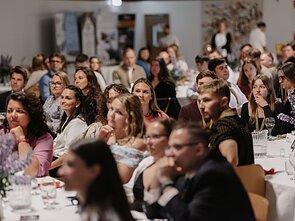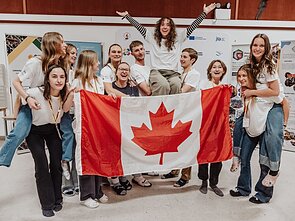










This summer, the World Lithuanian Youth Congress (PLJK) took place, where delegates adopted resolutions on bolstering national security, promoting civic engagement, and supporting Ukraine. Re-elected for a second term, PLJS chair Agita Beržanskaitė shared insights into the organisation’s current activities and the aspirations of active diaspora youth.
Young Lithuanians living abroad are not indifferent to the challenges facing both Lithuania and the wider world. Through the World Lithuanian Youth Union (PLJS), they are setting goals aimed at strengthening the Lithuanian state and uniting the global diaspora.
Strengthening national security
Speaking from Cyprus, Beržanskaitė noted that one of the key resolutions adopted at the congress focused on involving diaspora youth in strengthening Lithuania’s national security. The main tasks outlined included improving communication among Lithuanians abroad and ensuring accessibility to compulsory military service.
“It is also about the resilience of the Lithuanian diaspora. Some Lithuanians living abroad have retained their Lithuanian citizenship. If we can remain resilient to hybrid attacks, propaganda and disinformation, we can make informed choices at the ballot box,” said the PLJS chair.
Congress delegates also discussed the accessibility of compulsory military service for young people in the diaspora.
“Some compatriots living abroad who wish to serve in the Lithuanian military have limited language skills. Questions arise about access to information, social guarantees and career prospects,” Beržanskaitė emphasised.
Civic engagement and support for Ukraine
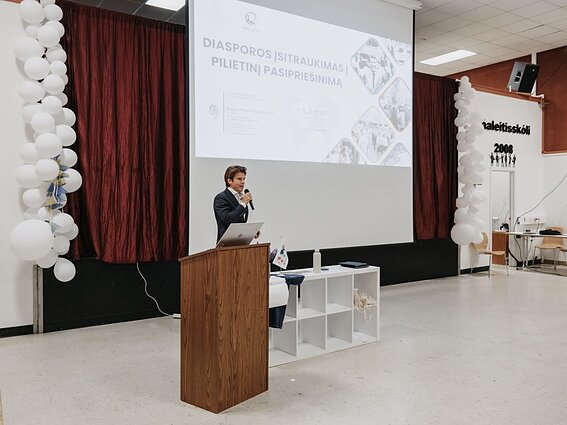
Another key resolution concerned the preservation of the World Lithuanian Constituency and encouragement of civic participation.
“It’s easy to forget the power of citizenship and voting – the foundation of democracy – once you leave Lithuania. By encouraging diaspora Lithuanians to join communities and advocating for active engagement with the Republic of Lithuania, we can achieve better outcomes,” said Beržanskaitė.
Last year, the constituency faced the threat of dissolution. To maintain it, at least 37,000 votes are required. According to the Central Electoral Commission, 37,811 citizens voted in the most recent elections, highlighting the continued importance of encouraging voter turnout abroad.
The third resolution adopted focused on continued support for Ukraine – a reaffirmation of a stance first taken by PLJS the year before.
“We’re showing that Ukraine is not only defending its territorial integrity, but also democratic values, human rights, and the security of all Europe. Continuing cooperation with Ukrainian youth and expressing solidarity is vital – for both Ukraine and Lithuania,” Beržanskaitė stated.
Not just for Lithuanians
Beržanskaitė explained that the organisation has opened its doors to youth who have left authoritarian regimes.
“From now on, the organisation welcomes not only young people of Lithuanian descent living abroad, but also those compatriots who were forced to flee authoritarian regimes and have since moved to Lithuania,” she said, explaining the recent amendment to PLJS statutes.
The organisation continues to include communities from aggressor states – Russia, Belarus, and Venezuela – made up of young Lithuanians who have returned from those countries. These individuals are now able to share insights into the situations in their former homelands and represent the youth of their respective Lithuanian communities.
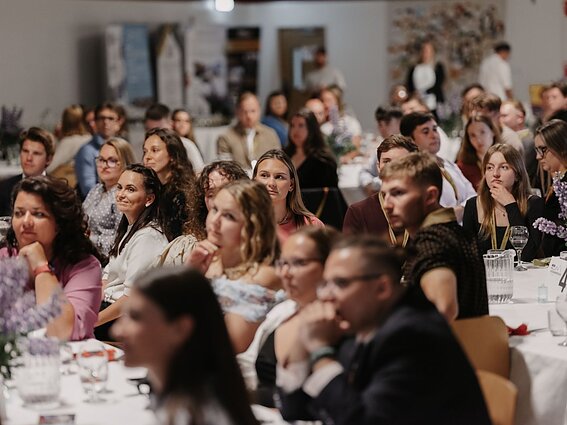
Motto: 'Different Paths – One Goal'
This year’s motto was chosen to reflect continuity with nearly 60 years of World Lithuanian Youth Congress history.
“When the first congress took place in 1966, during the Soviet occupation, the primary goal was clear – to preserve Lithuanian identity in the diaspora. It was a fight for language, memory, and connection to Lithuania, even if that Lithuania existed only in the heart or in family stories,” said Beržanskaitė.
Congress organisers aimed to show that although Lithuanians abroad live in different countries for a range of reasons – education, work, marriage, or even being born outside Lithuania – they are united by a common goal: to maintain ties with Lithuania, its language, culture and heritage.
Lithuania as a model for Scandinavia
This year’s congress was organised by three youth groups from Northern Europe – the Lithuanian Youth Unions of Denmark, Sweden, and Iceland – together with PLJS.
“This was not only a logistical challenge, but also a symbolic gesture of cooperation: Lithuania often looks to Scandinavia as an example, but this time, the gaze was mutual,” said Beržanskaitė.
For delegates, the congress was about more than decision-making – it was a chance to discover new cultures and connect with one another. Evening events were dedicated to showcasing Danish and Swedish culture, with plenty of informal socialising.
A highlight for many was the trip around Iceland, which included visits to natural wonders such as volcanoes, waterfalls, and black sand beaches.
“It wasn’t just about exploring a new country. It was a journey – both physical and personal. Iceland’s extraordinary landscapes reminded us that nature is powerful and unpredictable – just like Lithuanian identity in the diaspora: alive, resilient, and multifaceted,” said Beržanskaitė.
New PLJS board elected
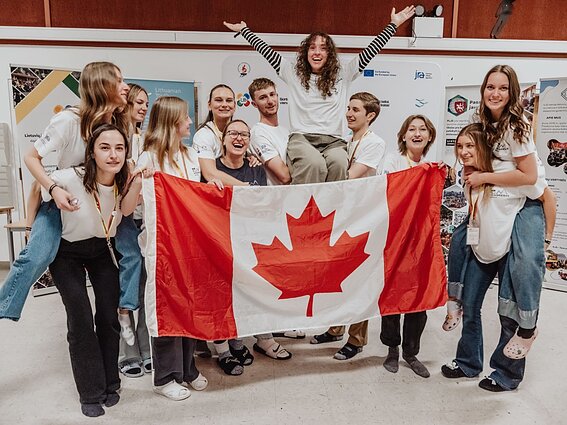
Board elections marked the climax of the congress, where delegates chose the people responsible for implementing the adopted resolutions and continuing the work ahead.
The newly elected PLJS board consists of: Marija Čyvas (United States), Simonas Bingelis (United States), Gabriela Avalos Liesinskas Mockienė (Venezuela), Simonas Pukinskis (United Kingdom), Silvija Liaukevičiūtė (Poland), Laima Griszka (Argentina), and Agita Beržanskaitė (Netherlands), who was re-elected chair for a second term.
The PLJS Supervisory Committee now includes: Ingrida Vaznelytė (Poland), Rimvydas Rubavičius (Scotland), and Elena Urbonaitė (Sweden).
According to Ms Beržanskaitė, the current generation of diaspora youth is contributing significantly to the organisation’s achievements by promoting the idea of a global Lithuania, openness to the world, social engagement, and concern for global conflicts.
“Today’s youth are proving the enduring value of the fight for freedom,” she concluded.
The next PLJS Congress is scheduled for 2027 and will take place across three South American countries: Brazil, Uruguay, and Argentina.

Newsletter
Every Friday morning.