













The disputed president of Belarus, Aliaksandr Lukashenko, threatens the Baltic states and Poland with extinction, yet signals to the Americans a willingness to talk and cooperate. Does the Minsk regime leader truly have room to manoeuvre and secure the sanctions relief he so desperately seeks from the West, or is he merely a figure in the Kremlin’s game?
Lukashenko’s signals
At the start of July, Lukashenko freed 16 political prisoners, and in June, 14 more, including the prominent opposition figure Siarhei Tsikhanouski. Meanwhile, many continue to be jailed for defying the regime, posting on social media, or taking part in protests from five years ago. The Belarusian human rights organisation “Viasna” reports there are 1,164 political prisoners, among them 2020 Nobel Peace Prize laureate Ales Bialiatski. At least eight political prisoners have already died in custody.
Over the past year, Lukashenko has freed about 300 prisoners. Tsikhanouski’s release came after a visit to Minsk by US President Donald Trump’s special envoy, Keith Kellogg. Whether this was a goodwill gesture or part of a deal is unclear.

“Belarus is a complete dictatorship. (...) There are no alternative centres of power left in the country, no secret resistance movements, and no political dynamism,” Belarus analyst and Sense Analytics Consultancy founder Artiom Shraibman told LRT.lt.
The human rights situation in Belarus has not improved, noted the UN special rapporteur on Belarus, Nils Muižnieks, at the end of June. On January 26, Belarus held presidential elections in which Lukashenko, in power since independence, once again declared victory.
“My predecessor noted in a report that elections are a catalyst for human rights violations in Belarus. This remains true during my mandate – the closer to elections, the harsher the repression,” said Muižnieks.
Belarusian officials persecute Belarusians abroad, harass relatives of political prisoners, and confiscate property. Prisoners face torture, violence, and constant sentence extensions for “malicious disobedience” to officials.
“Imagine: you have nearly served your full sentence, wrongly imposed for defending your human rights. You have endured terrible conditions and abuse. Soon you will be released, but officials inform you that your sentence has been extended by another year,” said Muižnieks. Some prisoners have had their sentences extended up to three times this way.
Despite releases, the overall prisoner population remains stable. Prisoners are coerced into appearing in propaganda videos or signing cooperation agreements with the State Security Committee (KGB).
But Lukashenko “is trying to signal that he is not only open to dialogue but wants it to produce tangible results, not just visits and meetings,” Shraibman said.
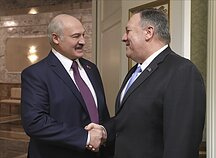
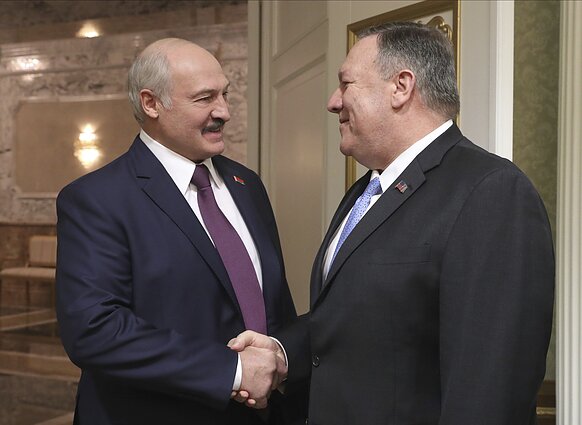
Lukashenko last hosted senior US officials in February 2020, when Secretary of State Mike Pompeo offered the regime US oil.
“The US, especially the new presidential administration, has publicly stated its goal of renewing relations with Russia and lifting sanctions. Knowing that Washington views Minsk as part of Russia, this is also a signal to the Minsk regime that there may be interest or at least space for negotiations,” former Belarusian diplomat and European Council on Foreign Relations (ECFR) associate Pavel Slunkin told LRT.lt.
In February this year, a secret visit by three US State Department officials, including Deputy Secretary Christopher Smith, took place in Minsk. According to The New York Times sources, the possibility of easing sanctions in exchange for releasing hundreds of political prisoners was discussed. However, no concrete steps were taken by either side.
Moreover, any Washington manoeuvres would be ineffective without EU support, especially from Lithuania, as Belarus’s potassium fertiliser exports, vital to its economy, were routed through the Klaipėda port.
A few years ago, prisoner releases did not seem likely to help Lukashenko secure sanctions relief. But growing fatigue over Russia’s war in Ukraine and the lack of progress there have increased such hopes in Minsk. The main obstacle to warming relations with the West remains the ongoing Russian invasion of Ukraine.
“His ability to balance as before is now unimaginable because he is complicit in the war. As long as the war continues, sanctions apply because he is a military ally or satellite of Vladimir Putin, so it is hard to imagine sanctions, pressure, and isolation disappearing simply because of Lukashenko’s actions,” Shraibman said.
In the event of a ceasefire or peace deal, sanctions on fertiliser or other sectors could be lifted for both Russia and Belarus, if part of the agreement.
“Any relations with the West should not help legitimise Lukashenko but should extract concrete, verifiable benefits while strengthening Belarusian civil society and democratic actors in exile. This situation reminds Europe that dealing with regimes in crisis, rather than transition, requires both strategic partnership and principled pragmatism,” said Maryna Rakhlei, senior US programme officer at the German Marshall Fund.
Lukashenko’s balancing act
Lukashenko has long earned a reputation for balancing between the West and Russia. Although a union state treaty with Russia was signed in 1991, it was never fully implemented. By meeting with both Putin and European leaders, Lukashenko managed to be a trade partner and political intermediary for all.
However, the situation changed after the 2020 revolution triggered by rigged Belarusian presidential elections. Only Putin came to the aid of his long-time ally, increasing political pressure and integrating Belarus more closely into Russian structures. Today, Lukashenko is politically dependent on Putin, Russian military forces use Belarus as their territory, and security services and media are saturated with Russian officials and narratives.
Thus, any meaningful warming of relations with the West would require Putin’s approval. Minor moves such as prisoner releases probably do not need Kremlin consent.
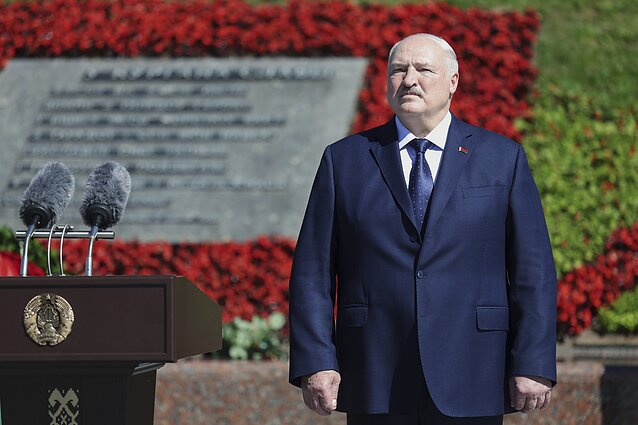
“It's only a matter of time before Putin sees this process as a threat to the Russia-Belarus alliance. That’s why Lukashenko is very carefully testing his limits. I doubt it will reach the scale we saw seven or six years ago,” Shraibman said. He believes Lukashenko could reduce his dependence on the Kremlin by limiting Russian influence in Belarus’s information space.
“He cannot take drastic steps, but it’s not impossible. Honestly, he doesn’t feel the need now; he has quite comfortable relations with Putin, who supports him financially, politically, militarily, and in information,” Shraibman added.
With no alternatives, the Minsk regime leader does not want to spoil his flirtation with the West. About 90% of Belarusian goods today go to Russia, which then exports them globally, giving Moscow the power to suffocate the Belarusian economy at any time. Belarus is also energetically dependent on Russia, which explains Lukashenko’s earlier sincere enthusiasm for US oil offers as a substitute for Russian imports.
The dynamic could change only if Putin makes stronger efforts to fully absorb Belarus. “Then we could see Lukashenko trying to distance himself, diversify his foreign policy, and US and EU diplomacy could become more active,” Shraibman speculated.
Still, Lukashenko’s diplomatic efforts may already signal a fight for the regime’s survival.
“This is a sign of strategic desperation. The collapse of the old world order, accelerated by unpredictable Trump foreign policy, created a world where previous rules and guarantees no longer work. In this unstable environment, the Belarusian regime feels its existence threatened,” Rakhlei told LRT.lt.
She considers even the scaling down of the Zapad 2025 military exercises a manoeuvre by Lukashenko to court Western favour.

Useful to Putin
The US probably does not want to simply help free political prisoners. Washington sees Lukashenko as a possible intermediary in talks with Putin, who might help convince the Kremlin leader to agree to a ceasefire and peace in Ukraine.
“Lukashenko has no leverage over Putin’s decisions, the peace process, the Russian army, Putin’s strategic thinking, or his plans in Europe and Ukraine. But he has access to Putin’s ear. That’s what he offers the Americans in negotiations. He tries to present himself as someone Putin trusts, who can get to Putin, who understands Putin,” Slunkin said.
Lukashenko likely tells the Americans he can better reveal Putin’s true intentions and be a good intermediary.
“The problem is, Lukashenko has no real leverage over Putin. And I’m not sure Putin listens to him much or would change his mind if he did,” Slunkin said.
But Lukashenko’s talks with Westerners also benefit Putin – they allow him to “take the temperature” without responsibility and float ideas to see reactions.
“Analysing Russian and Belarusian strategies, it seems sometimes they play the ‘good cop, bad cop’ game,” Slunkin said. “When Lukashenko conveys a message from Putin or probes the atmosphere for him, it doesn’t mean Putin takes responsibility for the words or makes promises. But it helps Putin understand Washington’s plans and capabilities, what he can and cannot do in Ukraine, whether he should maintain his rhetoric about occupation or start pretending he wants peace.”

Lukashenko’s total dependence on Putin worries NATO’s eastern flank states, creating a desire in the region to give him some breathing room and distance from Moscow.
“I sincerely believe Lukashenko wants to be more independent of Russia. He knows how brutal Russia is and why it’s dangerous. But at the same time, he does not trust the West at all and knows any concessions would weaken his regime. (...) He can release prisoners, but that’s probably all he can do,” Slunkin reflected.
Lukashenko seeks to exploit NATO and Russia’s mutual fear of war to convince the West to support his bid for greater independence from Moscow. Yet, with Russia controlling Belarus’s economy, true autonomy remains out of reach, and Putin continues to use Belarusian territory for his military aims as he pleases.
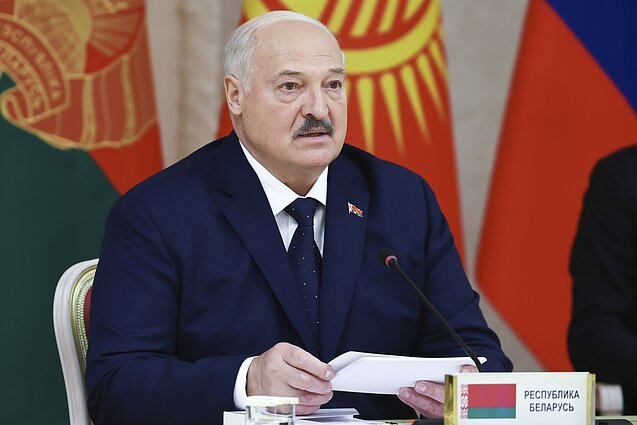
Lukashenko himself does not hesitate to extend a hand of cooperation to Western countries, while also to threatening his neighbours. During a meeting marking the Belarusian regime’s Independence Day on July 1, Lukashenko warned that the Baltic states and Poland “will disappear from the world map if they continue their current policies,” accusing Germany, which has deployed a brigade in Lithuania, of seeking war.
“No one wants to remember how the ‘Nazi European Union's, as it is now fashionable to say, march eastward ultimtaely ended,” Lukashenko added.
Thus, the only real source of change may be a regime change. “As history shows, such regimes remain stable until the very moment they don’t. And no one knows when that moment will come. In Belarus’s case, [change] might be triggered by some events in Russia or if something happens to Lukashenko himself, as his regime is highly personalised. Such regimes struggle to survive the loss of their leader and remain the same,” reflects A. Shraibman.

Newsletter
Every Friday morning.