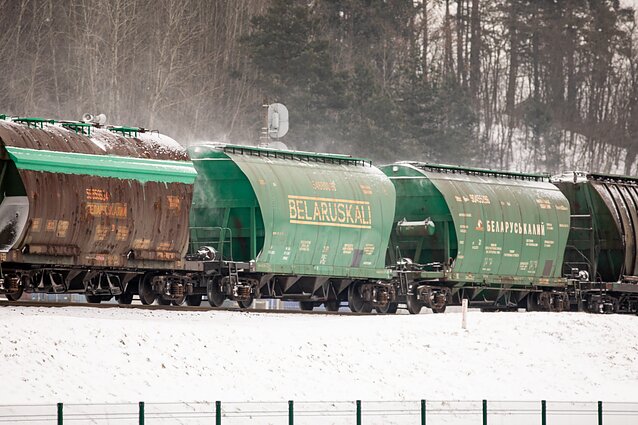






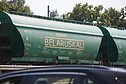

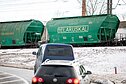



Birių Krovinių Terminalas (BKT), the Klaipėda-based bulk cargo terminal partly owned by Belarusian fertiliser giant Belaruskali, has proposed a settlement that would see the resumption of fertiliser transit through Lithuania, according to a letter obtained by BNS.
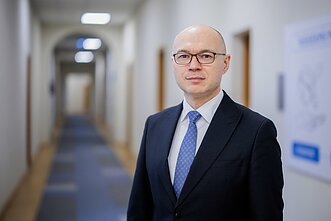
As the European Union General Court continues to hear BKT’s legal challenge against EU sanctions, the terminal’s CEO, Ruslan Malinin, has written to Prime Minister Gintautas Paluckas and the Lithuanian government offering to drop the lawsuit in exchange for Cabinet approval to restart Belaruskali shipments via Klaipėda.
"By agreement between the parties, a limited and politically justified interpretation could be announced, similar to the mechanism used for Kaliningrad transit, with particular emphasis on ensuring global food security, reducing dependence on Russian fertilizer exports, and cutting Russia's revenue from Belarusian potash logistics," the letter, sent to the government in June and obtained by BNS, reads.
According to the letter, such a compromise would help avoid further legal and political escalation, eliminate legal uncertainty, and restore economic ties without undermining EU sanctions.
The letter refers to Lithuania’s decision to resume the rail transit of sanctioned goods to Russia’s Kaliningrad exclave, a month after it had initially blocked such shipments in line with EU sanctions on items such as steel and construction materials, introduced in response to Russia’s 2022 invasion of Ukraine.

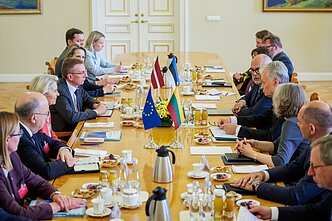
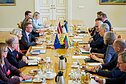
However, Prime Minister Gintautas Paluckas said on Friday that Lithuania is not currently holding any discussions on resuming the transit of fertilizers produced by Belarus' potash giant Belaruskali through the country.
“For now, Lithuania's position remains unchanged, and we're not planning any steps regarding arbitration or other legal disputes," Paluckas told reporters. "At this stage, there are no serious or detailed discussions taking place."
"We're aware that a letter has been submitted to the government's office, which is gathering information and coordinating with the Foreign Ministry, which is responsible for enforcing and overseeing sanctions, and the Transport Ministry, which applies them directly through Lietuvos Gelezinkeliai (Lithuanian Railways, LTG)," he added.
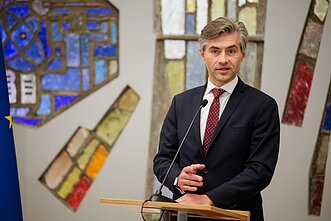
Transport Minister Eugenijus Sabutis echoed the sentiment, telling BNS that no discussions were taking place.
“There are no discussions, absolutely nothing,” he said.

BKT, controlled by businessman Igor Udovickij (who owns 70 percent of the terminal), launched legal action after the Lithuanian government halted Belaruskali’s transit through Klaipėda in February 2022, following EU sanctions. Belaruskali retains a 30 percent stake in BKT but has no voting rights due to the restrictions.
On May 19, the EU General Court dismissed parts of BKT’s lawsuit that challenged restrictive measures imposed by the European Commission, which led to Lithuanian government's decision to terminate to Belaruskali's transit through Klaipeda.
However, the section of the case challenging the EU Council’s regulation and it's inaction – the legal basis for those measures – remains under review.
In a separate action, Belaruskali filed a claim in December seeking $12.09 billion in damages from Lithuania over transit sanctions, bringing the case before an international arbitration tribunal.
Until then, BKT had managed approximately 11 million tons of Belaruskali fertilizer each year. The terminal’s full annual capacity is 16 million tons, a target the company had hoped to achieve.
In 2021, prior to the transit ban and sanctions, BKT reported a profit of 16.1 million euros and revenue of 96.1 million euros.
Lithuania has been a vocal supporter of EU sanctions against Belarus in response to human rights abuses and Minsk’s alignment with Russia, including in the context of the war in Ukraine.
Updated: added the Prime Minister's comments, provided additional contex.

Newsletter
Every Friday morning.