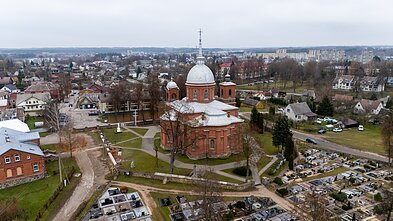











Utena College, in north-eastern Lithuania, is offering several academic programmes in Russian. According to the higher education institution, these courses are most commonly chosen by Ukrainian students. Critics argue that the college should discontinue such programmes and focus instead on promoting Lithuanian language learning, rather than opting for what they describe as the easiest path.
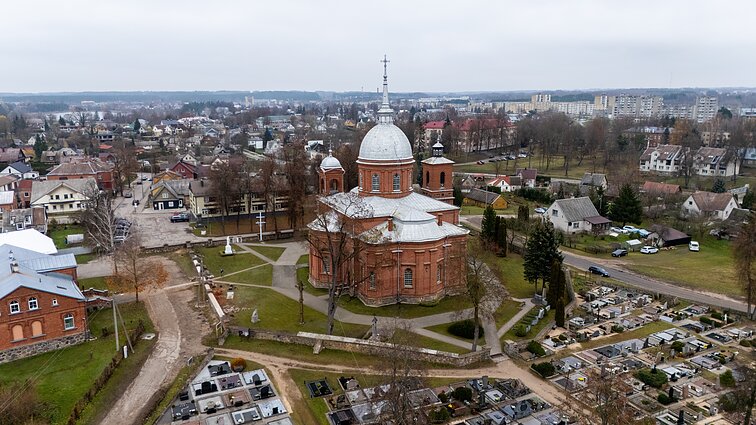
At Utena College, also known as the Utena University of Applied Sciences, foreign students can study general nursing and five other programmes in Russian.
“Physiotherapy, dental care, cosmetology, social work – these are some of the programmes. We also offer a law programme at the Faculty of Business and Technology, but we admit students to that programme under an agreement with a Latvian college,” said Dr Vitalija Bartuševičienė, Deputy Director for Studies and Research at the college.
According to Dr Bartuševičienė, it is not yet clear how many foreign nationals will enrol in these courses. In the previous academic year, 30 students were studying in Russian across three programmes.
“The majority are Ukrainians who have fled the war, and their proficiency in foreign languages, particularly English, in our experience, is relatively weak. That is why we offer them the opportunity to study in Russian,” Dr Bartuševičienė explained.
Nurse Vaiva Jankienė is not convinced by this. A frequent participant in aid missions to Ukraine, she believes the university is merely using Ukrainians as a justification to run tuition-based programmes in Russian.
“This is simply irresponsible, and it should not even be up for debate whether such programmes should exist. They should have been discontinued long ago. There is no reason to train nurses who will speak in Russian,” said Jankienė.
“Language is unquestionably a key issue. These are professions that are likely to take students to the West or back to Ukraine – where Russian is not needed. I’m not even sure it’s morally right to offer Ukrainians the chance to study in the language of their occupiers,” she added.
Despite the criticism, Dr Bartuševičienė insists that foreign students are being integrated into Lithuanian society. As part of their studies, she said, they are also taught the Lithuanian language, and some graduates remain in the country to work in the healthcare system.
“If people fleeing war already speak that language, then is language really the most important issue? I would question that. From my point of view, the key concern is providing those individuals with opportunities,” she said.
Andriejus Sadauskis, a representative of the Association of College Directors, declined to comment directly on Utena College’s decision to offer programmes in Russian. However, he noted that, to his knowledge, no other Lithuanian college currently offers courses in that language.
“Every higher education institution has the autonomy to decide which programmes to run. Each institution’s academic council approves its study programmes,” said Sadauskis.

The Ministry of Education, Science and Sport has also weighed in on the debate, underlining that Lithuanian law does not prohibit the provision of higher education in a foreign language.
“The Ministry of Education, Science and Sport does not encourage studies in Russian. Previously, the ministry has already called on higher education institutions to avoid expanding ties with hostile states – particularly Russia,” said Deputy Minister Regina Valutytė.
The ministry has pledged to review the nationalities of students enrolling in Russian-language programmes and has not ruled out the possibility of future discussions around policy changes.

Newsletter
Every Friday morning.