









Imagine a deserted border area in Africa where there is little but red dust so fine it gets everywhere. Now imagine a line of people arriving with nothing after having walked for days to escape certain death. One old man leans on a weathered stick for support, one woman carries a child on her hip and a jute bag with belongings on her head.
Normally, UNHCR, the UN Refugee Agency, would be there to meet them. We would build a well with water, set up tents for shade, provide high energy biscuits to people who have not eaten for days, provide medical care for wounds and infections, and people in blue vests would be looking out for children who are arriving alone and guiding the elderly to a place to sit.
I joined UNHCR, after witnessing UNHCR work in a situation like this in a refugee camp in Africa. There, I saw refugees – arriving starving and exhausted – receive food, shelter, and, most importantly, hope. Later, I saw the agency’s staff negotiate safe passage for displaced people in besieged and isolated areas in the Balkans while conflict raged.
In chaos, UNHCR provides order.
In moments of hopelessness, we are the ones who show up and remind people that somewhere – Vilnius or Kaunas – there is someone who cares.
When I left journalism to join the humanitarian community, it was because I was convinced about how unique UNHCR’s work is: delivering lifesaving assistance while working to keep people safe.
This has not changed. In today’s world, what we do in Sudan or Syria not only saves lives, but impacts us in Lithuania, the rest of Europe, US and Asia in terms of movements of people and goods, and in terms of our collective security.

However, the current severe cuts in global humanitarian funding are significantly impacting UNHCR and our ability to carry out our work. This year, we may have to significantly scale back operations and cut up to 1/3 of the capacity of our organisation, which will impact millions of people.
The UN refugee agency was created out of ashes of the Second World War, by the shared hope – despite evidence to the contrary – that humans will take care of one another. And for decades, we did.
The consequences of global aid cuts on millions of people fleeing war and conflict are immediate and severe: if not already, they will soon lack critical medicines, emergency shelter, food, clean water, and legal and psychosocial support – including for children and survivors of sexual violence and trafficking.
This is not just a funding shortfall – it is a crisis of responsibility. A crisis of empathy. The cost of inaction will be measured in suffering, instability, and lost futures.
I also want to address some common misconceptions about global humanitarian aid delivery. Over 90 percent of our staff are on the front lines. We are on the ground, assisting people forced to flee when disputes are left unresolved. We are responding to more emergencies than ever before – 43 refugee emergencies last year alone. It’s important to remember that most refugees prefer to stay close to home. But if we can’t help them where they are, they will understandably move onward.
While national security is often framed as protection at our borders, true security begins much earlier – with efforts to build a more stable world. Investing in humanitarian aid helps prevent the conditions that fuel instability and local conflict: reducing inequalities and radicalisation, strengthening economies, supporting communities, and fostering international goodwill. We are part of the civilian defence mechanism of the world.
What many people may not realise is how incredibly complex humanitarian work can be. Imagine trying to deliver aid to 100,000 people who have just crossed into a remote border area – a place with no roads, no buildings, no electricity, and only accessible by foot or by air.

Working in conflict zones or humanitarian crises requires skilled and brave staff, and highly specialised knowledge. Our staff are child protection and social workers, psychologists, doctors, engineers, scientists, and logistics specialists.
UN logistics have been built over time and far outstrip the abilities of the private sector and states to reach those in need. We have a humanitarian arsenal of trucks, planes, and warehouses that can be deployed anywhere. When a new crisis strikes, we are already on our way there to help. We are seldom, even at the best of times, able to do everything we would want to do. But – until now – we have always been able to at least do the bare minimum. Save lives. Provide hope and stabilise difficult situations.
We’ve done this time and again, navigating political storms, collaborating with local organisations, and working alongside host communities. Starve us of funds, and these structures will disappear, along with political capital and the fruit of decades of investment.
I joined the UN over 20 years ago and spent many years working in the dusty, remote places I described above. I firmly believe we must continue extending a helping hand to alleviate the suffering of those we can reach. When one donor steps back, others must step forward. We are committed to being more efficient, transparent, and effective – but we cannot do this without adequate funding.
If we want a safer world, we need to look beyond military defence – to the root causes of conflict and the structures and solutions we have to alleviate the suffering they cause. One of those solutions is the United Nations.
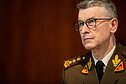
Annika Sandlund is the UNHCR representative in the Nordic and Baltic countries

Newsletter
Every Friday morning.