














Rising energy prices, climate change, and geopolitical instability are forcing countries to rethink their energy strategies. In Lithuania, scientists say the answer may lie deep underground – in the form of geothermal energy, according to a press release by Kaunas University of Technology (KTU).
Though commonly associated with countries like Iceland and Italy, geothermal energy is also a local, stable, and renewable source available in Lithuania. According to Professor Mayur Pal, a geothermal energy expert at KTU, Lithuania is uniquely positioned among the Baltic states to benefit from this clean energy source.
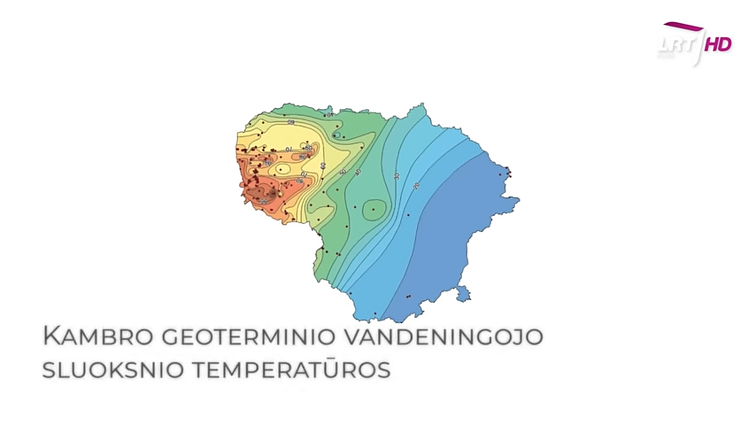
Lithuania has significant geothermal potential, especially in the Devonian and Cambrian rock layers, yet it remains largely underutilised, says Pal, who leads the GeoEnergy Lab at KTU’s interdisciplinary M-Lab centre.
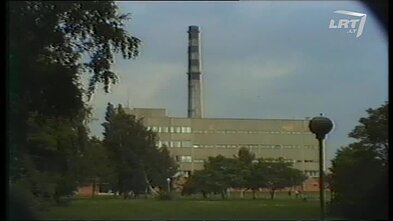
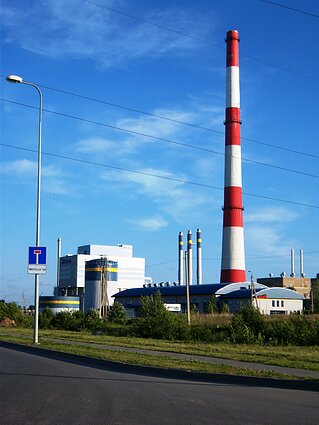
The Klaipėda geothermal demonstration power plant, once a pioneering facility using water from ancient Devonian aquifers for heat production, marked an early milestone in the sector. However, after its closure due to technical and financial challenges, momentum in deep geothermal energy research and development stalled.
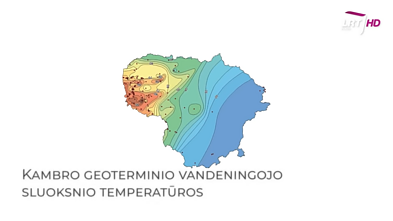
Low-enthalpy geothermal sources – those with temperatures sufficient for heating but not electricity generation – are found at depths of 1,000 to 1,500 metres in western Lithuania. These sandstone formations are highly porous and permeable, making them ideal for district heating. Deeper Cambrian layers, reaching temperatures of around 96°C at depths of up to 2.5 kilometres, could theoretically support small-scale electricity generation.
Despite these promising geological formations, Lithuania currently produces only a small fraction of its energy from geothermal sources. The country still imports around 70% of its electricity. Prof. Pal argues that geothermal energy could reduce this dependence while contributing to the country’s renewable energy targets.
“A few hundred megawatts from Cambrian geothermal systems could offset electricity imports, and Devonian aquifers could replace the use of biomass or gas in district heating networks,” said Pal. Unlike wind or solar, geothermal is available 24/7 and emits minimal CO₂.
However, challenges remain. High upfront investment costs, long development timelines, and technical issues – such as high water salinity and reinjection difficulties – have slowed progress.
Still, Pal sees geothermal energy as a stable and strategic asset, especially for critical infrastructure and even defence applications where energy supply must be uninterrupted.
He also sees Lithuania’s geothermal potential as a regional advantage. Latvia and Estonia do not have similar geothermal resources, he argues, and with proper investment and political will, Lithuania could become the Baltic leader in low-enthalpy geothermal energy by 2030.
“Projects such as reviving the Klaipėda geothermal power plant and integrating this energy into district heating could become a model for other countries,” said Pal.
Lithuania could also partner with countries like Denmark on Baltic Sea geothermal initiatives and tap into European Union funding.

Newsletter
Every Friday morning.