









The Lithuanian parliament on Thursday gave the green light for the country to withdraw from the Ottawa Convention banning anti-personnel landmines.
The motion was passed with 107 votes in favour, none against.
Three MPs – Valius Ąžuolas of the Lithuanian Farmers and Greens Union (LVŽS) and Vytautas Jucius and Petras Dargis from the Nemunas Dawn party – abstained in the vote.
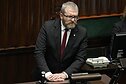
Several other members of the LVŽS Nemunas Dawn political groups, including Nemunas Dawn leader Remigijus Žemaitaitis, did not take part in the vote despite being present in the parliament. They have previously criticised the plans to leave the treaty.

In March, the defence ministers of Lithuania, Latvia, Estonia, and Poland issued a joint statement calling on their countries to pull out of the treaty. They were later joined by Finland.
In late April, the Estonian government approved a proposal to withdraw from the convention, while the Latvian president signed into law a bill on the country’s exit from the treaty.
The government argues that Lithuania needs to leave the convention in order to be able to acquire, produce, stockpile, use, and transfer anti-personnel mines. This, according to the Defence Ministry, is needed due to threats from Russia and Belarus.
The International Committee of the Red Cross has called the decisions announced by the five countries “a dangerous setback for the protection of civilians in armed conflict”.
The Defence Ministry says the use of anti-personnel mines would enhance the Lithuanian Armed Forces’ ability to restrict enemy movement, particularly at critical and hard-to-access points on the battlefield.
Both military officials and politicians responsible for national defence have said that the use of mines would act as a deterrent, and that withdrawing from the convention would enable the training of troops.
The Defence Ministry also says that even after leaving the Ottawa Convention, Lithuania will continue to honour its international humanitarian law obligations under other international treaties, as well as universally recognised international customs concerning the means and methods of warfare.
Lithuania’s exit from the convention would only take effect six months after it submits its withdrawal documents to the United Nations secretary-general.
All European Union member states are currently parties to the Ottawa Convention, while China, Russia, the United States, India, and Pakistan are not.

‘We are adding this element to our military arsenal’
Social Democrat MP Ruslanas Baranovas, who visited Ukraine earlier this week, said the various tools Ukraine used to resist Russian aggression helped prevent Kremlin forces from advancing.
“By approving the withdrawal, we are adding this element to our military arsenal. We’re doing it so that our adversaries will have to think twice before acting against us,” he argued before the vote.
Arvydas Pocius, a member of the parliamentary Committee on National Security and Defence and former chief of defence, also urged fellow MPs to support the move, insisting that all initiatives reinforcing NATO’s eastern flank were necessary to ensure Lithuania’s security.
Remigijus Motuzas, chairman of the parliamentary Committee on Foreign Affairs, noted that Lithuania was not the only country looking to withdraw from the treaty.
President calls it ‘leadership’
President Gitanas Nausėda said Lithuania’s decision to withdraw from the Ottawa Convention was a “logical step” and a show of “leadership”.
“This is a logical and consistent step. We’ve shown leadership in this area. We made our decision and, as a second step, sought to find partners who would follow suit. Such partners have emerged. Today we’re speaking about all the Baltic states in unity and solidarity, and also about Finland,” Nausėda told reporters in Macikai, a village in the western district of Šilutė.
“Another important thing was to talk to our partners and explain the essence and meaning of our decision. Our partners clearly understood the geopolitical and geographical situation we are in, and that we need every tool available to defend our country,” he added.

Newsletter
Every Friday morning.