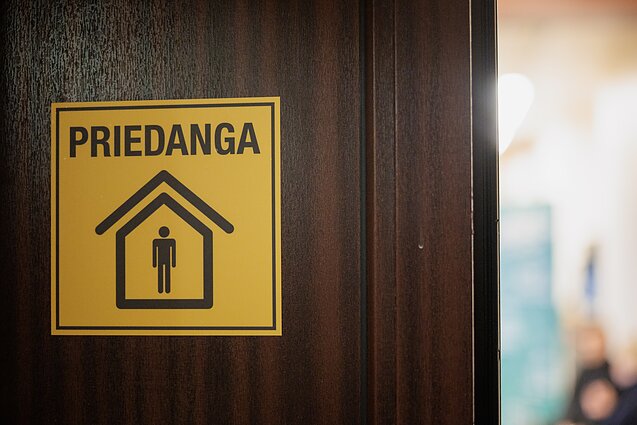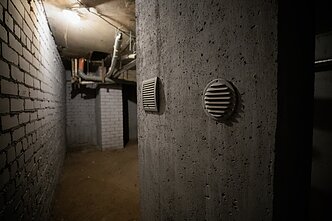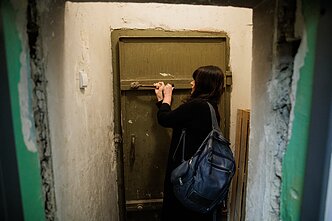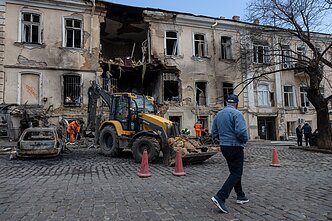
















The Lithuanian government plans to upgrade 1,000 shelters in five years. Almost 80 million euros will be allocated for this purpose. According to the Interior Ministry, more than half of the population could currently hide in shelters.
In Panevėžys, the available shelters would be able to accommodate 15 percent of the population – the lowest of any major city in Lithuania.
The city municipality says it does not have any more buildings suitable for shelters and urges residents to take care of their own security.
“We no longer have the capacity and are looking at apartment associations. [...] People must remember that it is safer to adapt basements than to stay in their flats,” said Justas Laurinavičius, preparedness officer at Panevėžys Municipality.
After Russia’s full-scale invasion of Ukraine began, the Interior Ministry calculated that shelters in Lithuania could accommodate about 40 percent of the country’s population. Now, it is calculated that there would be enough space for more than a million or 1.5 million people.

Out of 60 municipalities in Lithuania, 57 have submitted applications to the ministry, requesting money to install or renovate shelters.
“There are municipalities that need to step up, to open, discover, and add [shelters] to the list,” said Interior Minister Vladislav Kondratovič.
This year, 300 shelters are to be renovated at a cost of 12 million euros, and 1,000 by 2030. In total, 77 million euros have been earmarked for this purpose. With this money, municipalities will be able to buy sleeping bags, first aid kits, and furniture.
According to the former interior minister, Agnė Bilotaitė, the number of shelters agreed during her term will probably have to be increased.
“Today, when the situation has changed, it is important to look whether three times more funding is needed,” she noted.
Last year, the requirements for shelters in new apartment blocks were announced. Constructors claim that they are still designing their houses according to the new requirements and promise to build them within six months or a year.
Electricity will be mandatory in the shelters under new apartment blocks, while heating is recommended. Shelters could not be locked, must have two exits and cannot have windows.
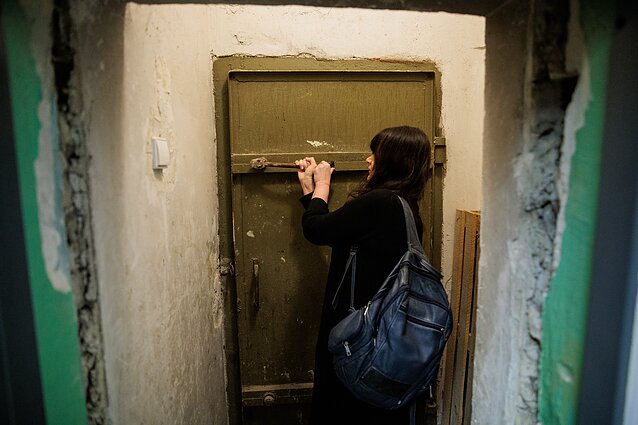
However, many existing shelters are located in the parking lots, basements, or other areas of previously built houses, and are locked.
“These shelters need to be checked, it’s a matter of raising awareness among the residents themselves,” Kondratovič said.
Shelters would only be used for short periods of time – up to a few hours – in the event of an air raid or the threat of shelling.

Newsletter
Every Friday morning.