



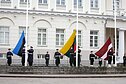
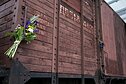

The Lithuanian state was reborn on the evening of March 11, 1990, when the results of the most important vote were announced. LRT.lt highlights 11 important events that shocked us or made us proud over 35 years of independence.
22:44
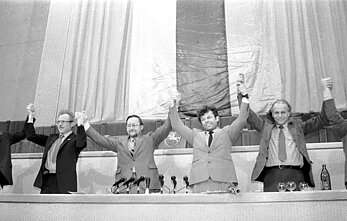
The clocks were striking 22:44 on March 11, 1990, when the results of the Supreme Council vote were announced – 124 in favour, 0 against, 6 abstentions. As such, Lithuania became the first of the 15 Soviet republics to declare its independence.
This was a long time in coming, and the events of 1988–1989 demonstrated steps towards freedom. The Supreme Council elections on February 24, 1990, showed that the political climate in Lithuania had already changed.
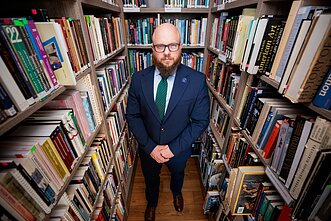
“The internal preconditions were the determination and resistance of the people. In the post-war years, there was an armed struggle and later intellectual resistance. All these things showed that the nation was determined to regain its independence,” recalled Česlovas Juršėnas, one of the signatories of the Act on the Re-establishment of the Independent State of Lithuania.
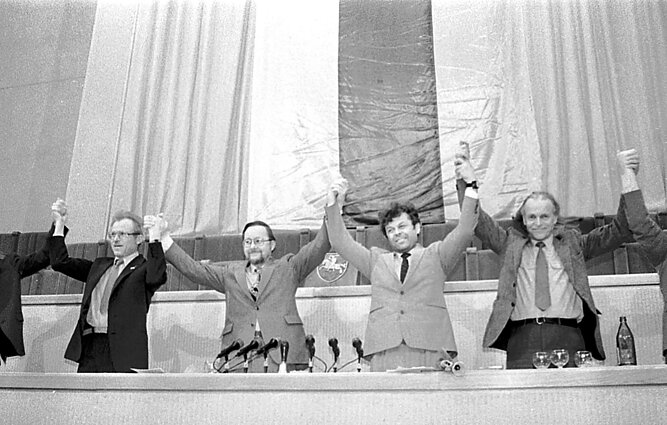
Sensing the mood of Sąjūdis, the Lithuanian pro-independence political movement, and the nation, the Communist Party also embarked on changes. In December 1989, the party split into reformist and radical wings. The former took a moderate approach to the question of independence, while the latter still tried to put the brakes on the process and demonstrated full loyalty to their masters in Moscow.
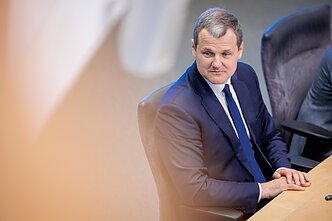
“Lithuania has chosen the path of return to Europe, the path of Europe’s return to Lithuania, without any doubts or hesitation. We did not consider economic alliances with Russia and the East. There was a clear understanding of the whole nation that we have to return to Europe or Europe has to return to Lithuania, and we have to create those conditions as much as possible,” said Petras Vaitiekūnas, one of the signatories of the March 11 Act.
January events
With Lithuania taking its first steps as an independent state, the Soviets turned to pressure, intimidation, and aggression. Although it all started with ultimatums and an economic blockade in April 1990, tanks appeared on the streets when these measures failed.
On January 13, 1991, 14 people were killed and about a thousand injured when Soviet troops stormed the Vilnius TV Tower and the Radio and Television Committee building. The Soviets attempted to overthrow the legitimate government of Lithuania by military force.

The 1991 period became a symbol of all the Soviet brutality for which the empire was famous. In Vilnius, in front of the television tower, the radio and television station, the parliament, and in other cities, the defenders demonstrated to the world that the nation was ready to defend itself without weapons, but with great will.
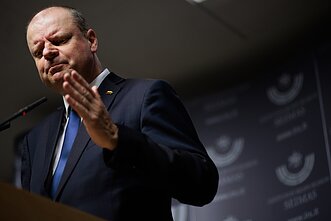
“January 13 certainly showed that the nation was not frightened, that it was maintaining its European orientation, and that was that. That was very important,” Vaitiekūnas said.
The violence and massacres perpetrated by the Soviet reactionaries had repercussions in Russia itself, where crowds gathered for rallies demanding to “get your hands off Lithuania”.
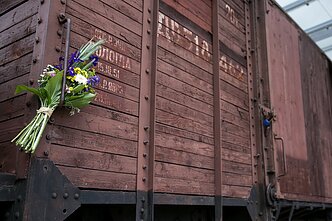
After January 13, the Soviet terror continued. There were tanks on the streets, people were beaten, and later, border checkpoints were attacked. It culminated on July 31, 1991, when six border guards were killed in an attack on the Medininkai border checkpoint.
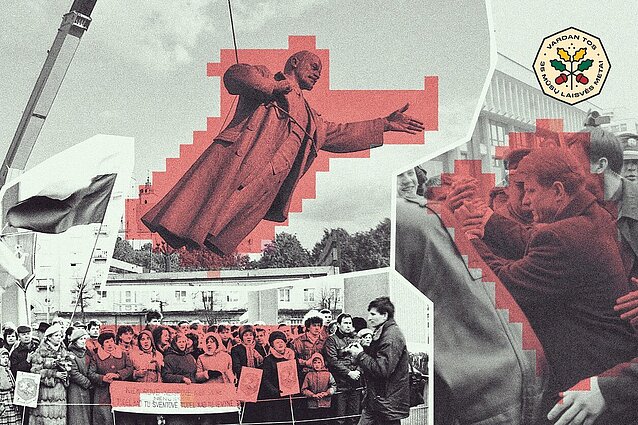
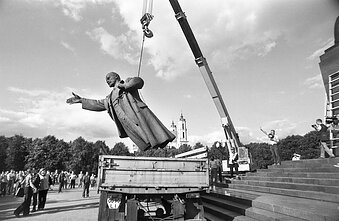
But the terror destroyed the Soviets themselves. After the failed putsch of August 19–21, 1991, the Soviet Union fell. Symbolically, the end of Soviet brutality was marked by the removal of Lenin’s statue from Lukiškės Square in Vilnius.

First elections
At the end of 1991, the Soviet Union collapsed. However, Lithuania moved into a period of rough democracy. Political divisions became evident in 1992, and the crisis was resolved in the summer with snap parliamentary elections and a referendum on the constitution/
“The divisions further heated up the atmosphere and there was no way out. It became clear to both the new and the old majority that it was no longer possible to work in this way and that it was necessary to prematurely dissolve the Supreme Council, to hold early elections and a referendum on a new constitution,” said Juršėnas, who became parliament speaker after these elections.
The first free Seimas elections were won by a landslide by the left-dominated Democratic Labour Party of Lithuania, a successor of the Soviet-era Communist Party of Lithuania.
The Constitution of the Republic of Lithuania, the most important law, was adopted by an absolute majority in a referendum on October 25, 1992.
The constitution enshrined the principles of democracy in Lithuania. One achievement of Lithuania’s political system is that since 1992, all elected parliaments served their full four-year terms.
Russian army leaves
Although Lithuania had already declared its independence, adopted its new constitution, and held both presidential and parliamentary elections, the foreign army was still on its soil.
It was only after difficult negotiations in 1992 that a concrete deadline for withdrawal was set, but the Russians, unsurprisingly, were unwilling to meet it. However, after long disputes, the last Russian tank left Lithuania a few minutes before midnight on August 31, 1993.
“At 23:47, the last foreign troops passed through Kena without stopping. A large crowd had gathered to see off the echelon of troops,” stated the news report of September 1, 1993.
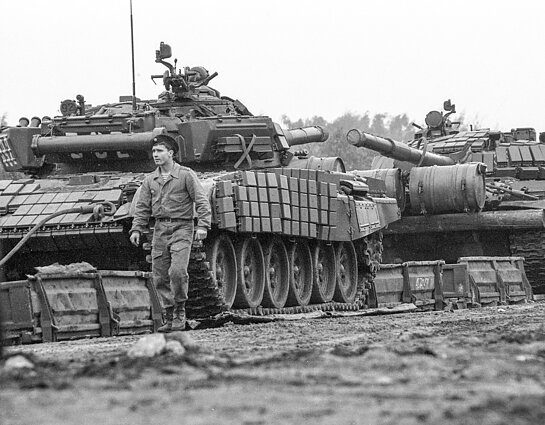
At that time, Russian tanks were still stationed in Latvia, Estonia, and even in Germany and Poland. There was also the belief that a Russian tank could only be driven out with another tank.
“If [the Russian army] had stayed, the whole history would have been different. It was a great achievement of Lithuanian politicians that a foreign power was removed from Lithuanian territory. The secret services remained, but their activities were limited as they could not rely on violence, murder, armed coup. The great success was achieved by completely peaceful means and earlier than in Germany,” Vaitiekūnas said.
The withdrawal of the foreign army coincided with another important event: less than a week later, a plane carrying Pope John Paul II landed in Vilnius. The Holy Father kissed the ground as soon as he stepped off the plane in Lithuania.
Joining ES
On May 1, 2004, Lithuania became a member of the European Union. The road to the European family was not easy and took more than a decade. The first Lithuanian delegation to the European Parliament was set up in June 1992.
However, the biggest step towards integration was taken on June 12, 1995, when the Association Agreement was signed. It recognises Lithuania’s ambition to become a member of the EU and sets out the Copenhagen criteria for accession, which the candidate countries must meet.
“We are becoming members of the EU and NATO, and European rules are coming into force. The Lithuanians were very focused on the need to respect those rules. The business developed according to European rules. Lithuanian politicians now understand that it is important for Lithuania to be able to live in a world that is designed by the rules, and everybody abides by them,” Vaitiekūnas said.
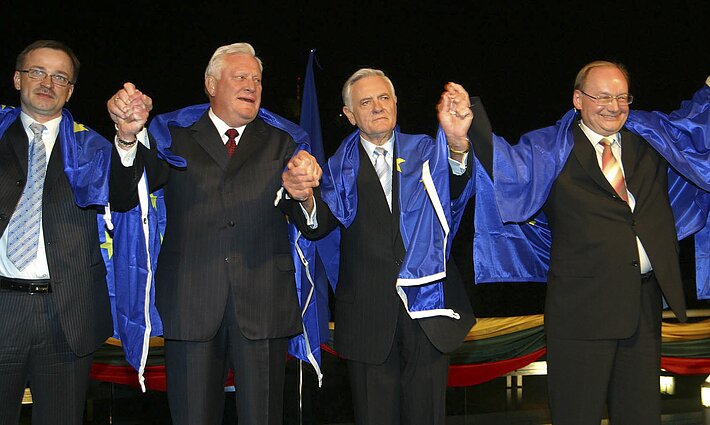
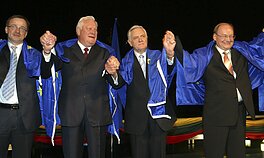
In 2003, a referendum was held on joining the EU, and 91 percent of the voters supported the membership. In 2004, Lithuania joined the EU along with nine other countries, including Latvia, Estonia, and Poland. Three years later, Lithuania became a full member of the Schengen area.
Joining NATO
Lithuania joined the North Atlantic Cooperation Council at the end of 1991. However, the situation was strange, as foreign troops were still stationed in Lithuania. It was not until the end of 1993 that more consistent contacts began after all parliamentary parties unanimously called on President Algirdas Brazauskas to approach NATO.
In early 1994, a letter was sent to then NATO Secretary General Manfred Werner. This started the integration and preparation work, which lasted a decade.
Lithuania did not hear its name among the invitees at the Madrid Summit in 1997. Then Poland, the Czech Republic, and Hungary – former members of the Soviet Warsaw Pact – were invited. This marked a major shift in NATO’s overall strategy.
“As far as NATO is concerned, we have to bear in mind the final period of the Brazauskas’ term in 1998. It ended with two highlights. He signed the border treaty with [Russian President Boris] Yeltsin. The second was the meeting of the three Baltic presidents with Bill Clinton in Washington, where a joint declaration, considered to be the opening of the door to NATO, was signed,” Juršėnas noted.
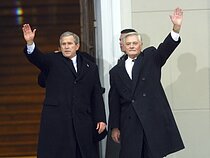
Today, the day of Lithuania's accession to NATO, March 29, 2004, is overshadowed by another date – November 23, 2002, when then US President George W. Bush came to Vilnius and delivered a speech of great importance to the Baltic states. “Anyone who would choose Lithuania as an enemy has also made an enemy of the United States of America” is his phrase now engraved on a plaque on the Vilnius City Hall building.

Impeached president
Lithuania was about to become a full member of the EU and NATO when the country was rocked by a huge scandal involving then President Rolandas Paksas. The politician, who unexpectedly won the 2002–2003 presidential elections, became a symbol and one of the early examples of Russian influence in the country.
A State Security Department report made public at the end of 2003 cast a huge shadow over the president and his circle. Particularly worrying was Paksas’ relationship with Yuri Borisov, a Russian businessman and his main supporter.
“At that time, very few people realised the Russian threat, Borisov's influence, Russian money coming in not only through energy or culture. It came through the presidency, and we needed to cut that influence from Lithuanian politics,” Vaitiekūnas said.
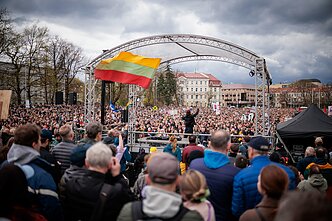
The impeachment process, scheduled for April 6, 2004, divided the public. Rallies of both supporters and opponents of Paksas began to take place in front of the Seimas and the Presidential Palace.
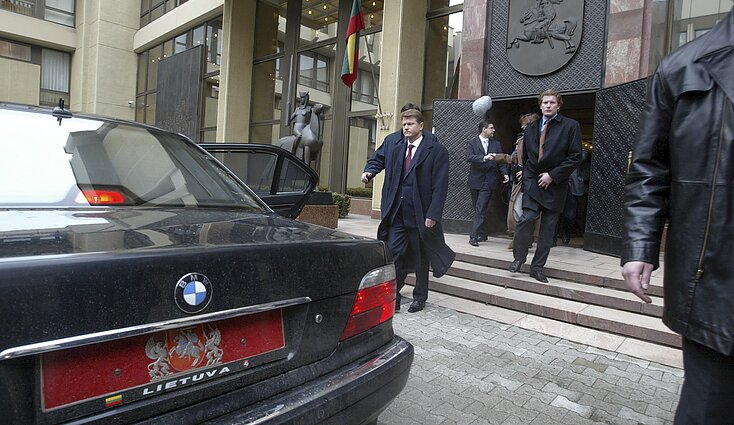
The Constitutional Court then ruled that the Paksas broke his oath of office and violated the constitution when he granted Lithuanian citizenship to his financial supporter and adviser Borisov by way of exception.
“This was a test of our entire system [...]. Here again, the left and the right were working together. I think this was a win, and we proved that we could put the head of state, who was in the wrong, in his place,” Juršėnas said.
After Paksas was impeached, Artūras Paulauskas served as interim president, and Valdas Adamkus was elected president for the second time after the new elections.
EU presidency
In the second half of 2013, Lithuania held the presidency of the EU Council. It had to culminate in Ukraine signing the Association Agreement with the EU. However, Ukrainian then President Viktor Yanukovych decided to step back during the EU Eastern Partnership Forum in Vilnius.
Massive protests broke out in Kyiv. Tens of thousands spoke in favour of a European direction, but it was followed by the Russian annexation of Crimea and the aggression in eastern Ukraine.

Throughout this time, Lithuania’s position remained categorical – unconditional support for Ukraine both during the Euromaidan in 2013–2014 and today.
The Lithuanian presidency and the meeting in Vilnius did not become a historic event, marking Ukraine’s European integration, but it did strengthen Lithuania’s position in the EU and highlighted Lithuania as one of the biggest and strongest supporters of Ukraine.
Historical discoveries
“On Wednesday, the original Lithuanian version of the Act of Independence of Lithuania of February 16 was found in the German diplomatic archives. This has been confirmed to BNS by Professor Liudas Mažylis of Vytautas Magnus University,” said a message published on the evening of March 19, 2017.

The discovery of the Act of February 16 in the German diplomatic archives symbolically started the preparations for the centenary of modern Lithuania. On June 7, 2018, the remains of partisan leader Adolfas Ramanauskas-Vanagas were also discovered.
These discoveries symbolically connected interwar Lithuania, the Soviet resistance, and independent Lithuania.
The Act of February 16 was exhibited in Lithuania and the partisan leader was solemnly re-buried in Vilnius Antakalnis Cemetery.
Pandemic and migrants
The 30th anniversary of Lithuanian independence was marked in lockdown. The pandemic caused by the Covid-19 virus brought the world to a standstill, and Lithuania was no exception.
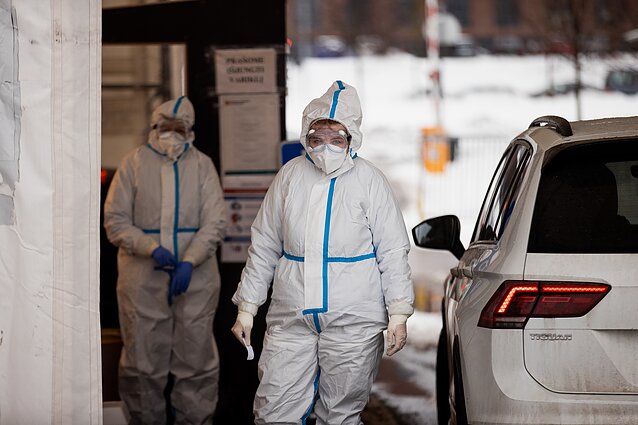
Meanwhile, the so-called migrant crisis, orchestrated by the Belarusian regime, started in the summer of 2021. It raised border security issues, as thousands of irregular migrants crossed into Lithuania.
The Lukashenko regime launched the so-called hybrid attack against Lithuania in response to the country’s support for the Belarusian opposition following rigged presidential elections in the summer of 2020.
In response, Lithuania erected a physical barrier on its border with Belarus and started a migrant pushback policy. The influx of migrants was tamed but Lithuania has repeatedly come under fire for violating human rights.
NATO summit
The relatively small centre of Vilnius has never before seen so many leaders of the free world. The Vilnius NATO Summit took place on July 11–12, 2023.
The Summit did not bring major gains for Ukraine, but in a public speech at Vilnius University Joe Bide echoed George W. Bush’s words from more than 20 years ago, and Volodymyr Zelensky thanked Lithuania for its support in the fight against Russian aggression.
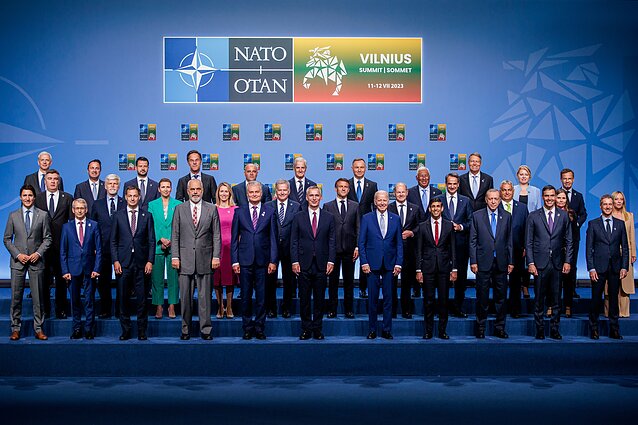
The two-day event went smoothly. There were enough hotels in Vilnius to host the heads of state and their teams, and all security requirements were met. The Vilnius NATO Summit once again proved Lithuania’s progress since 1990 and that it is now a respected Western partner.
“We have created an independent state, a democratic state, and the whole nation is better off. The figures are very clear – in 2004, when we joined the EU, we had only half the European average GDP. And today, we have almost 90 percent. We set out to have an independent state, and we have it,” Juršėnas stressed.

Newsletter
Every Friday morning.