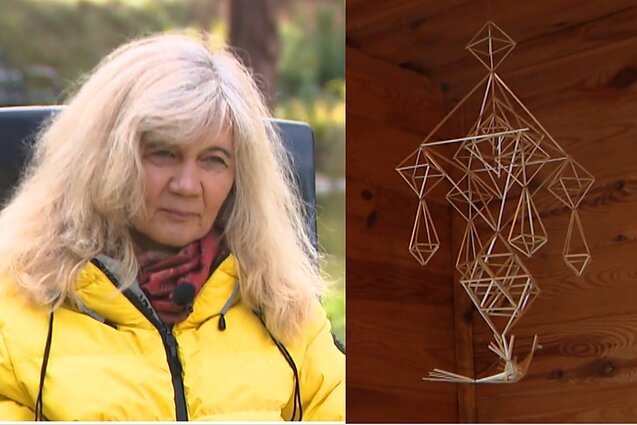














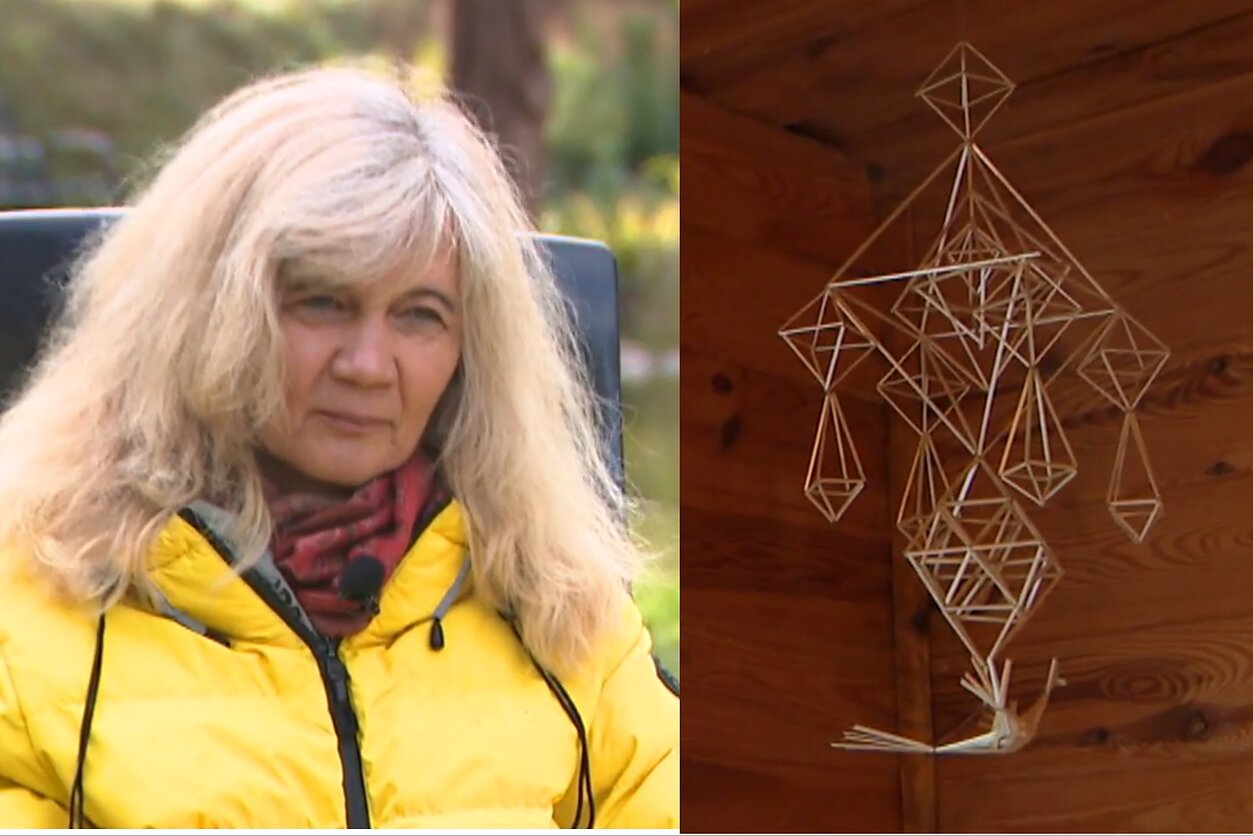
Laima Gegužytė-Saviščevienė, from the Dzūkija region in southern Lithuania, keeps the tradition of the country’s unique straw gardens alive.
Gegužytė-Saviščevienė, who lives in the village of Maksimoniai in the Varėna district, is well-known to Dzūkija visitors, as well as to foreigners and lovers of old crafts. She has held dozens of personal exhibitions and has worked for 25 years at the Dzūkija National Park.
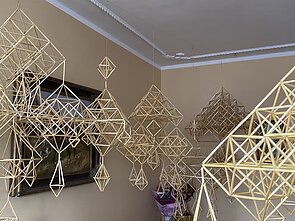
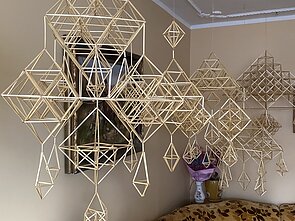
However, her most treasured works are the straw gardens – Šiaudiniai Sodai, in Lithuanian.
“They give a spiritual feeling, as well as display the colour of the sun on dark evenings, especially before Christmas, when the nights are long. Then you want light and as the windows in the typical Džūkai homesteads were small, in the olden days they would decorate the interior with such toys, which radiate light and bring happiness,” she said.
They are made out of straw and are connected with linen thread. Piecing it together can be a challenge. “If you feel angry, it will not work,” she added.
According to Gegužytė-Saviščevienė, people are now slowly returning to the countryside and are rediscovering the old crafts.
Throughout the ages, the straw gardens were used to decorate Lithuanian homes on all major festivals, as they were believed to attract good luck and create harmony.
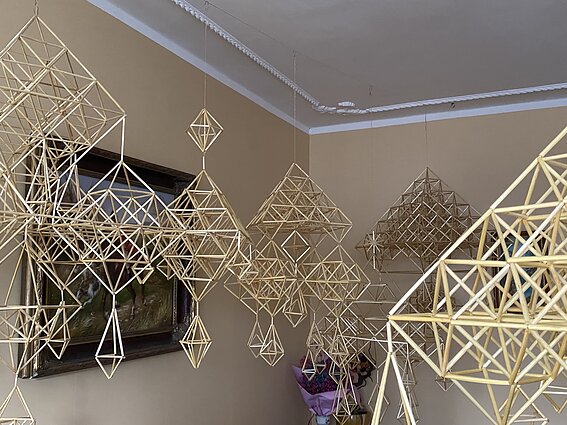
“It was a tradition to hang straw gardens over the cradle when a child was born. The garden would hypnotise the child. Nowadays, this tradition is making a comeback, with the gift becoming popular again on the occasion of marriage and the birth of children,” she said.
Last year, the making of straw gardens was inscribed on the UNESCO World Heritage List.

Newsletter
Every Friday morning.