



After Lithuania banned cars with Belarusian license plates, owners are re-registering them in the country. Some politicians believe that there is still too much traffic between the two hostile countries.
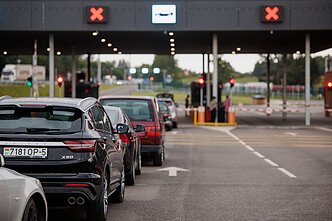
For half a year now, only Belarusians with a residence permit in Lithuania or Schengen visas issued by Lithuania have been allowed to enter the country with their cars.
However, there are restrictions even for them.
“Only the person [who entered] with that car can drive it. They cannot give the car to another person,” Customs Department spokesman Darius Binkys comments to LRT TV.
Moreover, to be able to drive their Belarusian-registered cars, owners must have entered the country through the Lithuanian-Belarusian border checkpoints.
“[For example,] with a permit from the Republic of Poland, they cannot drive in Lithuania,” notes Binkys.
There is also a time limit of six months. In order to use the car longer, owners must re-register it in Lithuania and get Lithuanian license plates.
According to the car registry agency Regitra, almost a hundred Belarusian cars were re-registered in Lithuania over the first half of this month. There were only five in the entire month of January in 2024. The increase, officials say, has to do with the new restrictions.

Customs estimates that around 400 cars enter Lithuania from Belarus every day and some 450 leave.
“The movement is constant across the border,” Binkys says.
Lithuanian politicians introduced the ban on Belarusian cars specifically in order to reduce traffic from the neighbouring country that they regard as hostile.
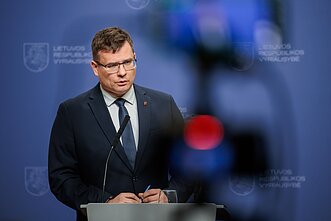
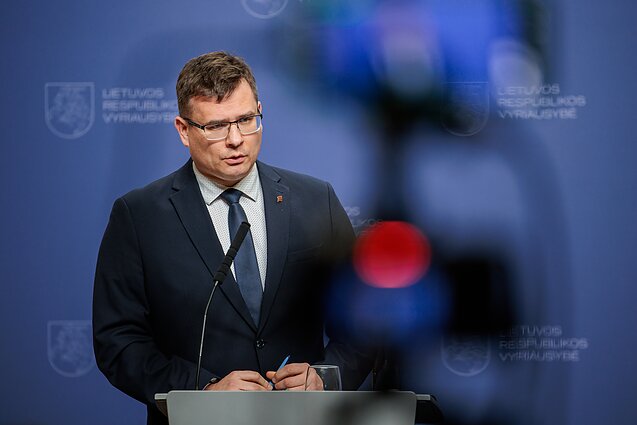
“This environment is conducive to hostile intelligence agencies,” insists Laurynas Kasčiūnas, former defence minister and now vice-chairman of the parliamentary Committee on National Security and Defence.
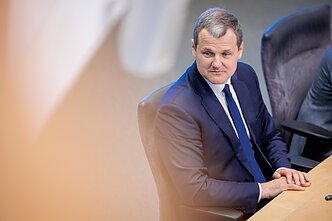
MP Giedrimas Jeglinskas, who chairs the committee, agrees: “If our policy is to reduce interaction with the Belarusian authorities, this is one of the steps.”
Lithuania is home to a large diaspora of Belarusian opposition figures and activists who fled their country to avoid repression. The office of Belarusian opposition leader Sviatlana Tsikhanouskaya argues that Lithuania’s restrictions hurt ordinary Belarusians rather than the government.
“I don't think that the ban on [Belarusian] car number plates will affect the regime, but it will affect a lot of people who support democratic Belarus, who support Ukraine. I know that many people, our supporters, will certainly suffer from these decisions,” says Tsikhanouskaya’s associate Franak Viačorka.
But Kasčiūnas is unconvinced. He is particularly suspicious of Belarusians who live in Lithuania but keep going across the border.
“Some say that when they see Europe, they will become big Europeans and will come to Belarus and change it into a European country. So far, I don’t see any such tendencies,” Kasčiūnas tells LRT TV.
For more than a year now, cars with Russian license plates have been banned from driving in Lithuania, except for those transiting to Kaliningrad. Both Russians and Belarusians who break the rule face fines of up to 6,000 euros and confiscation of their cars.
So far, only two cases of violations have been prosecuted.
“No cars have been seized so far,” notes Binkys. “There are still court disputes pending, so I would not like to comment.”
According to him, this shows that the sanctions are effectively enforced.

Newsletter
Every Friday morning.