








Here are some of key changes that came into effect in Lithuania on January 1, 2025.
Driving license and health checks
From January, the validity of the driving license is linked to the validity of the medical certificate – drivers who do not undergo a medical check-up at the prescribed intervals will no longer be able to drive.
Once a medical check has been carried out and a certificate has been obtained, the validity of the driving license will be restored automatically.
According to the data provided by Regitra, the state enterprise in charge of driving tests and licenses, almost 370,000 Lithuanian drivers have had a health check since the end of 2023 and 72,000 have not.
Drivers under 65 need to have a health check every ten years, those aged 66 to 79 need to do it every five years and those over 80 every two years.
Low Emission Zones
Low Emission Zones have been introduced in the old towns of Vilnius and Panevėžys. No taxes or restrictions are currently foreseen in the capital.
In Panevėžys, meanwhile, it will be forbidden to enter the low-emission zone for all types of vehicles with internal combustion engines.
Municipalities are obliged to set up low-emission zones from January 2025 under the Law on Alternative Fuels.
Medics allowed to refuse service
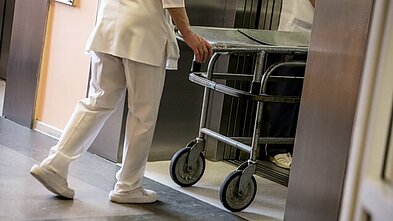
Starting from January 1, medical professionals are allowed to refuse to provide services if a patient's actions pose a threat to the health or life of the healthcare professional, another staff member or other patients.
Increased fees to enter Neringa
From this year onwards, the fee for entering Lithuania's Curonian Spit resort of Neringa will increase – for passenger cars, it will cost 50 euros during the peak season between June 20 and August 20, and 10 euros during the remaining months. Previously, the rate was 5 euros for the autumn, winter and spring periods and 30 euros for the peak summer months.
The fee has also been increased for motorcycles, and will also be introduced for electric vehicles. The rate will be 25 euros during the peak summer season.
The local entry fee is aimed at regulating traffic flows and encouraging people to choose less polluting transport alternatives.

Textile sorting
Starting from January 1, municipalities must make it possible for all residents to recycle textile waste. It must be collected in dedicated facilities – special containers, devices or other adapted means.
According to the requirements, at least one textile waste container per 1,000 inhabitants must be installed in urban districts, towns and villages. In densely populated urban districts and towns, one textile waste container per 2,000 inhabitants may be installed while ensuring more frequent collection of textile waste.
Restrictions on travel to Russia, Belarus and China
Employees of institutions and members of the paramilitary Riflemen’s Union who are authorised to handle classified information are now banned from travelling to “unfriendly foreign countries” – Russia, Belarus and China.
According to the estimates of the Defence Ministry, the ban will affect 56,000 people.
The respective legislative amendments also stipulate that retired officers retain the right to work with or have access to classified information.
Free parking in Klaipėda
In an attempt to encourage people to visit the Old Town, parking fees in central Klaipėda will be waived every day from midday until 14:00.
According to Klaipeda Mayor Arvydas Vaitkus, two free parking hours after midday will hopefully encourage people to visit cafes, restaurants and shops in the Old Town.
Higher tourism tax in Kaunas
In Kaunas, the tourism tax has been doubled to 2 euros per night.
The increased rate will bring in almost one million euros a year in extra revenue to the city budget.
Cyber Defence Board
The newly formed military unit, the Cyber Defence Board of the Lithuanian Armed Forces, will begin operations. Their responsibility will be to plan and execute cyberspace operations, as well as introduce communication and information systems at the strategic and operational levels.
Cancer diagnosis
Starting from January 1, the age limits for the breast cancer early diagnosis programme will be extended.
The early diagnosis programme for breast cancer will expand the age bracket and will now be available for women 45 to 74. Previously, the programme was open to women aged 50 to 69.

Newsletter
Every Friday morning.