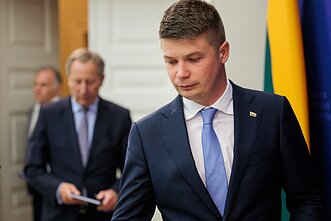
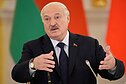

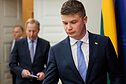
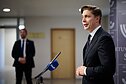





Georgian Prime Minister Irakli Kobakhidze has been banned from entering Lithuania after being added to the Baltic states’ list of sanctioned politicians and officials, Lithuanian Foreign Minister Kęstutis Budrys said on Sunday.
“In coordination with Estonia, we have expanded the list of sanctioned Georgian politicians by adding 17 more individuals, including Prime Minister Irakli Kobakhidze,” Budrys posted on X on Sunday.
“We will not tolerate the violence and oppression against peaceful protesters, journalists and the opposition. It’s time for joint EU level action now!” he added.
According to the Lithuanian Foreign Ministry, the sanctioned individuals, including the Georgian prime minister, are directly responsible for severe and systematic human rights abuses and curbs on fundamental freedoms in Georgia.
The ministry said the individuals had also been blacklisted by Ukraine and, as of Sunday, by Estonia.
Earlier this month, Lithuania barred entry to Bidzina Ivanishvili, the billionaire founder of the ruling Georgian Dream party, and ten Georgian Interior Ministry officials.

Budrys has called on the EU to follow the Baltic state’s suit and sanction Georgian politicians and officials responsible for the crackdown on protests.
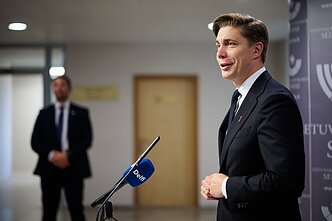
“We call for the EU to also introduce sanctions against those persons. The second thing is the visa-free regime, we should ban it for diplomatic and service passport holders,” Budrys told reporters in Brussels on Monday ahead of the EU Foreign Affairs Council meeting.
“The third thing is to halt technical and political talks with Georgia within the EU-Georgia Association Agreement, also to stop the institutional talks with Georgian institutions and also to stop the financial support that is being provided for the institutions,” he added.
According to him, the EU “should send a strong message to Georgian civil society that we will support them”.
Lithuanian President Gitanas Nausėda has also called for EU-level sanctions against Georgian government officials who are responsible for using force against protesters.

Saturday’s controversial presidential election in Georgia saw Mikheil Kavelashvili, a 53-year-old former footballer loyal to the ruling Georgian Dream party, secure a five-year term. For the first time, the president was not directly chosen by voters but by a 300-member electoral college.
Georgia has been in turmoil since Georgian Dream claimed victory in the disputed October 26 parliamentary elections. Opponents accuse the party of drifting toward authoritarianism and drawing the country closer to Russia’s sphere of influence.
A new wave of protests has been taking place across the country daily since Kobakhidze announced that Georgia is suspending EU accession talks until the end of 2028.

Newsletter
Every Friday morning.