














Lithuanian border guards have recently seen a significant decline in the use of weather balloons for smuggling, following several high-profile incidents earlier this month.
“The situation is looking optimistic. We’ve recorded a significant decline [in the use of weather balloons for smuggling across the Lithuanian border],” border guard chief Rustamas Liubajevas told reporters after a meeting of the parliamentary Committee on National Security and Defence (NSGK).
He suggested that the decrease could be linked to recent operations by Lithuania’s law enforcement bodies, weather conditions, and the search for new smuggling methods.

Up to 50 incidents have been recorded in October so far, with most of the balloons intercepted, he said.
Arvydas Pocius, the NSGK chairman, said that all relevant institutions had been invited to the meeting.
“Not a single balloon has flown into Lithuanian territory to carry out any intelligence tasks. Drones are used for such tasks, not meteorological balloons,” Pocius said.
“However, there will be certain acquisitions of new technologies that will allow us to detect, control and neutralise those balloons; the procurement of such measures is planned, and we’ll move in that direction,” the MP said.
“We are talking about certain systems, new radars required for monitoring. I don’t want to comment in detail,” he added.
Some politicians say that high-flying weather balloons pose risks to civil aviation and can be used for purposes other than smuggling.

Such balloons have landed on Vilnius Airport’s grounds and at a military battalion’s training field in the southern town of Alytus.
Pocius says the authorities responsible for flight safety have assured him that the likelihood of a collision between an aircraft and a balloon is extremely low.
“The likelihood is very low, but certain decisions have been made. For instance, pilots flying into Lithuanian airspace will be alerted in advance when such cases may occur,” he said.
Since August, Lithuania has recorded an increase in cases of illegal cigarettes being smuggled into the country from Belarus by attaching cargo and GPS devices to weather balloons. Carried by the wind, the balloon crosses the border and lands after a while, and local smugglers use the GPS signal to locate the cargo.
Lithuanian border guards said earlier this month that they had intercepted more than 70 of the over 600 weather balloons recorded so far this year.
In early October, border guards, the paramilitary Riflemen’s Union and the military police conducted a joint exercise to test methods for neutralising weather balloons.
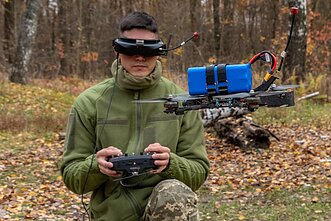
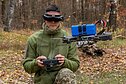
Defence Minister Laurynas Kasčiūnas then said that drones equipped with first-person view (FPV) technology could be used to combat such balloons.
Interior Minister Agnė Bilotaitė said that in response to the threat posed by the balloons, the ministry has drafted a bill that would enable border guards and officials responsible for safeguarding strategic facilities to bring down balloons that illegally cross Lithuanian airspace.
According to Bilotaitė, the cost of weather balloons is about 100 euros, and their flight direction depends on the wind, which is why many of them end up back in Belarus.
Liubajevas said that over 200 pre-trial investigations related to smuggling have been opened so far this year.

Newsletter
Every Friday morning.