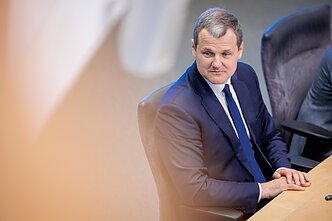









Permanent counter-mobility measures are being set up on parts of Lithuania’s border with Russia’s Kaliningrad. This is not only a signal to Russia but also a way to immediately protect areas that could be vulnerable, says Defence Minister Laurynas Kasčiūnas.
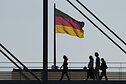
The Queen Louise Bridge over the Nemunas River separates Lithuania and Kaliningrad, as well as two worlds. On Russia’s side, Z, the symbol of the Kremlin’s war against Ukraine, is visible on the building facades facing Lithuania.
Now, more symbols of separation have appeared. Darius, who used to live in Lithuania’s Panemunė, just across the bridge from Kaliningrad’s Sovetsk, came to see the new defensive barriers.
“We had Russian friends there when we were kids. The Russians used to visit us, too. And now, all friendships are over,” he says.

Lithuania’s Defence Ministry, together with the Armed Forces, installed permanent counter-mobility measures on the bridge separating Panemunė from Sovetsk to stop the movement of hostile vehicles.
“We plan to spend 600 million euros on this project over the next decade – that is how much the Lithuanian defence line will cost. Most of it will be spent on mines. We have contracts, and some mines are already on the road. More will follow,” Defence Minister Kasčiūnas said in Panemunė on Thursday.
The Queen Louise Bridge will be equipped with 80 dragon’s teeth and seven hedgehogs, some of which will also be reinforced with concertina wire.
Next to the bridge, additional barriers could be formed if necessary to stop an enemy attempting to cross the Nemunas River. The places suitable for crossing – shoals and fords – have already been identified, according to the Armed Forces. They should be reinforced by the formation of an obstacle course.

According to Major General Remigijus Baltrėnas, Chief of the Defence Staff, Lithuania’s border with Kaliningrad is very diverse – it runs overland, across the Nemunas River, and finally touches the Curonian Spit.
“We cannot apply one standard across the entire border with Russia. You only see one water barrier now. The Curonian Spit is a slightly different water obstacle – it has different access and planning. It is the same with the land part. These three areas have different receptions, but at the end of the day, they come together to form a single defence plan,” Baltrėnas explained.
In late July, the Lithuanian government approved the implementation of part of the planned counter-mobility measures.
The plan is to set up counter-mobility parks by April 1 at locations designated by the Lithuanian Armed Forces along the border with Belarus and Russia’s Kaliningrad.

Kasčiūnas said in August that these measures would boost the state’s deterrence and defence potential as well as the security of the country’s borders with Russia and Belarus.
According to the Defence Ministry, 8 million euros will be allocated to the Armed Forces and 2.4 million euros to other institutions for the purchase of counter-mobility engineering equipment this year.

Newsletter
Every Friday morning.