
















Algirdas Vileikis, the last mayor of Vilnius under Soviet rule, predicted in the 1980s that Vilnius would become a “city of one million people” by 2030. Is it still a viable goal or completely out of reach now?
Vileikis was not the only leader of the capital who said that Vilnius could have one million inhabitants by 2030. In 2013, the then mayor, Artūras Zuokas, also raised the vision of Vilnius and its metropolitan area, ie a 50-kilometre ring around the city, having one million inhabitants, with 700,000 living in the city itself.
Today, he says Vilnius and its metropolitan area are already home to 1.2 million inhabitants.
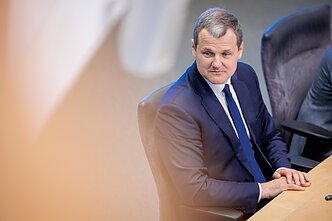
“Vilnius will certainly be the largest city in the Baltic states and, in my opinion, could certainly have around 800,000 inhabitants as a city. [...] The metropolitan area has around 1.2 million inhabitants. We can say that Vilnius already has more than one million inhabitants today,” Zuokas noted.
According to the former Vilnius mayor, the negative demographic trends pose significant challenges not only for Vilnius but also for Lithuania as a whole.
Data provided by various international organisations shows that Lithuania is one of the fastest-shrinking societies, he said. Only Bulgaria and Latvia are losing people faster than Lithuania in the European Union.
“But that is the challenge – to disprove the forecasts. Although they predicted a decline in Vilnius' population, it has been steadily growing,” Zuokas explained.
According to the Centre of Registers, over 375,000 people had their residence declared in the capital in 1991. A decade later, the number grew to almost 487,000 and reached 555,000 people in 2011. As of January 1 this year, some 634,000 people are officially Vilnius residents.

However, the actual number of inhabitants may be slightly different, as not all people living in Vilnius declare their residence here. For example, thousands of students arrive in Vilnius every year.
Zuokas said that during his years as Vilnius mayor, the population was measured by the number of people registered in the polyclinics in Vilnius. This calculation, he said, was more accurate.
“Today, I would say that the real population of Vilnius is 620,000 to 650,000, [as] this is how many people are currently registered in polyclinics. This trend of population growth in Vilnius can continue,” he said.
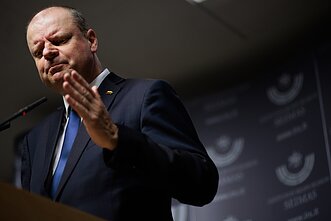
However, Daumantas Stumbrys, an associate sociology professor at Vilnius University (VU), says it is unlikely that Vilnius will soon grow to a million people.
“We have seen rapid changes in recent years, with the scales tipping in the other direction. We used to have more people going abroad, but in the last few years, we have had more migrants coming to Vilnius. The international migration balance has turned positive,” he noted.
When Russia started its large-scale invasion of Ukraine, almost 70,000 Ukrainians came to Lithuania, a large number of them settled in Vilnius. Thousands of Belarusians flocked to the Lithuanian capital following the post-election repressions in Belarus in 2020.
There is also an increase in internal migration when people from other parts of Lithuania come to live in Vilnius. However, one indicator remains negative – population growth. In the capital, as in Lithuania as a whole, more people die than are born each year.
A way to increase the size of Vilnius would be to incorporate surrounding territories, but this would require political will.
“In Lithuania, we do not have many examples of this, but we do have, for example, Grigiškės, which has been annexed to the Vilnius City Municipality. This has certainly increased the population,” said Stumbrys.

Population growth must be sustainable
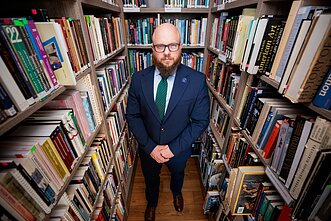
Valdas Benkunskas, the current mayor of Vilnius, told LRT.lt that a million inhabitants was an emotional reference point. The real goal, according to the mayor, is for the city to grow sustainably.
“We can be proud that Vilnius is the fastest-growing city in the region compared to other Baltic capitals. This shows great potential, that we are indeed growing and that this growth is sustainable and of high quality,” said Benkunskas.
According to the mayor, population growth should not undermine the quality of life in the capital.
“It is important that growth and the strengthening of the city take place without losing what we have now and what makes the city attractive,” Benkunskas said.
If the aim was to reach a million inhabitants in the capital as quickly as possible at any cost, the only way would be to have uncontrolled migration.
“But there is no such goal. It could lead to other problems and we can see that in other European cities, uncontrolled immigration causes cultural and social problems. That is why balance is needed,” Benkunskas said.
“We are primarily interested in internal migration, ie getting as many students as possible from other Lithuanian cities and regions to come to the capital and stay here after graduation, as well as representatives of other professions, which we lack the most: doctors, teachers, police officers,” he added.
Last year, some 1,300 foreign students came to study in Vilnius, according to the mayor. Based on the city’s surveys, around half of them thought about staying in the capital after their studies.
“Such people make the city economically stronger,” Benkunskas said.

Enough space?
According to VU associate professor Stumbrys, Vilnius is not a densely populated city, so there is room for growth.
“Lithuania as a territory is also not densely populated and Vilnius as a capital, as a metropolis, is not densely populated,” he said. “We are not limited by mountains, Vilnius is not an island, and there are no huge protected nature reservations that would limit expansion.”
A sudden increase in population could still create challenges in ensuring access to public services. According to Benkunskas, the capital needs to ensure that the number of schools and other infrastructure grows together with the city.
“This requires investment, and in some cases, political will. There is work to be done and it needs to be done,” the Vilnius mayor said.
Some of it includes providing adequate and affordable housing.
“There could be problems with the quality of housing, with the formation of certain gated communities, as Paris and other European cities have now. Therefore, [the pace of] growth should be moderate,” Benkunskas stressed.

Newsletter
Every Friday morning.