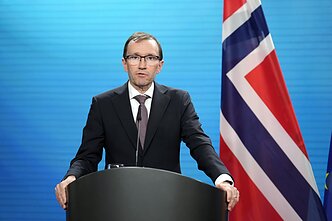














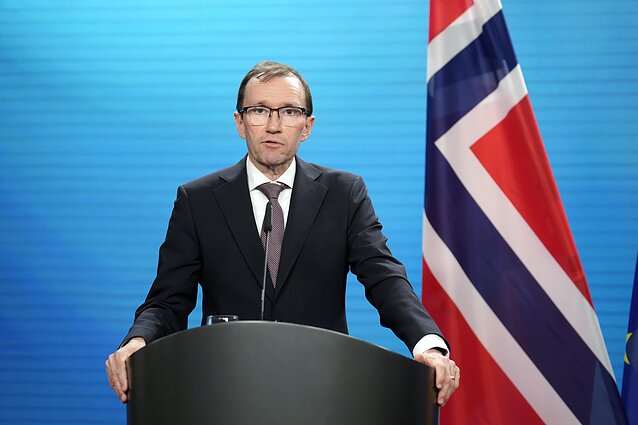
Norway’s Minister of Foreign Affairs Espen Barth Eide on Thursday expressed regret at Lithuania’s decision to withdraw from the Convention on Cluster Munitions.
The convention prohibits the use, production and acquisition of cluster munitions and sets out specific obligations to address the humanitarian consequences of these weapons.
“It is regrettable that Lithuania has taken the decision […] to withdraw from the Convention on Cluster Munitions,” a statement from the Norwegian Ministry of Foreign Affairs published on the Norwegian government website quoted Eide as saying.
The Lithuanian parliament on Thursday made the final decision to quit the Convention that the country joined in 2011.
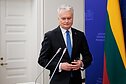
Once President Gitanas Nausėda signs the law, Lithuania will notify the UN secretary-general, the convention’s depository, of its denunciation through diplomatic channels.
The idea to quit the treaty first came up when the United States sent cluster munitions to Ukraine last year.
The government has argued that the international legal restrictions assumed under the convention limit the defence capabilities and combat power of Lithuania’s own forces and those of its allies operating on its territory, and reduce the effectiveness of deterrence.
Officials also say that Lithuania’s withdrawal from the convention does not negate its commitment to the principles of international humanitarian law.
The Norwegian Ministry of Foreign Affairs pointed out in its statement that some 90 percent of victims of cluster munitions are civilians and that it is necessary to protect them in compliance with international agreements irrespective of the fact that Russia’s war of aggression against Ukraine has dramatically changed the security situation in Europe.
“We understand Lithuania’s concerns, but disarmament conventions are not just commitments that apply in peacetime. They are even more important when countries are at war. The manner in which wars are fought has significance. That is why we must maintain international rules, norms and obligations for warfare, also when the security landscape changes. The enormous suffering of the people of Ukraine and Gaza is a stark reminder of this,” Eide said.
Most Western European countries are parties to the convention, as is NATO member Canada. Of the NATO members, the convention has not been signed by the United States, Estonia, Finland, Latvia, Poland, Romania, and Turkey.
According to the statement of the Norwegian Ministry of Foreign Affairs, Norway has sought, through diplomatic and political channels, to convince Lithuania to remain a party to the Convention on Cluster Munitions. This was also among the topics of Prime Minister Jonas Gahr Støre’s conversation with the Lithuanian president on Wednesday.
Meanwhile, Amnesty International stated that the Lithuanian parliament’s decision to leave the Convention on Cluster Munitions is a disastrous and troubling shift.
“This move abandons the global consensus aimed at minimising civilian harm during armed conflict,” Dinushika Dissanayake, Amnesty International’s Deputy Regional Director of Research in Europe, said in a statement.
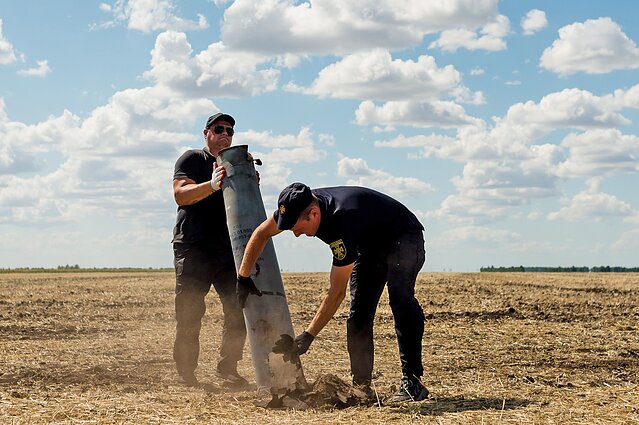
She noted that cluster munitions “are inherently indiscriminate weapons which pose a grave threat to civilian lives long after a conflict has ended”.
“Their use has devastating consequences, as many systems have an extraordinarily high ‘dud’ rate, up to 20 percent, contaminating large areas with unexploded ordnance for years or even decades,” Dissanayake stressed.
Amnesty International urged Lithuania to reconsider its withdrawal from the Convention on Cluster Munitions.
Lithuania joined the Cluster Munitions Convention in 2011.
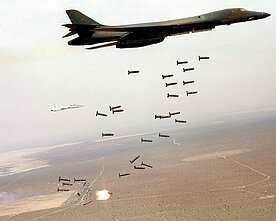
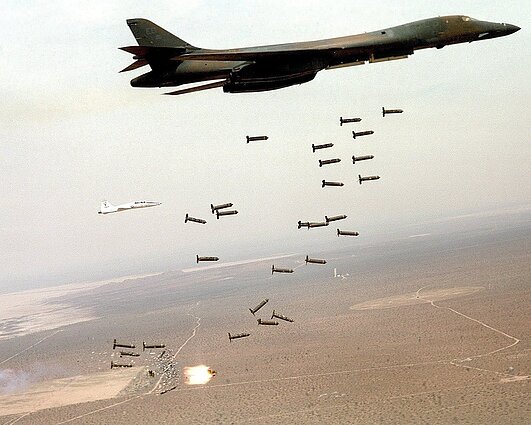
A cluster munition is an air-dropped or ground-launched explosive weapon that ejects smaller submunitions.
In mid-July 2023, the United States supplied these widely banned munitions to Ukraine.

Newsletter
Every Friday morning.