










Naming Estonian Prime Minister Kaja Kallas as the European Union’s next foreign policy chief means that the EU accepts the Baltic states’ hard position on Russia, Lithuanian Foreign Minister Gabrielius Landsbergis has said.
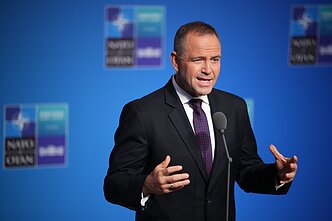
“This is an acknowledgement of the vision of both the Baltic countries and the Eastern flank. She has never hidden her position, she has been very clear and strong on issues of values, which are very important to us, and we can see that this has not harmed her,” he told reporters on Friday.
According to Landsbergis, Kallas’s hawkishness regarding Russia may be reflected to some extent in the future foreign policy of the EU.
“The processes of policy coordination are quite complex, and in many cases the high representative can [only] say what has been agreed... Her heart is on the right side, and we’ll see how she manages to build a consensus in the European Council,” Landsbergis said about Kallas.
“The job is quite unenviable,” added the Lithuanian foreign minister, who himself is considered one of the likely picks for the next European Commission.
EU leaders struck a summit deal on Thursday to keep Ursula von der Leyen as head of the European Commission, while tapping Estonia’s prime minister Kaja Kallas as the bloc’s top diplomat.
The late-night accord carves up the EU’s top institutional jobs for the five years to come, with former Portuguese prime minister Antonio Costa to head the European Council.

‘Fog of intrigue’ over Lithuania’s nomination
Landsbergis, who is also the leader of the ruling conservative Homeland Union (TS-LKD) party, keeps silent on his candidacy for the European Commission.
Landsbergis has been criticised for not making it clear whether he will be a contender for a European commissioner or not, and the prime minister is dragging her feet on naming Lithuania’s candidate.
“It’s more of a fog of intrigue,” he said on Friday. “These are normal processes, the prime minister is building a consensus as it is her prerogative to put forward [the candidate], you need to have a consensus with the president, you need to have a consensus in the Seimas [parliament]. She is certainly doing it.”
On Thursday, Seimas Speaker Viktorija Čmilytė-Nielsen called a coalition council meeting to discuss Lithuania’s EC candidate. However, according to its participants, there was more talk about the desired EC portfolios, rather than about who is going to be the nominee.
“It saddens me, but I have no desire to take part in this intrigue, to encourage it, to shut it down or to do anything about it,” Landsbergis said on Friday.
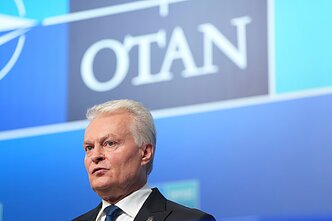
Lithuanian President Gitanas Nausėda said on Thursday he expects Prime Minister Ingrida Šimonytė to propose a candidate for a European commissioner soon. Nausėda said he himself offered a name.
Landsbergis says he does not know who the president’s preferred candidate is, adding that he’s not involved in the conversations.
Lithuanian leaders have said Vilnius is interested in the EU enlargement or defence portfolios in the EC. Landsbergis has received backing from Manfred Weber, president of the European People’s Party.

Newsletter
Every Friday morning.