










Lithuanian nurses are paid the lowest wages in Europe, said an opposition politician recently. Is this really the case?
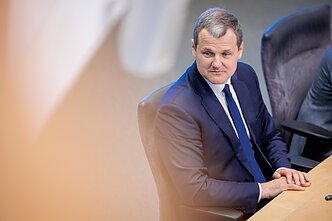
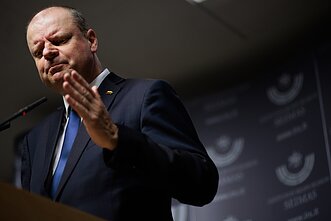
“I want to draw attention to […] a problem and how the current government is not solving it. Our Lithuanian nurses earn the lowest wages in all the 27 EU countries,” Social Democratic Party leader Vilija Blinkevičiūtė said at the party’s council meeting.
Another Social Democrat politician, MP Orinta Leiputė, said that low salaries were linked to the problem of mobbing in medical institutions and high workloads.
Last among OECD members
Lithuania is indeed at the bottom of a ranking by the Organisation for Economic Cooperation and Development (OECD) in terms of nurses’ wages. Although the ranking does not include some poorer EU or European countries, such as Romania or Bulgaria, most European countries are included.
The OECD 2023 report compares the purchasing power of nurses, that is, what they can actually afford on the salary they receive. Lithuanian nurses are four times poorer than their counterparts in Luxembourg.
For Lithuania, the report uses data from 2018 and therefore does not reflect possible effects of the Covid-19 pandemic on the salaries for health workers.
Still, Lithuania is behind Latvia, Estonia and Poland in the rankings, and twice below the overall average.
On average, nurses in Lithuania in 2023 earned around 2,000 euros a month before tax, or less than 1,300 euros after tax. This is half of what doctors make. The average salary of nurses is similar to the national average.
According to experts interviewed by LRT.lt, low salaries paid to nurses are a long-standing problem.

“Lithuania stands out in a bad sense when it comes to financing the health system. This has been going on for years, but politicians don’t see the problem and don’t try to increase the funding,” says Auristida Gerliakienė, chairwoman of the board of the Lithuanian Medics Movement.
According to MP Leiputė, many nurses are emigrating, which leaves Lithuania’s medical institutions understaffed. Many medical workers complain about excessive workloads, which are not regulated. As an example, she cited a situation where one nurse is left on night shift in a hospital with 60.
“Some nurses try to find easier work, the private sector is better paid, but if we talk about the public sector, nurses prefer to work in health centres and clinics, where there are no night shifts and a lighter work schedule. Some emigrate or go into the beauty sector, which is very popular at the moment,” the politician said.
Aging professionals
The Lithuanian Medics’ Movement estimates that there are currently 2,527 nursing professionals who have reached retirement age, about one in ten. Within five years, the figure is expected to more than double – over 6,000 nursing professionals will be of retirement age.
Gerliakienė also notes that there is no support for young people who want to study nursing, and that they are more likely to come from rural regions and less well-off families. Almost a third of them emigrate after their studies, going to countries where the pay gap between nurses and other medical staff is smaller.

“Most nurses [in Lithuania] are over 50 years old, young people do not go into nursing. It is hard work, a lot of responsibility, sometimes even dangerous because of possible violence. Nurses are also subject to a lot of mobbing. Not every institution provides nurses with the right tools to protect their health,” said Gerliakienė.
The Ministry of Health, which has been criticised in the past, has said that hospitals and clinics themselves allocate salaries and are therefore responsible for paying their staff adequately.
However, Gerliakienė says the problem is bigger than that.
“The prevailing tendency is that a doctor’s work is valued and that of a nurse is unseen,” she says.
The Health Insurance Fund pays for services performed by doctors and nurses together, but hospital administrations give priority to doctors since licensing depend on the functions they perform. “Everyone wants to keep doctors, while nurses are an afterthought,” according to Gerliakienė.
And salary is just part of the problem, she adds: working conditions and the prestige of the profession are also at issue.

Newsletter
Every Friday morning.