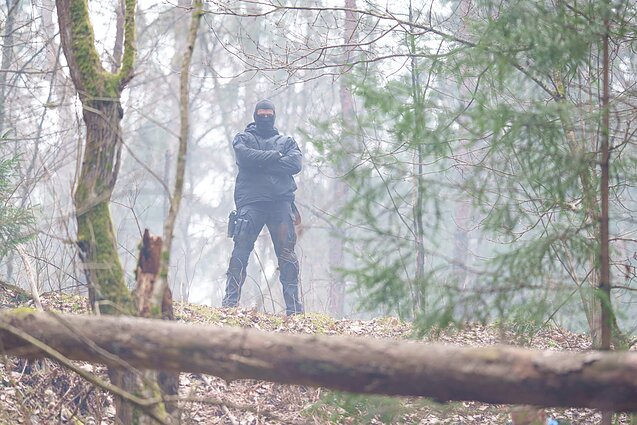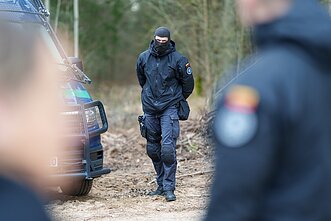






Lithuania’s elite special operations force could recruit twice as many officers as it has now, but very few candidates can pass the demanding selection tests.
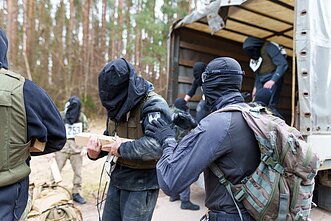
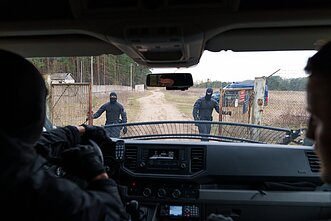
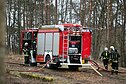
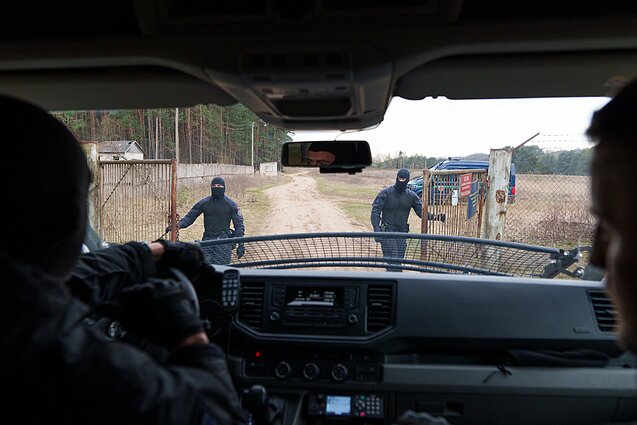
A truck comes down a forest road, six men with black sacks on their heads are hurried out of it, and masked officers harshly urge them to grab a 20-kilogram box, backpacks, and wooden sticks that stand in for machine guns.
With all this stuff in their hands, the men are escorted into the forest where their big challenge begins.
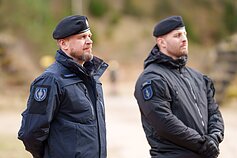
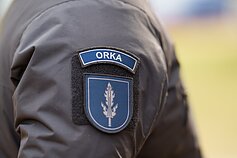
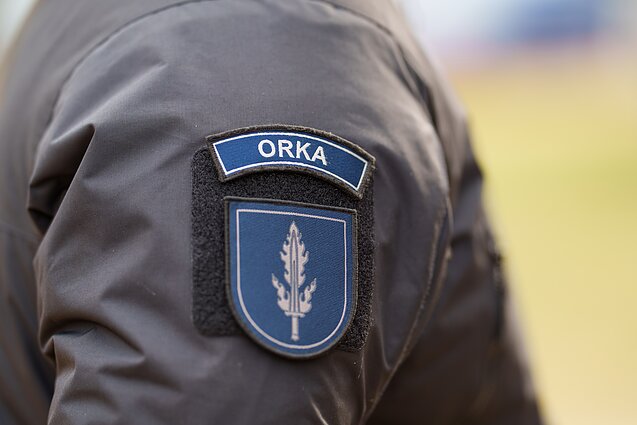
The scene is reminiscent of a hostage drama, but if they perform well, the six will eventually become part of the Operational Response Counter-Attack Team (ORKA), an elite squad within the Public Security Service (VST). In the future, they themselves may be responsible for freeing real hostages.
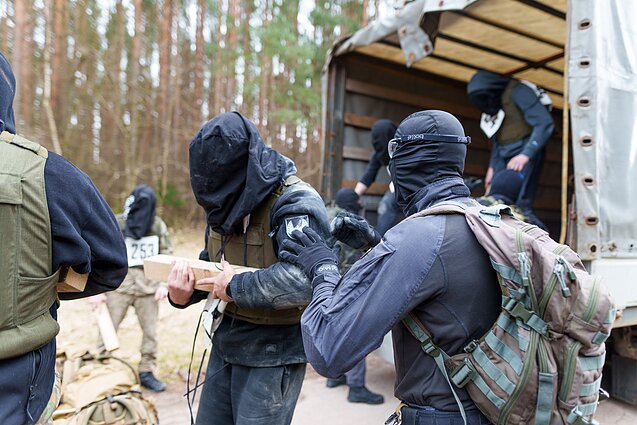
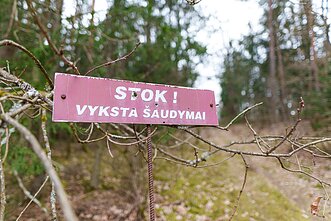
The tactical psychophysical march, which is part of the recruitment test for the elite unit, lasts a day. Only a small part of it was shown to journalists last week. The candidates had to crawl across a 15-metre creek culvert and get out of a sealed and smoke-filled house through a chimney.
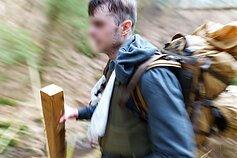
“I had the task of carrying the box and that’s what I was focused on,” says a 31-year-old ORKA aspirant who goes by the nickname Ąžuolas (Oak in Lithuanian). He packed his rucksack with dry clothes and food but was not in any hurry to change after a chilly swim – he didn’t know what was coming next.

The VST leadership says that twice as many officers could be recruited to the ORKA unit across Lithuania, and the funding is available for that, but the tough recruitment tests filter out many candidates, only around half make it to the end.
Being among the best
Although he is not yet a member of the squad, Ąžuolas communicates with the media with his face covered.
The identity of these elite officers is closely guarded. The mere prospect of becoming a member of the ORKA requires a high level of confidentiality.
“It was, is and will be hard,” says the man. “It’s not for everyone.”
He describes the process he is going through in order to get into ORKA: “It started with a physical test. The rest of the day I spent with a bag on my head, I couldn’t see much. Weapons, mental tasks, stressful situations, tolerance of heights.”
Before the VST, Ąžuolas served in the National Volunteer Force.
“I want to be among the best,” he quips when asked why he is applying to the ORKA.
According to ORKA chief and co-founder Ričardas Alzbergas, the selection process consists of several stages. At the VST training ground near Karmėlava, central Lithuania, the candidates are going through the final stage, which checks their psychophysical abilities. They are tested for acrophobia, claustrophobia, marksmanship, intellectual aptitude.
The candidates also get to show their concentration, attentiveness, and ability to calm down in stressful situations. In the midst of demanding physical exertion they are asked to solve logic and math problems.
Many candidates do not even finish the test. “More than half drop out. This psychophysical tactical march is difficult. During the march, they are given various tasks to do at intermediate stations,” said Alzbergas.
Why do so many candidates fail to finish the march? According to Alzbergas, “the officers are not weak” but the tasks are challenging and “perhaps not everyone is suitable to be a member of the team”.

“If we used the same standards with everyone, we wouldn’t be able to check everything. Some candidates will pass the tests without any difficulty, others will stretch themselves beyond their capabilities,” says the ORKA chief. Examiners take note when a candidate is brought to the limit of their abilities and they don’t press any further.
ORKA needs a base in Vilnius
Arūnas Paulauskas, deputy chief of the VST, says that it is important for the country to have well-trained officers who are not part of the military but can handle heavy weaponry.
In particular, they would be well suited in “little green men situations” – in case a foreign adversary sends in unidentified troops or agents.
“We would like to expand the squad geographically too. At the moment, the unit is based in Kaunas, but we see that it is also necessary to have a presence in Vilnius, closer to the eastern borders. I would think, if we doubled the size of the unit, officers would have enough work,” says Paulauskas.
The funding is available, he adds, so the VST is actively looking for potential recruits.

The average salary of a starting officer in the VST is around a thousand euros a month after tax, while in the ORKA they could expect to make one-and-a-half times that.
According to Alzbergas, only officers already in the VST can apply for the ORKA.
“We cannot accept officers from the street, even if someone really wants to, they would first have to go through a basic course to become a Public Security Service officer,” he says.
According to him, the candidates do not have to meet any particular physical criteria, nor are there any age restrictions.
“There are only basic requirements to become an officer, an impeccable reputation, loyalty, certain psychological qualities, a health check,” says Alzbergas.
The ORKA is a force of specially selected and trained officers to carry out high-risk tasks such as hostage release in prisons, eliminating armed threats in mass riots, protecting convoys of dangerous criminals, repelling attacks on critical infrastructure, responding to unconventional threats.
ORKA officers become part of the Lithuanian Armed Forces during wartime.

Newsletter
Every Friday morning.